


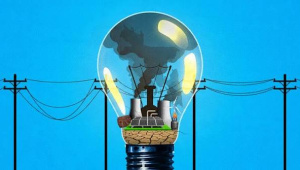
Energy security is now an investment imperative
11 September 2026
Bangladesh's energy crisis is now becoming a much larger economic problem with the potential of affecting foreign direct investment (FDI).
11 September 2026

Bangladesh needs life-centred education reform for students
14 September 2025
Active learning, moral education, teamwork, and community engagement should be embedded across all subjects.
14 September 2025

Higher education commission crucial for systemic reform
2 October 2024
It is now widely accepted that investment in human capital through education plays a crucial role in economic growth.
2 October 2024

How should our engineering education evolve?
12 February 2024
Over the years, engineering programmes in Bangladeshi universities have stagnated, still clinging to a 20th-century structure.
12 February 2024

Our outdated, inefficient higher education institutions
19 December 2023
The world has never witnessed such unprecedented human-to-technology interactions.
19 December 2023

The role of Bangladeshi universities in the era of AI
24 September 2023
How many jobs will disappear in a country depends on the industry, type of work, and pace of AI development.
24 September 2023

Accreditation: A proven method to get programme recognition
28 May 2023
At the time of Bangladesh’s liberation, there existed only six public universities, and the total number of students was around 25,000.
28 May 2023

Impact of the fourth industrial revolution on classroom education
14 August 2022
Bangladesh cannot ignore the changes brought about by the fourth industrial revolution.
14 August 2022

Keeping up with the Fourth Industrial Revolution a crucial factor in economic growth
Over the past decade, there has been tremendous interest in understanding how technology is shaping the nature of work and education around the world.
11 December 2021

Assessment in university courses must be innovative, realistic and relevant
Assess-ment of student learning in a course, in general, is interpreted as a means to evaluate the attainment of the course content
10 December 2019

Why knowledge-based economies are richer
It is inarguable that education is important, as it opens the door to a better life for everyone.
18 November 2019

Research universities can light the way for tomorrow’s Bangladesh
Higher education is rapidly expanding in developing countries. There were only four public universities at the time of Bangladesh’s inception as a sovereign country in 1971. The country has now a total of 43 public and 103 private universities. The number of students enrolled in universities has shot up from 4,11,717 in 2008 to10,28,314 in 2018 (BANBEIS). But what does it mean for economic development?
2 July 2019

How universities can improve student satisfaction and quality of learning
Societies in both developed and developing countries are increasingly aware of the vital role that university graduates can play to advance their economies. Many examples can be cited where graduates helped to pull their countries out of recession (David Willetts 2017).
10 June 2019

The role of universities in developing SMEs
The business community, not only in Bangladesh but also in the world, is constantly pressing universities to change their traditional role of imparting knowledge to their students.
30 March 2019
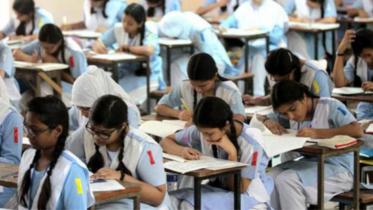
Creating a generation of learners and innovators
The curriculum for any undergraduate programme is highly influenced by the social, physical, economic and cultural environment. Consequently, with the change of any such setting(s), its development process will also change. The great economist and Nobel Laureate, Wassily Leontief, wrote in 1953 that “labour will become less and less important… More and more workers will be replaced by machines.”
28 February 2019
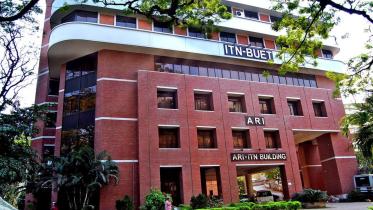
Rethinking engineering education in Bangladesh
During the twentieth century, engineering education in the developed countries underwent a remarkable transformation.
10 February 2019

A new learning paradigm
In the beginning of the twentieth century, a growing number of educators, professionals and representatives of the business community in western countries began to realise the shortcomings of the traditional education (TE) system.
16 January 2019
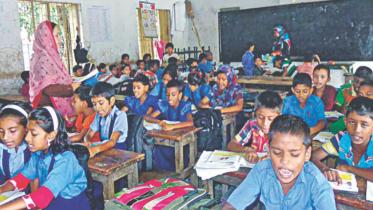
Thinking School: A catalyst for transformational change in education
It's a common scene to see children in our streets in the early morning going to school, carrying heavy bags full of books on their shoulders.
6 November 2018

Some thoughts on university grading systems
Grading is an integral part of a student's life. Grades or marks are the primary means of evaluating a student's academic performance.
13 February 2018

What's in an academic calendar?
Bangladesh started with only four public universities and now has a total of 38 public universities and 92 private universities.
5 February 2018

How can we build a knowledge-based economy?
Bangladesh is on its way to becoming a middle income country by 2021. To achieve this status, rebuilding a knowledge-based economy is essential.
5 January 2017

Rethinking higher education
At the time of independence, there were only 6 public universities in Bangladesh. At present a total of 38 public universities have been established.
16 September 2016