


Digital finance offers scope to bridge MSME credit gap
Bangladesh has around 7.16 million micro, small and medium enterprises (MSMEs), accounting for 61.2 percent of all enterprises and providing employment to around 19 million people, but the sector faces an estimated $2.8 billion financing gap, according to a study.
Although 92.6 percent of MSMEs are micro enterprises, they receive only 14 percent of total disbursed MSME loans, highlighting a major gap in access to formal finance.

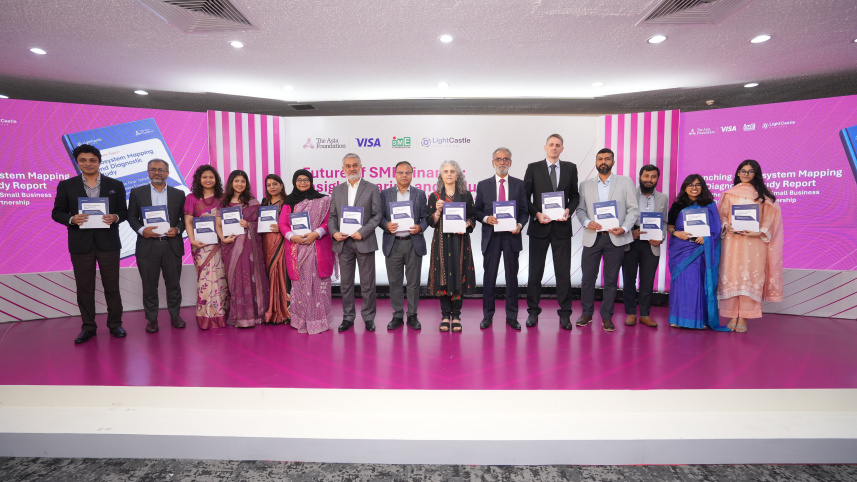
The findings were presented at a report dissemination seminar on “Ecosystem Mapping and Diagnostic Study on MSME Financing in Bangladesh” organised by The Asia Foundation in Dhaka today, said a press release.
The seminar, held under the “Bridging the Gap: Unlocking Small Business Finance through Fintech Partnerships” programme, brought together representatives from Bangladesh Bank, SME Foundation, banks and financial institutions, fintech companies, mobile financial services providers and development organisations.
The study was conducted by LightCastle Partners, with SME Foundation as the implementing partner and Visa as the strategic partner.
Filip Graovac, senior adviser of innovation and future economy and project lead of the programme at The Asia Foundation, said the country was not short of capital or policy intent, but lacked a working connection between the two.
Chief Guest Muslim Chowdhury, former comptroller and auditor general of Bangladesh and former finance secretary, stressed the need to keep micro, small and medium enterprises distinct in policymaking to avoid misguided policies.
The study found that 95.2 percent of surveyed MSMEs faced financial shortages, while 86 percent typically borrowed money. However, only 58 percent had formally applied for loans, suggesting that many businesses drop out before reaching the formal application stage.
The research also identified strong potential for digital finance, as 87 percent of MSMEs had a digital footprint and 97 percent were active on mobile financial services platforms. Yet only 11.55 percent had accessed digitally enabled credit.
Current digital lending products were largely limited to Tk 50,000 or below and offered short repayment periods. Around 60 percent of MSMEs preferred loans above Tk 3 lakh, while 85 percent preferred tenures longer than six months. Working capital accounted for 57 percent of MSME borrowing.
The study proposed four priorities: piloting digitally enabled lending, building interoperable and consent-based data systems, improving the commercial viability of small-ticket lending, and strengthening the regulatory and institutional environment for responsible financial innovation.
The panel discussion focused on simplifying lending processes, creating a digital ecosystem, digitising finance, using transaction data for alternative credit assessment and bridging gaps among banks, customers and digital platforms.
Participants also discussed AI-assisted alternative credit scoring, emphasising responsible data use, privacy and consent.
 For all latest news, follow The Daily Star's Google News channel.
Comments