


Oliver Stone at 80: The filmmaker who never stopped arguing with America

At times, directors do more than just telling stories with their films. Oliver Stone picks fights.
Turning 80 yesterday, Oliver Stone remains one of American cinema's great contrarians -- a filmmaker for whom the screen has never been merely a window on reality but a place to cross-examine it.

It is difficult to think of another filmmaker whose career has been so consistently animated by argument. He has spent half a century quarrelling with his country, its wars, its presidents, its money, its myths and, occasionally, its audience.
Even when he was wrong, he was rarely timid. Even when his films faltered, they tended to leave a bruise.
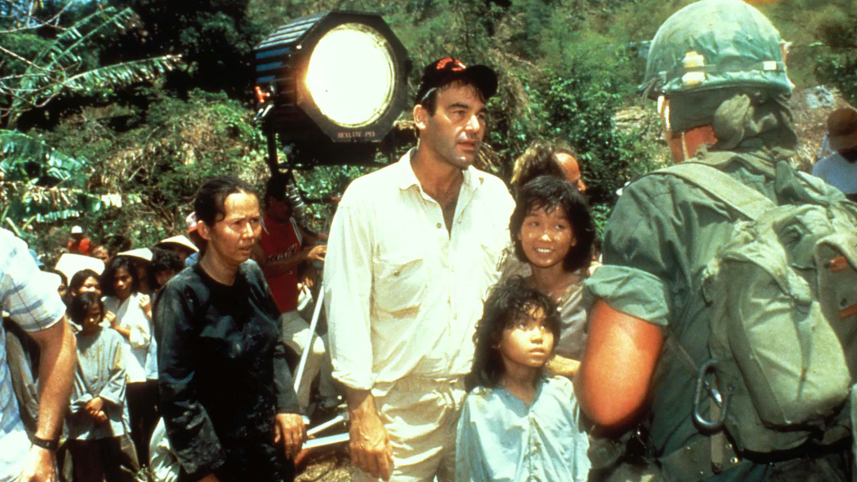
Born in New York in 1946, Stone went to Vietnam as a young man and returned carrying wounds that would become the deepest imprint on his cinema. Platoon (1986), his visceral Vietnam reckoning, won both the Oscar for Best Picture and Best Director. Born on the Fourth of July followed, turning the ruined idealism of a wounded veteran into an indictment of a war that had devoured its own generation.
But Stone's battlefield was never confined to Vietnam.
In Wall Street, greed wore a silk suit and spoke with Gordon Gekko's seductive certainty. JFK turned history into a hall of mirrors. The Doors plunged into rock 'n' roll delirium, Natural Born Killers made violence itself a media spectacle, while Nixon peered into the darkness behind presidential power. And with Alexander, Stone went to wrestle with the oldest seductions of all -- conquest, empire, ambition and the making of a legend.
Stone's cinema has always had a conspiratorial pulse, but beneath the paranoia lies a more serious obsession: who controls the narrative?
Governments conceal. Corporations manipulate. The media manufactures spectacle. History hardens into official versions. Stone’s instinct has always been to scratch beneath the varnish.
His technique is as restless as his politics. Archival footage collides with staged drama; grain, colour, speed and sound fracture the conventional grammar of filmmaking. His movies often feel as though they are thinking aloud, sometimes brilliantly, sometimes messily, occasionally too loudly.
Excess, indeed, is part of the Stone signature.
Not all his films have survived the passage of time with equal distinction. Some have been criticised for their historical liberties, others for their political sympathies or sheer discursiveness. Yet even his failures possess something increasingly unfashionable -- conviction.
Stone never seemed particularly interested in making cinema comfortable.
In an age of manufactured realities, algorithmic outrage and competing versions of truth, the “Stone-sensibility” feels less like a relic than an old alarm bell still ringing.
He taught generations of viewers to distrust the frame, to ask who placed the camera there and what lies just beyond its edges.
Oliver Stone's most enduring character may therefore not be Vietnam, Wall Street or any president. It is dissent itself.
He has spent a lifetime turning America's contradictions into cinema, and its certainties into questions.
 For all latest news, follow The Daily Star's Google News channel.