



Daisy Edgar-Jones to lead new adaptation of ‘Sense and Sensibility’
26 June 2026
•
TV & Film
‘Like a morning after a nuclear attack’
24 March 2023
•
Weekend Read
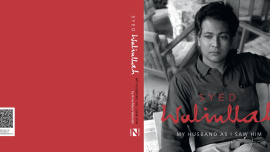
Book review: Nonfiction / Syed Waliullah: husband, artist, thinker, writer
17 August 2022
•
Books & Literature
Fear of sexual harassment triggering child marriage: survey
20 February 2022
•
Bangladesh

For the Love of Tea
7 January 2022
•
Star Literature
Court Corner / SC forms committee against sexual harassment
4 November 2021
•
SEXUAL HARASSMENT

UK-listed cybersecurity firm Avast in merger talks with NortonLifeLock
15 July 2021
•
Organisation News

(Uncertain) Future of Journalism in Bangladesh
28 November 2019
•
Star Weekend
“The space for in-depth critical journalism is shrinking"
28 November 2019
•
Star Weekend
“Predisposed journalism can never grow and sustain”
28 November 2019
•
Star Weekend
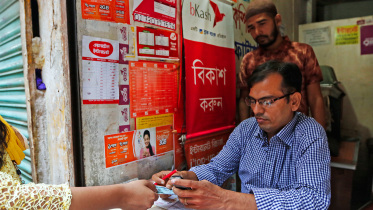
Hustlers on the loose
Thirty-eight-year-old Anisur Rahman had decided to send his sister BDT 10,000 through a bKash outlet on his way home from work. Eid was nearby and his sister needed some extra cash. Upon reaching the outlet, Anisur discovered that he was not the only one who urgently needed to transfer money. He was asked to write down his sister Jakia Sultana's account number and wait. A few minutes later, the agent informed Anisur that his money had been transferred and asked him to call Sultana to confirm.
7 September 2017

SNAPSHOT
“The shadow escapes from the body like an animal we had been sheltering.” ― Gilles Deleuze
31 August 2017

An Irish Monimul and the Sumaiya clause
In a move that seems to have garnered as much attention in Bangladesh as Neymar's record transfer to PSG and is the first of its kind, Bangladeshi cricketer Monimul Haqque has decided to apply for an Irish citizenship.
31 August 2017
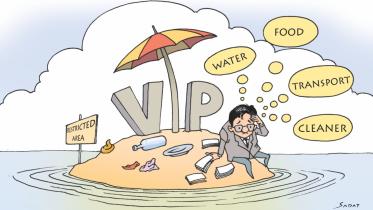
VIP area declared semi-autonomous
Rafique Ahmed sits relishing his 300 taka coffee. An employee at a top MNC, Rafique is one of thousands of citizens affected by the latest law that resulted in the federalisation of the VIP areas of the country.
31 August 2017
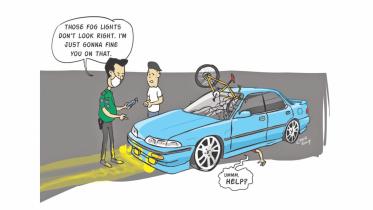
Enemies of traffic safety: Fog lights and fancy wheels
When you get a good thing, you don’t let it go. Unless of course you instantly find a better thing. A better thing is almost always greater than a good thing. This is great advice when it comes to choosing fish at the frozen food section. A fresh fish is a good thing. A fish that smiles and waves at you is fresher, hence a better thing.
31 August 2017

Surviving our long distance marriage
Courtesy of studying and working in different countries, the vast majority of my half-a-decade long marriage has been long distance.
31 August 2017

An unbearable loneliness
Haruki Murakami's 'Men Without Women'
31 August 2017
A thousand gardens
Where have the fish in the Buriganga gone? Bubbling with rich, garish tones that can belie the grim reality, the waters of the Buriganga, once the lifeblood of the capital, tell our very own tale of woe.
31 August 2017
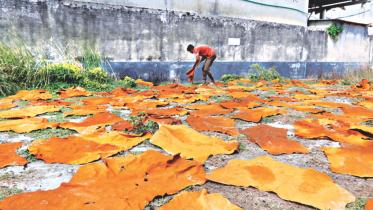
This time Dhaleshwari
Leather factories polluting again
31 August 2017

Phulbari Movement of 2006: Where we stand now
"This success is the first step towards victory. And all the credit must go to the brave people of Phulbari,” said Engineer Shekih Muhammand Shahidullah, Convener of the National Committee to Protect Oil, Gas, Mineral Resources, Ports, and Power, to the thousands gathered on the streets of Phulbari, Dinajpur
31 August 2017
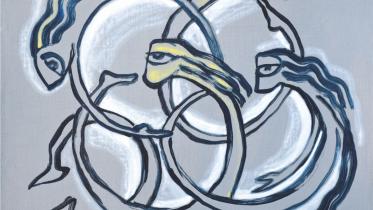
Ethically representing narratives of birangonas
An estimated 200,000-400,000 women and girls were raped by the Pakistani army and their local Bengali collaborators during the Liberation War of Bangladesh. Six days after the war ended on December 16, 1971, women raped during the war were designated birangonas, war heroines, in an effort by the fledgling Bangladeshi government to recognise and honour them.
31 August 2017
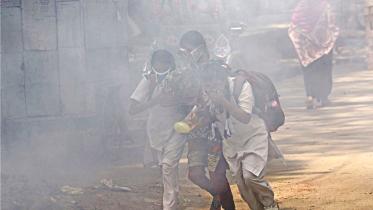
I deserve the blue
When 13-year-old Rafiul Islam Rabby was having trouble breathing, his mother Rabeya Begum didn't take it very seriously—not initially, at least. A week after, she noticed her son was coughing and wheezing throughout the night, unable to sleep. This time, Rabeya Begum took her son to the hospital.
31 August 2017

Cruelty before sacrifice
Dhola Babu was the most prized possession of cattle farmer Abdus Sabur. At only two-and-a-half years, Dhola Babu, the Friesian bull had gained a staggering 1200 kilograms of muscle.
31 August 2017
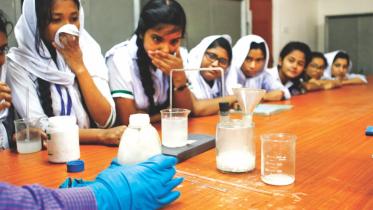
MAILBOX
It's no wonder that enrolment in science has been on the decline over the decades in such a “demotivating” education system which is prevailing in Bangladesh.
31 August 2017
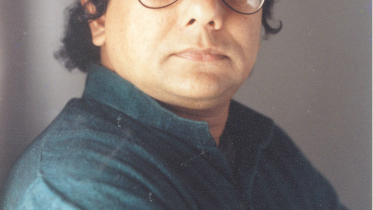
Rendering the great sense of loss of 1947 through film
In an interview with Star Weekend, Tanvir Mokammel talks about the significance of 1947 in his films, the role of artists in documenting history and the amnesia surrounding Partition among Bangladeshi filmmakers.
24 August 2017

University of Dhaka and the partitioning of Bengal
A recent and a very good historian of Bengal, Nitish Sengupta has observed that [in the mid-19th century] 'Nowhere else in the subcontinent were Muslims as worse off in Bengal, just as, paradoxically, few other communities derived as much benefit from British rule as the Bengali Hindus'.
24 August 2017
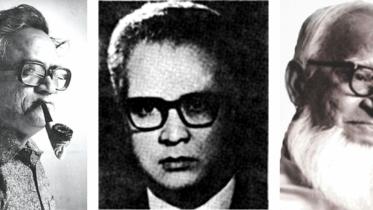
Partition and Bangladeshi literature
The Partition of the Indian subcontinent in 1947 has become indissolubly linked to horrific, haunting images of armed gangs or mobs attacking helpless groups of men, women and children trying to cross a border that had just been scratched on the map. Literature registers the shock in works that make harrowing reading.
24 August 2017
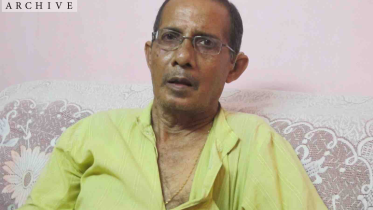
Akhilananda Dutta
Akhilananda Dutta comes from a family of doctors. Born in Dhaka in 1942 to a doctor and a housewife, he recalls that most of their family members were doctors at that time.
24 August 2017
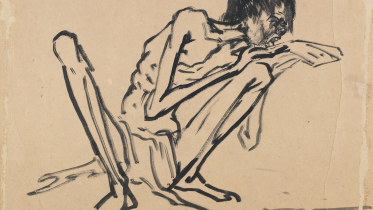
How communal politics ruined agrarian society
First, when it came to the ecological question, the two-nation theory, on which the partition was claimed to be based, was muted as seen in Punjab and Bengal where the question of partitioning the water bodies took the centre stage. Second, the immediate aftermath of the partition left thousands of people dead and millions homeless and filled with gruesome trauma.
24 August 2017

Partition 1947: How a nationalist movement turned communal
Who is to blame for the 1947 Partition of India and the large-scale violence that it triggered? There are accusations and recriminations.
24 August 2017