


When ordinary people risk everything to save animals in need

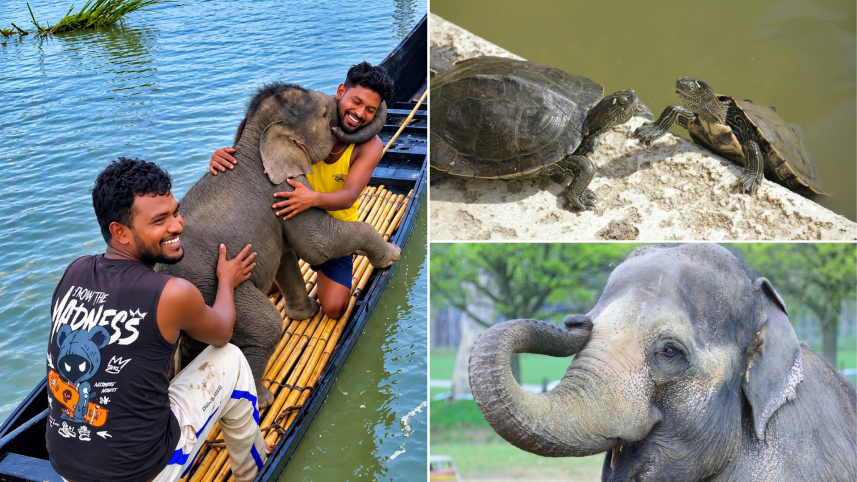
Amid constant news of animal neglect, sometimes quiet acts of extraordinary compassion offer a different perspective. From fishermen braving rushing rivers to families sharing their homes with hundreds of strays, people are stepping up to protect the vulnerable.
There are some who stop when they see an animal in trouble. There are those who spend hours trying to pull a trapped elephant out of a well, fishermen who risk going into rough waters to save stranded elephants, and individuals who quietly spend their nights feeding animals that have nowhere else to go.

A recent incident in India's West Bengal is one such example.
A newborn elephant calf was swept nearly four kilometres downstream by the strong current of the Teesta River after becoming separated from its herd near Gajoldoba in Jalpaiguri. Five fishermen spotted the calf struggling to stay afloat and rowed towards it. Three of them entered the water and helped pull the calf onto their boat.
The animal was later handed over to forest officials, who provided veterinary care and began efforts to locate its herd. After nearly two hours of coordinated efforts involving fishermen, forest personnel, and residents, the calf was reunited with its mother, who was later seen nursing it.
There was no guarantee that the rescue would end this way. The calf was only a few days old and had been carried several kilometres away from its herd by a powerful river. Yet, the people who saw it did not simply watch it disappear into the current.
A similar story was reported by The Daily Star almost a decade ago in the Garo Hills of Sherpur, but the positivity of the incident lingers in my mind.
A baby elephant had fallen into an old well after becoming separated from its herd. When the villagers could not rescue it themselves, they informed the forest department and fire service. Officials and villagers worked together for about two and a half hours, widening the well and using a rope to pull the calf out. The unharmed elephant eventually ran towards the forest.
In 2021, a similar wildlife emergency showed the power of humanity. Two elephants that had crossed from Myanmar became stranded on a beach and later entered the sea. Local fishermen used boats and ropes to rescue them from the water. Residents then helped lead the elephants inland.
What makes the story particularly striking is that people in the area had previously suffered crop damage and even loss of life because of encounters with wild elephants. Yet. when two animals were in danger, people still came forward to save them.
Perhaps what stays with us about these stories is not only that the animals survived, but how many people were willing to help them survive. A fisherman saw a struggling calf in a river and moved towards it. Villagers gathered around a well to rescue a trapped elephant. In Teknaf, people who had themselves experienced the difficulties of living alongside wild elephants still helped two of them return to safety.
These are small acts in the larger picture of wildlife conservation, but they reveal something important about our capacity for care. Not every act of kindness needs to be extraordinary. Sometimes it is simply noticing that another living being is in trouble and deciding to do something about it.
There will continue to be stories of cruelty and neglect. But there are also these stories of people choosing to help, often without expecting anything in return. Perhaps these quieter acts deserve some attention too. They remind us that even when the world seems unkind, there are still people willing to make it a little kinder for another living being.
 For all latest news, follow The Daily Star's Google News channel.
Comments