


3,000 apply, only 200-250 get in: Carmichael College faces accomodation crunch

The weeds have taken over the courtyards, plaster is peeling from the walls and garbage lies scattered across the floors. Once filled with students, two dormitories at Rangpur’s historic Carmichael College now stand deserted, locked away for nearly 15 years.
The closure of the two halls has added to the college’s accommodation crisis, with around 3,000 students applying for residential seats each year but only 200–250 securing one — meaning fewer than one in 10 applicants gets a place.

For the rest, finding a place to live becomes another hurdle in pursuing their education.
Established in 1916, Carmichael College now has around 25,000 regular and irregular students at the higher secondary, honours and master’s levels across 21 subjects. Yet only around 950 students can currently live in its seven operational residential halls. Of the total, four halls are designated for women students.
“At present, only 4 percent of the students are provided with accommodation in the college dormitories,” said Carmichael College Principal Professor Abul Hossain Mondal.
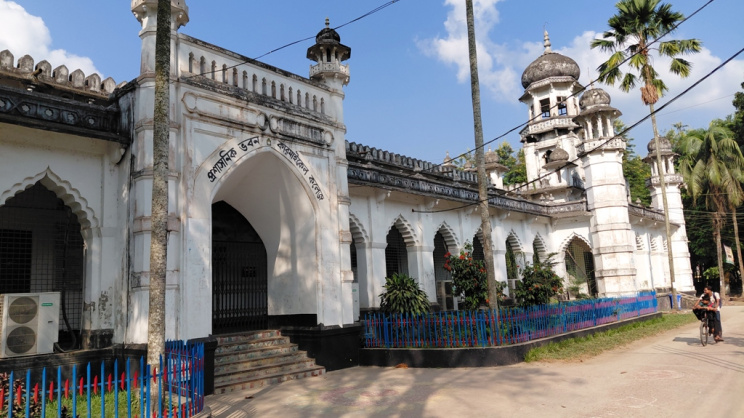
The shortage means many students have to live in rented messes outside the campus, paying not only rent and food costs but also daily transport fares. For students from low- and middle-income families, the additional expenses can make continuing their studies considerably harder.
The problem dates back to June 2011, when four male dormitories were closed following a violent clash over control of the halls.
A university source, wishing to remain anonymous, said the clash on June 13 that year involved activists and supporters of the then Bangladesh Chhatra League and Islami Chhatra Shibir. The four halls were formally declared closed on June 20 and subsequently locked.
After years of demands from students, two of the four halls, GL Hall and KB Hall, were reopened in 2019, the principal said.
The other two, CM Hall and MAG Osmani Hall, have remained closed ever since.
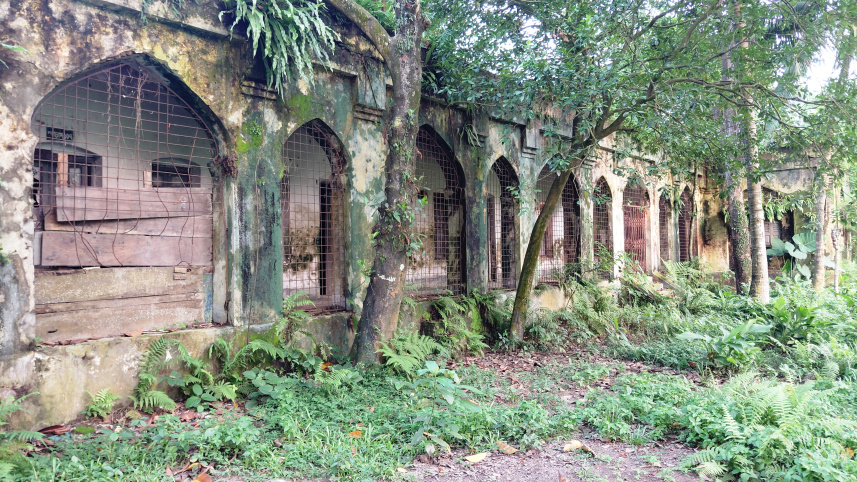
After years without regular use, both buildings have deteriorated badly. Their courtyards and entrances are overgrown with weeds and bushes, while parts of the walls are damp and plaster has fallen away. Garbage has accumulated inside and outside, giving the once-busy halls an abandoned appearance.
The principal said large sections of the roofs of the two closed dormitories have collapsed, leaving the buildings in a dilapidated condition.
“They are currently unfit for habitation, making it impossible to reopen the dormitories,” he said.
The accommodation problem, however, extends beyond the two abandoned halls.
Students said most of the seven operational halls, except the newly built Abu Sayed Hall, are also in poor condition. The buildings have not received adequate renovation for years, leaving some students living with damp walls and damaged ceilings.
At KB Hall, student Siam Sarker said pieces of plaster sometimes fall from the ceiling.
 For all latest news, follow The Daily Star's Google News channel.
 “Sometimes pieces of plaster fall from the ceiling of the dormitory. We have to live here at risk. The ceiling could collapse at any time and cause a major accident,” he said.
Yet leaving is not an easy option.
“It costs a lot to rent a mess outside the college. So, we are forced to live in this risky dormitory. This is also affecting our studies,” Siam said.
For students who fail to secure a hall seat, the alternative can be just as difficult.
Shahriar Rahman, an English Department student, lives in a rented mess in the Collegepara area. He said he spends around Tk 6,000 a month on rent and food, in addition to rickshaw fares to and from the college.
“If I could get a seat in the hall, my monthly educational expenses would have been around Tk 3,000. Now my family is struggling to bear the additional costs. I am going through a very difficult time,” he said.
Female students face similar difficulties.
Yasmin Ara, a Bangla Department student, lives in a rented mess because she could not secure a hall seat. She said the environment there is often unhygienic and not conducive to studying.
“The environment in the mess is not very good; it is quite unhygienic. Still, I have to stay there for the sake of my studies. Like me, many female students face various problems every day. Many of these problems could be reduced if we had seats in the college halls,” she said.
Yasmin said 24 other Carmichael College women students live in the same mess. They come from Lalmonirhat, Kurigram, Panchagarh and Gaibandha and had all applied for seats in the college halls but were not accommodated.
“I have also applied for a seat twice. It is essential to ensure accommodation for female students of the college. For this, an adequate number of dormitories need to be constructed. This is our demand,” she said.
The college authorities say they are seeking to address the shortage.
The principal said a proposal had been sent to the Education Engineering Department for renovating the halls. Once the work is completed, the two long-closed dormitories could be reopened.
“We have also sent proposals to the higher authorities for constructing one new hall each for male and female students. I hope we will receive a positive response to our proposals this year,” he said.
He said renovating the old halls, reopening the two closed ones and constructing new residential facilities had become urgent to preserve the educational environment and heritage of the college.