Who really owned Britain’s royal jewels?
Glittering baubles of gold and oversize jewels distinguish royalty from commoners. Had the Egyptian pharaoh Tutankhamun been buried without his regalia, he would have been just another anonymous handful of dust. He was a minor pharaoh compared to his wealthier predecessors. Their richer tombs were systematically denuded by brazen grave-robbers.
Descendants of the Aztec empire might still have the fabled treasures of their ancestors, had the greedy Spanish conquistadors not invaded and ravished Latin America in 1519-20. Countless Chinese imperial treasures were destroyed by Anglo-French invaders during the Second Opium War in 1860, when they ransacked the Old Summer Palace in Beijing. Anything precious that remained of China’s cultural heritage was smuggled out to Taiwan by Gen Chiang Kai-shek in 1949-50.
The magnificent jewels looted by Nadir Shah when he drained the imperial Mughal treasury in 1739 are stored today in the Bank Melli in Tehran. They underpin Iran’s currency. Post-Revolution Russians since 1922 have stored their imperial treasures in the Kremlin. The British Crown jewels would have been wealthier had Oliver Cromwell not melted and sold some of them during the brief period of Britain’s other commonwealth (1653-58). Modern rulers prefer to keep their tangible assets in real estate or tax-proof havens. Only royalty flaunts its higher status with bejewelled crowns and tiaras.
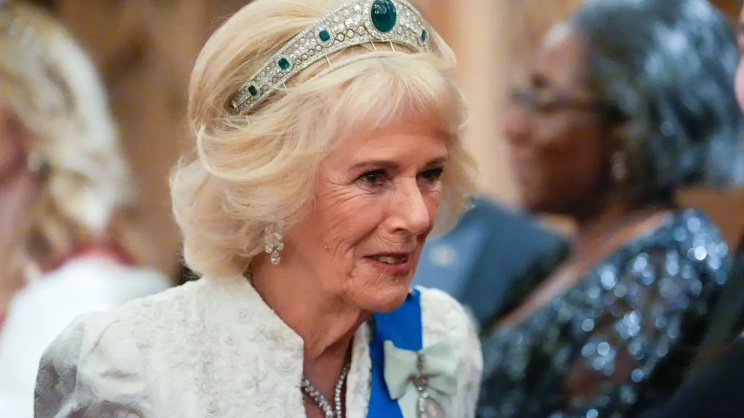
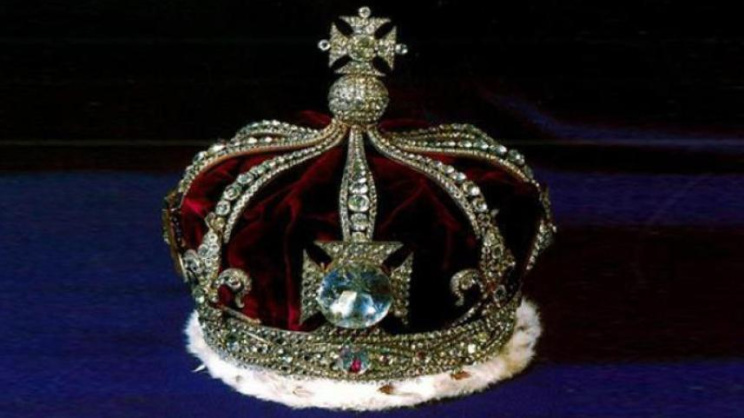
Royalty watchers are intrigued by the speed with which the present Queen Camilla is using the royal baubles left by her in-laws. One cache of Crown property was inherited by King Charles as monarch from his ancestress Queen Victoria. These include the Kohinoor and the Lahore Durbar diamonds and emeralds (purloined from the Sikhs), and gifts from obsequious maharajas.
Royalty watchers are intrigued by the speed with which the present Queen Camilla is using the royal baubles left by her in-laws. One cache of Crown property was inherited by King Charles as monarch from his ancestress Queen Victoria. These include the Kohinoor and the Lahore Durbar diamonds and emeralds (purloined from the Sikhs), and gifts from obsequious maharajas. Another glittering hoard came from Charles’s great-grandmother — the acquisitive Queen Mary. Her appetite for jewellery was insatiable. When the Romanovs fled Russia in 1918 and were forced to sell their jewels, she bought the now famous Vladimir tiara from the Grand Duchess Marie Feodorovna in 1921, and a spectacular cabochon sapphire and diamond brooch from the exiled Empress Marie Feodorovna’s collection. Queen Mary lived long enough to bequeath these and other heirlooms directly to her granddaughter — the regnant Queen Elizabeth II. She skipped the less favourite Queen Elizabeth (later the Queen Mother).
A third group of jewellery came to King Charles from the bequest of Queen Alexandra. She died in 1925 and left some important jewels to the “future wife” of her grandson Edward (then Prince of Wales). His subsequent marriage to Mrs Wallis Simpson caused heartburn within the royal family. Many tactless attempts were made by Lord Mountbatten to wrest the jewellery from her. These are finally in Charles’s possession.
A fourth important group has a decidedly plebeian origin. In 1942, Dame Margaret Greville — believed to be the illegitimate daughter of a Scottish brewer from his cook — sent a tin trunk containing priceless jewellery to her friend Queen Elizabeth (later the Queen Mother). Despite the obvious defect in her pedigree, Dame Margaret had insinuated herself into royal circles. She hosted Elizabeth and her groom Albert (later George VI) during their honeymoon. Although she knew Queen Mary, she bypassed the greedy dowager and gave her collection instead to the daughter-in-law. In 1942, during the war, Queen Elizabeth, on opening the shimmering contents of the mundane trunk, wrote to Queen Mary: “I must tell you that Mrs Greville has left me her jewels, tho’ I am keeping THAT quiet for the moment!”
She wore those jewels sparingly in public, perhaps to avoid criticism from nascent republicans, and her envious in-laws. She displayed them fully only in the late 1950s after Queen Mary’s death.
Prominent amongst them is a monumental diamond tiara commissioned by Dame Margaret from Boucheron in Paris in 1921. Matching it is a spectacular five-row festoon necklace, bought from Cartier. It sparkles with diamonds and emeralds set in platinum. Both have become a part of Queen Camilla’s regalia. Another Greville gift — a pair of diamond chandelier earrings — is worn often by Catherine Princess of Wales.
In 2023, at their coronation, King Charles and Queen Camilla, in deference to Charles’s down-scaled ‘green’ monarchy, required all female royals to wear “embroidered floral headpieces instead of diamonds”. Diamonds may be forever, but on this occasion, they were kept beyond their reach. Queen Camilla, however, a spry 80-year old, has exempted herself from her own rules. She appears determined to enjoy every carat in the royal vaults. A republican Cockney landlady once dismissed such overladen royals with the jibe: “If you were to smother me with diamonds, I too would look like them!”
The article was first published under the title 'Royal baubles' in Dawn on September 17, 2026
F.S. Aijazuddin is a writer.
Send your articles for Slow Reads to slowreads@thedailystar.net. Check out our submission guidelines for details.

The 25,000-year history of betel nut chewing
The world map we know is distorted. Why does it matter?

Bengal and the coming of Islam: A story of soil and spirit
Xuanzang’s travels to Bengal and beyond : The man, the pilgrim and the Monkey King
Professor Anisur Rahman: The economist who put people at the centre

APO 433: Dhaka’s forgotten post office of World War II
Dadabhai Naoroji: The man who exposed the economics of British colonialism
Untold stories of 1971 through private letters
The extraordinary journey of Atish Dipankar Srigyan