Myanmar’s deteriorating crisis and the political future of the Rohingya
Myanmar is entering a new political phase. The international community can no longer afford to view the country’s crisis simply as a conventional conflict between the military and armed resistance groups. The struggle has become far more complex, raising fundamental questions about who will wield power in Myanmar, how the country should be governed, how its ethnic communities can share and exercise power, and what kind of state will eventually emerge from the conflict.
Nowhere are these questions more urgent than in Rakhine State.
The Arakan Army (AA) has emerged as the dominant armed force across large parts of the state, while the Myanmar military continues to fight the group and retains significant military capabilities. Caught between these competing forces are the Rohingya, who have endured decades of systematic discrimination and persecution, been rendered stateless, and suffered dispossession, forced displacement, and genocide.
Against this backdrop, the warning issued by UN High Commissioner for Human Rights Volker Türk on 7 September 2026 about renewed and deepening atrocities must not become merely another expression of international concern. His call for stronger international and state responses—including holding both the AA and the military accountable, restricting transfers of arms and ammunition where they risk facilitating violations, banning imports of aviation fuel and related technologies, and strengthening civilian protection—points to the need for a broader shift in international policy. External powers must move beyond a response centred primarily on humanitarian assistance towards facilitating a political settlement in which the Rohingya can secure a safe and dignified future.
The Rohingya crisis cannot be solved by repatriation alone
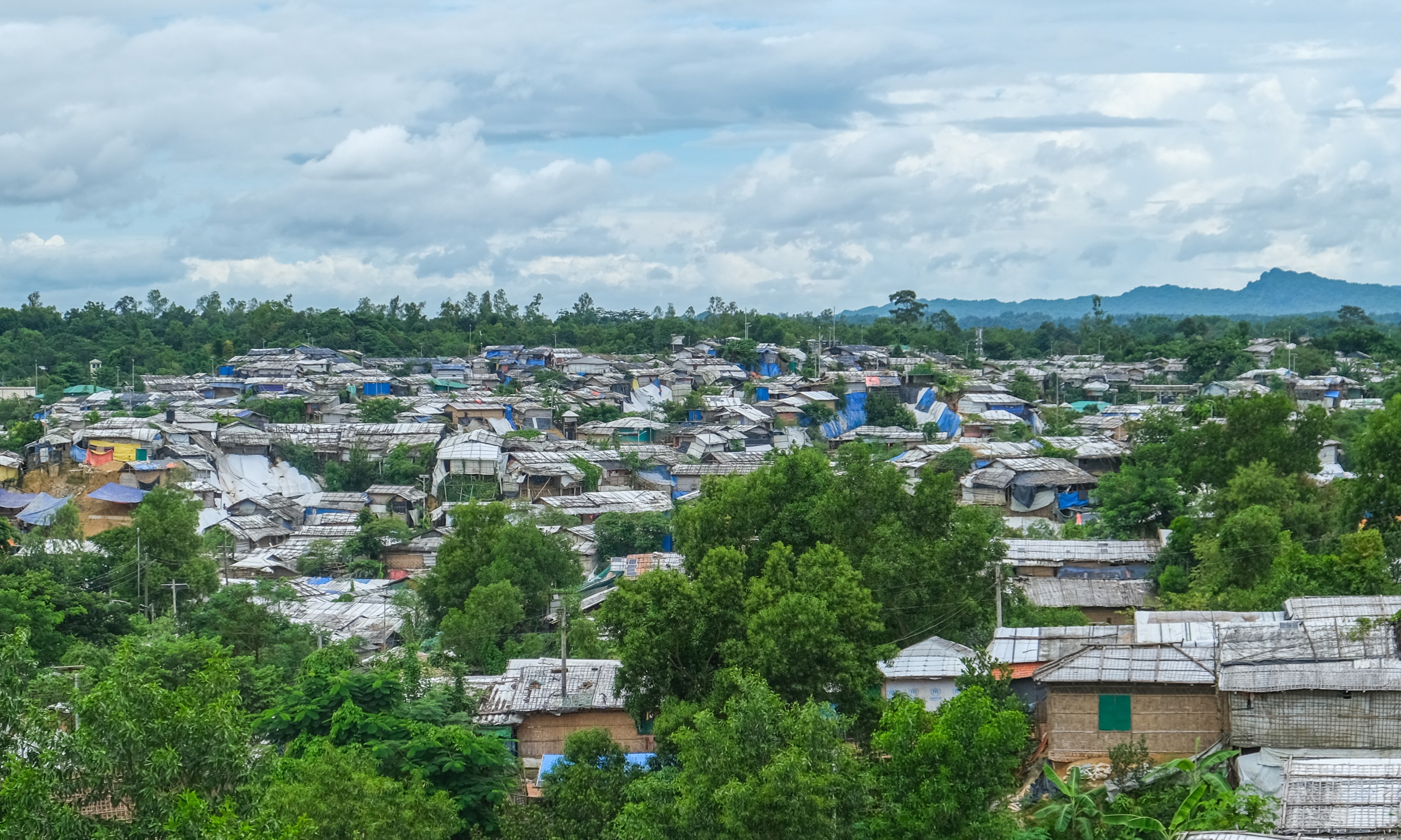
For nearly a decade, the international diplomatic response to the Rohingya crisis has largely revolved around humanitarian assistance and the prospect of repatriation from Bangladesh.
Both remain essential, but neither addresses the deeper causes of the Rohingya’s exile and political marginalisation. The Rohingya did not become refugees simply because the state temporarily lost control over territory. Their displacement was the product of decades of state policies and ethnic exclusion: the denial and erosion of citizenship rights, restrictions on freedom of movement, political disenfranchisement, dispossession of land, and repeated campaigns of violence. These ultimately culminated in the mass atrocities of 2017—the most devastating manifestation of a crisis that had begun long before.
Restoring what the Rohingya have lost will therefore require far more than moving people back across an international border. It will also require rebuilding their confidence that Myanmar can become a country in which they can live safely, exercise their rights, and have a stake in their own future.
Repatriation can only be an outcome of a political settlement; it cannot substitute for one. This distinction needs to be emphasised both in Bangladesh’s diplomacy and in Rohingya political advocacy. Having shouldered much of the humanitarian burden for years, Bangladesh cannot reasonably be expected to host such a large refugee population indefinitely.
International diplomacy must likewise recognise that repeated attempts at premature repatriation will not resolve the crisis. Any return must be voluntary and based on credible guarantees agreed upon with the refugees concerning their security, citizenship, political participation, property, freedom of movement, and other fundamental rights in Rakhine State.
Dhaka should therefore insist that any repatriation take place under internationally verified legal and physical protections, including guarantees of freedom of movement, property rights, legal rights, and other necessary safeguards. Most importantly, the international community must recognise that sustainable return will only become possible when the political causes that drove the Rohingya into exile have been addressed.
The Arakan Army creates a new diplomatic reality
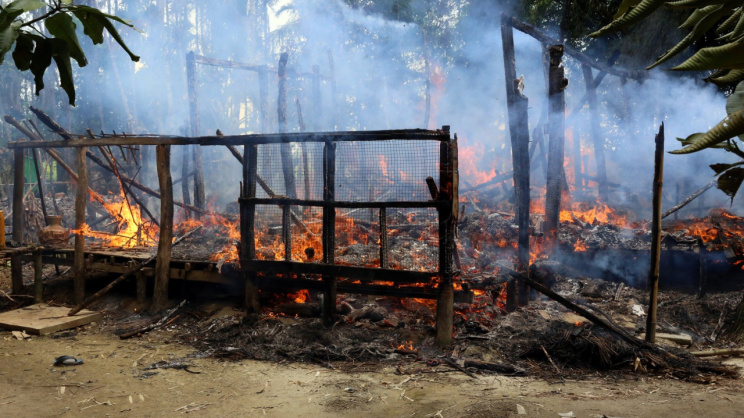
The rise of the Arakan Army has fundamentally reshaped Rakhine’s political landscape. Whatever political position one takes towards the movement, the reality is that the AA exercises de facto control over large parts of Rakhine State. That reality requires engagement, but engagement should not automatically confer political legitimacy or international recognition.
This distinction between engagement and recognition is crucial. Communication with the AA may be necessary to address humanitarian access, civilian protection, Rohingya property rights, freedom of movement, displacement, legal status, and other immediate concerns. Such engagement, however, need not amount to granting the group formal political or diplomatic standing in a way that prejudges Rakhine’s eventual political settlement.
Refusing to engage with non-state actors that exercise effective territorial control does not necessarily provide greater protection for civilians. At the same time, if the AA genuinely seeks a place within a future federal Myanmar, it must accept responsibility for everyone living in the territory under its control. A change in who holds power cannot be allowed to legitimise discrimination, persecution, or impunity against civilians, including the Rohingya. Nor should any authority operating outside civilian control be held to a lower standard in its treatment of them.
The same principle must apply regardless of who controls territory or exercises political or military authority—whether the military regime, the AA, or other opposition movements. All must be held to the same standards of accountability and international law. The Rohingya cannot be rescued from one form of insecurity only to be exposed to another. International engagement with Myanmar’s competing political and military actors must therefore be guided above all by the protection of civilians and the prevention of further violations and atrocities.
Accountability must extend to all perpetrators
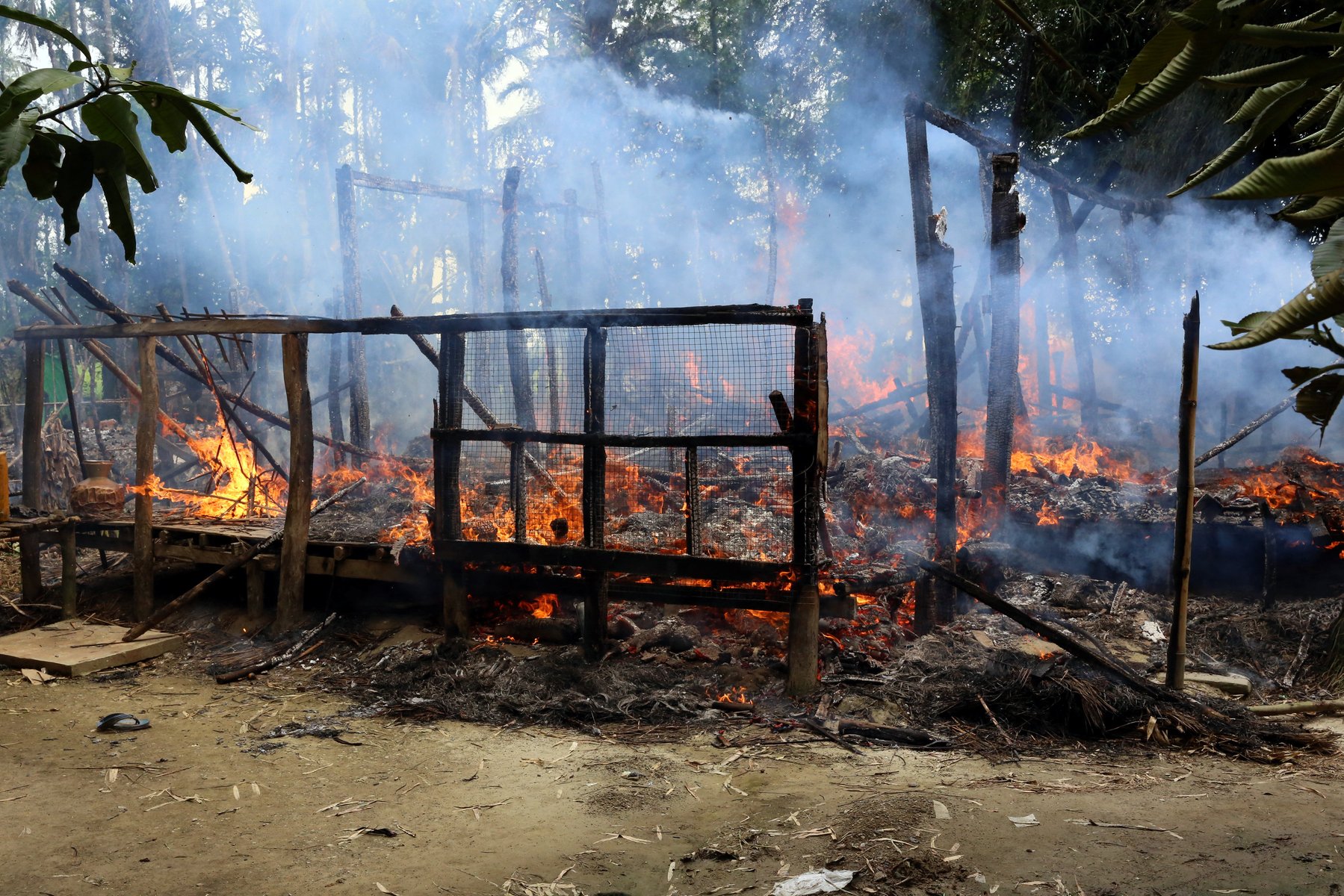
Accountability must be at the heart of any international response to Myanmar’s crisis. Volker Türk’s call for accountability speaks directly to one of the fundamental problems that has sustained the conflict for decades: perpetrators of serious violations have repeatedly been able to act with impunity.
The UN Security Council has the power to refer the situation in Myanmar to the International Criminal Court, potentially bringing crimes committed by the military, the AA, and other actors within its jurisdiction. Any international accountability process must address violations and atrocities committed against all affected communities rather than selectively focusing on particular perpetrators or victims. The military’s long record of systematic atrocities cannot be normalised. But neither should emerging centres of power be permitted to commit abuses that would be condemned if carried out by the military.
Any individual or entity responsible for violations of international humanitarian law must be held accountable under applicable international law. The same principle should inform international controls on the transfer of arms, ammunition, and dual-use items. States must ensure that such transfers do not facilitate or increase the risk of serious violations. These measures should be carefully designed to constrain the capacity to commit abuses without creating additional dangers for civilians.
Accountability is also about the political foundations of a future Myanmar. It sends a message about what kind of state will emerge from the present conflict. Any political settlement based on the assumption that territorial control or military victory automatically confers immunity would risk carrying Myanmar’s longstanding culture of impunity into a new political order.
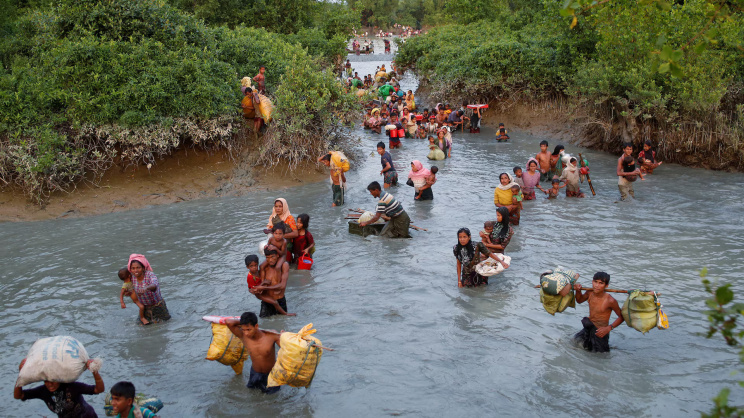
The question of land is equally fundamental to the future of the Rohingya. Sustainable return will be impossible without addressing what happened to the homes, villages, farmland, and other property they left behind. No amount of diplomatic rhetoric or humanitarian assistance can restore the Rohingya’s rights if the land from which they were expelled has been confiscated, occupied by others, or redistributed while they remain in exile.
Evidence of Rohingya land and property rights should therefore be documented and preserved as a matter of urgency, alongside the creation of a credible mechanism for restitution, restoration, or adequate compensation. Unlawful confiscation of land should not be allowed to create permanent rights simply because the original inhabitants were persecuted and forced to flee. Resolving these claims will undoubtedly present enormous legal and political challenges for future authorities and the international community, but the issue cannot be separated from any credible approach to repatriation and political settlement.
Citizenship must be at the centre of any political settlement
Citizenship is just as fundamental. There can be no sustainable return while the Rohingya remain stateless, politically disenfranchised, and vulnerable to renewed persecution. The denial and erosion of citizenship rights have been central to their systematic marginalisation. Any viable political settlement must therefore provide the Rohingya with a secure legal status that does more than simply permit them to reside in Myanmar or provide them with another form of documentation while leaving them permanently excluded from political life.
The precise legal framework will ultimately have to emerge from Myanmar’s political transition, but the underlying principle should not be negotiable. The Rohingya must have legal security, freedom of movement, property rights, access to public services, political participation, and effective protection against discrimination.
They cannot be expected to return to their homeland indefinitely as residents without an equal stake in its political future, while others continue to make the fundamental decisions that shape their lives.
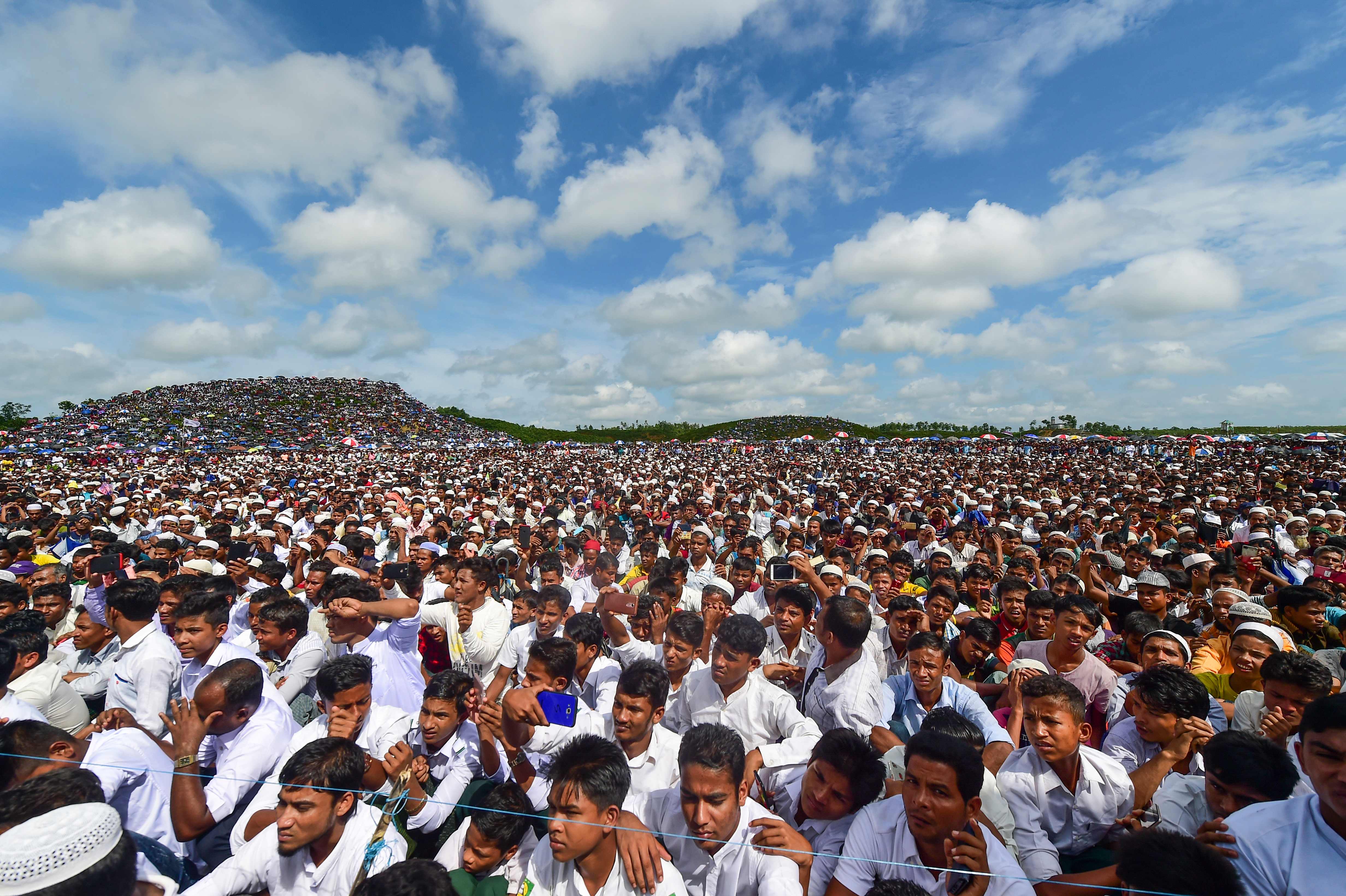
Federalism could provide a political opening
Myanmar’s fragmentation may also create an opportunity to imagine a fundamentally different political order. Decades of conflict have demonstrated the limitations of a highly centralised state in governing a country with such profound ethnic, political, and regional diversity. A future Myanmar should therefore move towards a decentralised federal system in which power is shared among federal, state, and local institutions, supported by constitutional guarantees that protect minorities and prevent the concentration of authority in any single institution or community.
Federalism alone, however, will not resolve these problems. If it merely redistributes power among competing political and armed elites while historically marginalised communities remain excluded and oppressed, it will amount not to a transformation of the political system but simply to a change in who manages it.
The Rohingya must therefore participate genuinely and meaningfully in negotiations over both the future of Rakhine State and the broader political future of Myanmar. They should neither be presented with a political arrangement written by others nor have the future of their homeland determined for them by Myanmar’s competing authorities or the international community. Rohingya representatives must have a meaningful role in negotiations concerning citizenship, land, security, governance, political representation, and return.
That representation need not—and should not—be monopolised by a single organisation or political entity. It should instead reflect a credible range of Rohingya voices, including representatives from grassroots communities, civil society, intellectuals, women, youth, and other constituencies. What is required is not simply consultation after decisions have effectively been made, but genuine participation in making those decisions. If the future of the Rohingya is determined without the Rohingya themselves, the political process will be fundamentally flawed from the outset.
The role of ASEAN and other powers
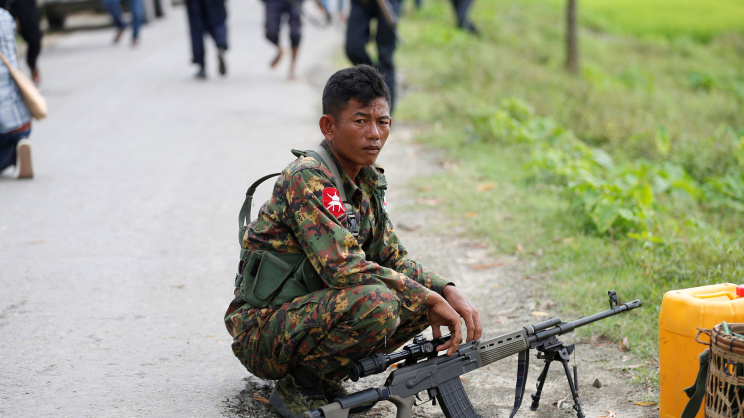
ASEAN must likewise reconsider the limitations of its traditional approach to Myanmar. The conflict can no longer be treated solely as the internal affair of a member state. Its consequences extend across borders through refugee displacement, human trafficking, transnational crime, environmental pressures, and wider regional instability.
ASEAN therefore cannot reduce its policy choices to either recognising emerging authorities or diplomatically isolating Myanmar. Neither approach, on its own, adequately reflects the increasingly fragmented political reality on the ground.
What is needed instead is structured and proactive engagement with the actors capable of influencing the security and political future of civilians. This includes the military, opposition and resistance forces, ethnic armed organisations, authorities exercising effective control over parts of Rakhine State and elsewhere, and, crucially, Rohingya representatives. Engagement does not have to mean political recognition; it can instead provide a means of securing humanitarian access, protecting civilians, addressing violations, and creating space for a broader political process.
China and India will also be crucial to any such approach. Both have significant strategic, economic, infrastructure, and border security interests in Myanmar, which have shaped their policies differently from those of many Western states. Any effective international strategy will therefore have to take these regional realities seriously while maintaining civilian protection and fundamental rights as core principles of engagement.
A more inclusive and accountable political order in Myanmar—one that expands political rights, strengthens transparency, and provides meaningful protections for minorities—would not only serve the interests of Myanmar’s people. It would also contribute to the stability and security of Bangladesh, India, China, other neighbouring states, and the wider region.
A realistic path forward for the Rohingya
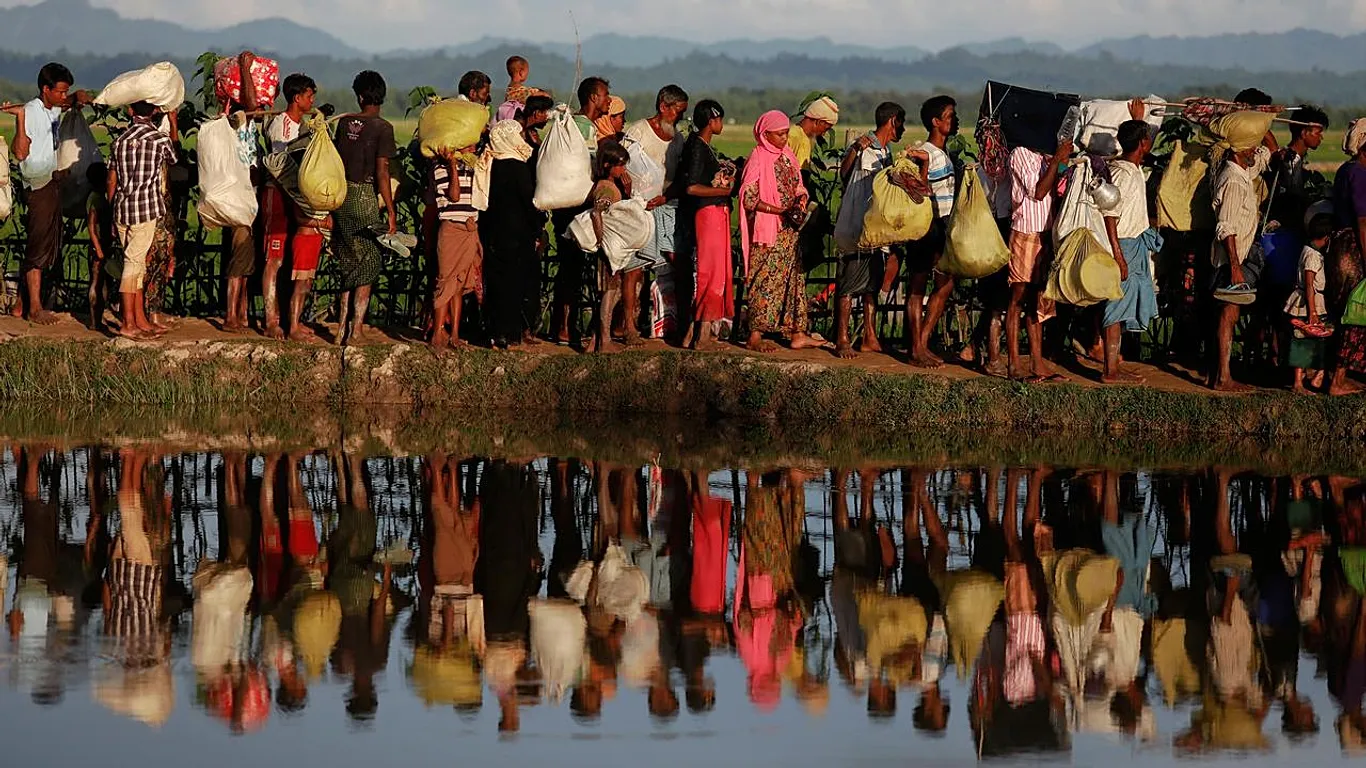
A realistic political strategy for the Rohingya should proceed in stages, beginning with protection. Humanitarian assistance for refugees must continue, safeguards against forced return must remain in place, humanitarian access must be secured, and evidence of atrocities, displacement, and property claims must be systematically preserved. Political transition cannot come at the expense of those who remain most vulnerable to the conflict.
The second priority must be the protection of rights within Rakhine State. A credible and independent mechanism should be established to monitor human rights violations, land confiscation, displacement, and threats to civilians. Such monitoring will be essential not only for immediate protection but also for any future process of accountability, restitution, and return.
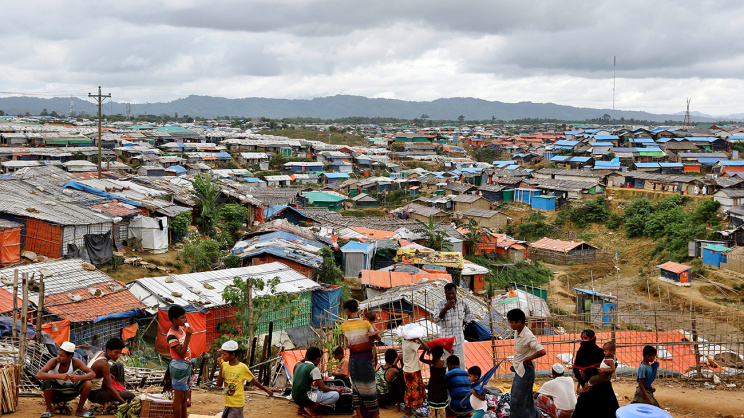
The third priority is political inclusion. Rohingya representatives must participate meaningfully in any process that determines their citizenship, land and property rights, security, political representation, governance, and eventual return. Decisions about the Rohingya cannot continue to be negotiated primarily between governments, armed actors, and international institutions while the people most affected remain outside the room.
The fourth stage is voluntary return. Repatriation should begin only when credible safeguards are in place and can be independently verified. Reaching that point may take years, and there is nothing inherently wrong with that. A gradual return grounded in rights and security is preferable to a hurried process that risks producing another cycle of persecution and displacement. International diplomacy should not mistake speed for progress. What matters is not how quickly people can be moved across a border, but whether the conditions exist for them to remain safely and permanently once they return.
The central question, therefore, is not simply whether the Rohingya will return to Myanmar. It is under what conditions they will return. The answer will determine not only their future but also what kind of political order eventually emerges in Rakhine State and Myanmar as a whole.
If the Rohingya return to a country where they remain without citizenship, land, security, dignity, political representation, and equal protection under the law, repatriation will do little more than relocate their displacement. It may simply recreate, on an even larger scale, the conditions that forced them to flee in the first place.
But if they return as equal citizens of a just federal state, with enforceable legal rights, the ability to reclaim or seek restitution for lost property, freedom of movement, security, and meaningful political representation, their return could signify something much larger. It could become evidence that Myanmar itself is capable of transformation, rather than marking another chapter in its long history of exclusion.
Volker Türk’s warning should be understood in this broader context. The immediate imperative is to prevent further atrocities, but the international response cannot end there. It must also help create the political and legal conditions that make another cycle of persecution less likely.
A simple principle should guide international engagement with Myanmar: civilians must be protected regardless of where they live, who controls the territory in which they live, or which actor is responsible for violating their rights.
Mohammed Siraj is a Rohingya multidisciplinary researcher, human rights advocate, aspiring legal scholar, and Founder and President of the International Institute for Law and Politics (IILP).
Send your articles for Slow Reads to slowreads@thedailystar.net. Check out our submission guidelines for details.
Bangladesh between India and China: The dilemma of defence diversification

What Bangladesh should ask before joining the Makkah Pact

Nepal’s difficult passage: Political change meets ecological crisis
BRICS at 20: Why the New Delhi Summit matters to the Global South
From Balfour to sanctions: Why the UK’s ban on Israeli settlement trade matters

Ganges Water Treaty: A new bargain or a new dispute?
Bangladesh and the Mecca Pact: The national security questions we are missing
From Chinese fighter jets to the Mecca Pact: Bangladesh’s strategic future?

Is Bangladesh the next base for Chinese scam networks?