


Can Tk 9 lakh settlement end the Baridhara crash death case?
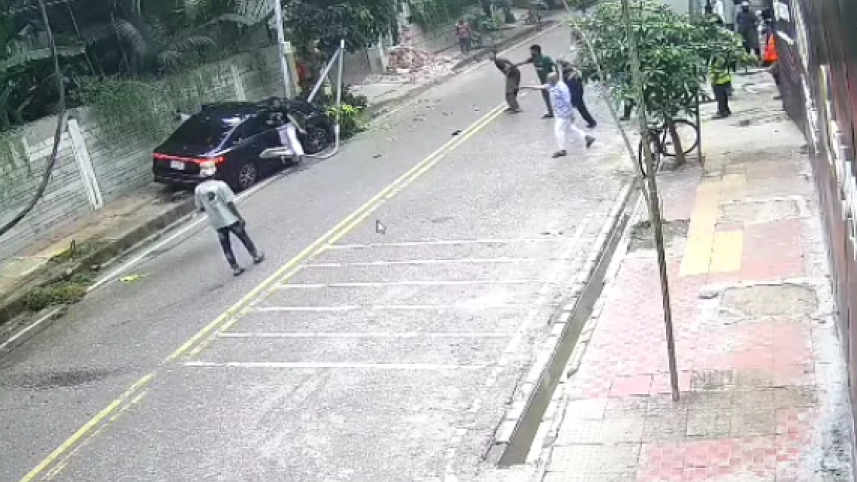
A settlement agreement worth Tk 9 lakh has emerged in connection with the death of construction worker Mehedi Hasan, 24, who was run over by a vehicle in Dhaka’s Baridhara Diplomatic Zone on September 22.
Although a settlement has been reached with the victim’s family, questions remain about its potential implications for the criminal case.

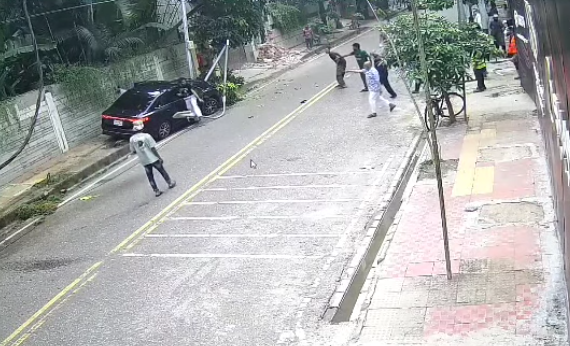
Following the incident, a 17-year-old boy was produced before a court, which ordered that he be sent to a child development centre. However, he was not named as the driver in the case.
According to the police forwarding report, CCTV footage showed the boy getting out of the driver’s seat after the accident. However, the settlement agreement obtained by The Daily Star states that Akash Marak, 44, was driving the vehicle, while the boy was sitting in the front passenger seat.
The settlement raises questions about whether a financial agreement with the victim’s family is sufficient to resolve the criminal case. What happens if the family wants to withdraw the case, and what legal effect does such a settlement have when the alleged offence is non-compoundable?
Not all offences are compoundable
Professor Dr Muhammad Mahbubur Rahman of the Department of Law at the University of Dhaka explained to The Daily Star the difference between the legal provisions for settling criminal offences and their practical application.
He said the law recognises some offences as compoundable. In such cases, a settlement can be reached in accordance with the procedures prescribed by law. If the complainant and the accused reach a settlement during the proceedings of certain cases, such as those involving simple hurt, the matter can be formally disposed of through the court.
However, he said, there is no such scope in serious offences such as murder.
According to him, even if a settlement agreement is reached with the relatives of the deceased in exchange for money for funeral expenses, assistance or any other reason, it has no direct legal basis.
However, Mahbubur Rahman’s remarks also highlight another aspect of the matter. Although there is no legal scope for settlement, informal compromises can take place in serious cases in practice.
He said that after persuading the victim’s family through money or inducements, important witnesses in the case may also be influenced. They may later refrain from testifying in court, give false testimony or turn hostile. This can weaken the evidence in the case and create a situation in which the accused may be acquitted.
He viewed financial transactions made in the name of a settlement in a criminal case as a separate matter.
According to him, such financial transactions between the two parties are private and informal. They cannot be regarded as a direct legal mechanism for exemption from criminal liability.
Tk 9 lakh settlement in the Baridhara crash case
Construction worker Mehedi Hasan was killed in the September 22 incident in Baridhara Diplomatic Zone. His elder brother, Muktadir Islam, filed a case with Gulshan Police Station on September 23.
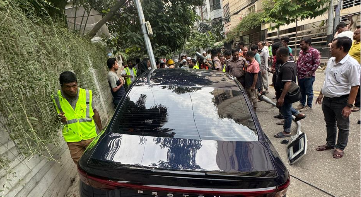
According to police, local people detained a boy who was in the vehicle and handed him over to the police. He was later produced before a court and, on the court’s order, sent to a child development centre.
The settlement agreement obtained by The Daily Star mentions a payment of Tk 9 lakh. Of this, Tk 1 lakh was to be paid for funeral and related expenses, while Tk 8 lakh was to be given for the future of the deceased’s elderly parents.
 For all latest news, follow The Daily Star's Google News channel.
 According to the FIR, the offence was charged under Sections 98 and 105 of the Road Transport Act, 2018. Section 105 deals with death or grievous injury caused by a motor vehicle accident and refers to the relevant provisions under Chapter XV, titled “Offences Affecting the Human Body”, of the Penal Code, 1860. The Code of Criminal Procedure, 1898, specifically refers to compoundable offences. However, offences under Sections 98 and 105 of the Road Transport Act, 2018, are non-compoundable in nature, meaning they cannot be legally settled between the parties to end the criminal case.
Supreme Court lawyer Advocate Mahbubur Rahman told The Daily Star, “Any criminal case is non-compoundable. And since this is a murder case, there is no scope for compromise.”
Asked whether the victim’s family could withdraw the case, he said, “No.”
Asked whether the payment of Tk 9 lakh could provide exemption from criminal liability, he replied, “No, there is no scope for that.”
He further said, “A criminal offence is an offence against the state; it is not just an offence against an individual.”
No scope for settlement without court approval
Barrister Jyotirmoy Barua told The Daily Star that he had heard the case was filed under the road transport law. However, whether an offence is compoundable or non-compoundable depends on the relevant section.
He said that as the sections mentioned in the FIR in this case are non-compoundable, the court is not obliged to accept such a settlement.
According to him, if an offence is non-compoundable, a settlement cannot be made without the approval of a magistrate or judge. Even if such a settlement is reached, the court is not bound to accept it.
He also said that if the settlement is reached through intimidation or coercion, it cannot be considered a genuine settlement.
Although the victim’s family files the FIR in a criminal case, the state is the complainant, said Jyotirmoy Barua, adding that the family cannot withdraw the case simply by reaching an agreement among themselves.
He described the settlement agreement as “a private settlement document”. “No one can be exempted from criminal liability through it,” he said.
The case has not yet been judicially disposed of.
There is also no scope to reach a definitive conclusion about the boy’s role. The police forwarding report says he was seen getting out of the driver’s seat, but it has not been established whether he was driving the vehicle at the time of the accident. The settlement agreement describes him as a passenger.
The legal effect of the settlement in relation to the non-compoundable sections mentioned in the FIR is now a matter for the court to consider.
What does the law say about punishment?
The provisions for punishment in cases involving death or damage to property caused by accidents are set out in Chapter 11, titled “Offences, Trial and Punishment”, of the Road Transport Act, 2018.
Under one provision of the law, if an accident causes loss of life or property because of driving at a speed exceeding the prescribed limit or reckless and dangerous overtaking, the punishment is imprisonment for up to three years, a fine of up to Tk 3 lakh, or both. The court may also order that all or part of the fine be paid to the injured person.
If the accident results in grievous injury or death, the offence is to be treated as an offence under the relevant provisions of the Penal Code.
At the same time, if grievous injury or death is caused by reckless or negligent driving of a motor vehicle, the law provides for imprisonment of up to five years, a fine of up to Tk 5 lakh, or both.
However, these are penalties prescribed by law and not a sentence imposed in this case.
Note: The Daily Star is withholding the name and other identifying details of the minor involved in this case. The reason is the legal protection provided to minors under Bangladesh’s Children Act, 2013. The Act addresses the issue specifically from the perspective of the media. Section 81(1) says that, in relation to a pending case or legal proceeding, no report, photograph or information concerning a child may be published through print or electronic media or the internet if it is contrary to the child’s interests and could directly or indirectly identify the child. Our decision to withhold the minor’s identity is therefore not intended to withhold relevant information from readers. It is a step taken to comply with the legal protections afforded to minors.
Comments