The young radicals who challenged 19th-century Bengal

In conversation with Rosinka Chaudhuri, Professor at Centre for Studies in Social Sciences, Calcutta and author of the book India’s First Radicals: Young Bengal and the British Empire, published by Penguin Random House India Pvt. Ltd. (2025).
The Daily Star (TDS): What has been your experience in conducting extensive research on the well-known, intellectually rebellious, and activist group Young Bengal, especially when revisiting their legacy nearly 150 years later? How has your exploration of new and rare archives reshaped our understanding of this group—often seen as radical yet ultimately less impactful, particularly given the perception that some members later either embraced Christianity or returned to Hinduism, revising their earlier radical positions?
Rosinka Chaudhuri (RC): Nearly 150 years later, I am surprised at the resonances with current developments in society and politics across the world. The issues Young Bengal fought for cannot be taken for granted, as rights are withdrawn and activists are visited by sedition laws. Their battles find an echo in our world as our right to free speech and free social and political activity are still issues that need to be fought for again today in India.
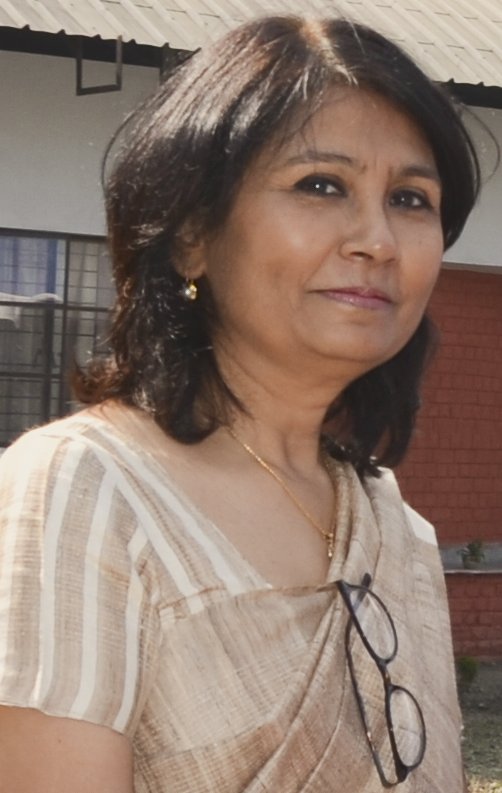
Collecting fresh material on this period of history has been difficult. As I said in my Acknowledgments, the material archive is in the British Library, London, which is not accessible (in financial and practical terms) to most scholars from the subcontinent. My research was done over the course of a decade through various applications for fellowships or visiting positions that allowed me to access the microfilms I needed to see.
The new material unearthed has shed new light on this group, allowing me to read their contributions, sometimes in first person and mostly in news reports, afresh. I concentrated on the years 1831-1843, so their later conversions or conservatism, while mentioned, did not impact my narrative of what happened in Calcutta in the year 1843.
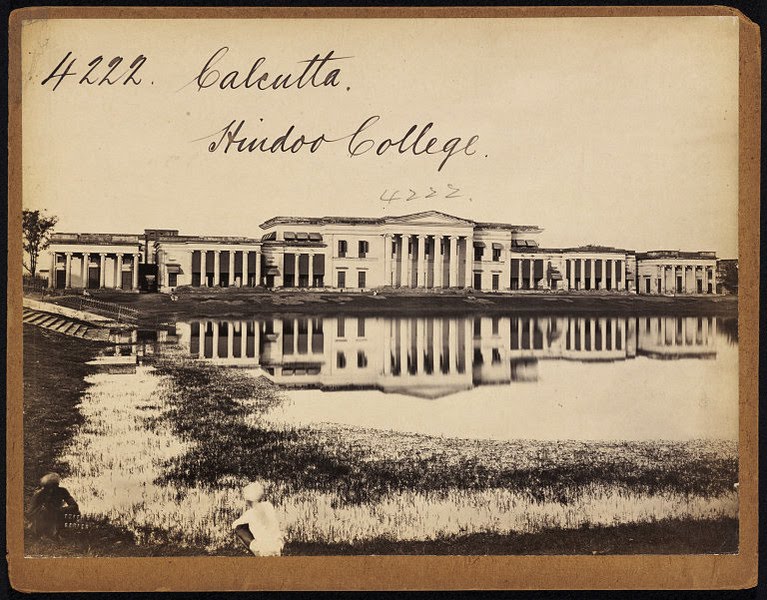
TDS: How was it possible for such an influential group to emerge so quickly after the establishment of Hindu College in Calcutta? How did the College enable them to engage with European Enlightenment ideas within the framework of local thought, which had largely taken the form of a backwards-looking response to the encounter with the West?
RC: It is really quite astonishing if we think of how such a group could emerge so magically within a decade of the establishment of the Hindu College. It points to the existence of certain radical bent of thought in the cultural sphere of Bengal, most evidenced in Rammohun Roy’s Tuhfat (1804) and in the group that coalesced around him in 1815 in Calcutta to form the Atmiya Sabha. No group such as Young Bengal can emerge without forbears and it is a pity that we don’t know enough yet about the intellectual formation that made a group like Young Bengal possible by 1831.
Yes, they read extensively – both in English political thought (Ricardo, Bacon, Locke, Hobbes, Milton) and the Scottish Enlightenment (Hume, Stewart, Reid, Brown) and of course in Romantic Poetry (Byron, Shelley, Burns) – as well as Indian texts rediscovered and reprinted by Orientalist scholars like Jones, Colebrooke, and Wilson. It should be noted that they read as much, if not more, outside their College syllabus than within it, with books travelling surprisingly speedily by ship within a year of publication in the West to Calcutta.
It should be also noted that no amount of College teaching would enable any group to think radically and think afresh of their own society and politics unless there was a larger cultural churning that remains invisible to our eyes from which their ideas also sprang.
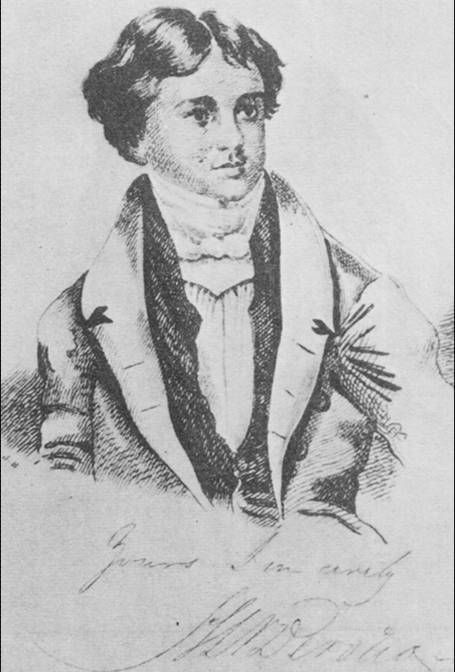
TDS: What role did Henry Louis Vivian Derozio play in shaping this radical intellectual group that championed liberty, reason, and reform against both conservative local religious authority and colonial dominance? Could you also briefly highlight the distinctive individual contributions made by key members of the group?
RC: Henry Derozio played, as everyone knows, a very large part in shaping this group. He was their teacher in the senior classes, but we must remember that he himself, born in 1809 and appointed at the Hindu College in 1826, was just 18 years old at the time, while they were a few years younger, being 15/16 years of age when they were in college together till he died in 1831. So, theirs was a friendship without much age difference, explaining the stories of conviviality and sociability around their activities, all of which was reported on assiduously in the press. Liberty, reason, and reform were attitudes they would have imbibed not only from him, but from others in the city and from their reading, but he certainly is acknowledged as having shaped their minds at a young age.
TDS: How did the Young Bengal movement’s position compare to that of Rammohan Roy—the first major Indian reformer and the ‘Father of Modern India’—in terms of the social, economic, political, and cultural debates of the time?
RC: Please read the book, specifically the chapter on Radhanath Sikdar, where many pages are devoted to the exact difference as I see it between this group and Rammohun Roy. I have also written about this in the forthcoming Cambridge Companion to Rammohun Roy.
TDS: What means of communication did the Young Bengal group use to disseminate their ideas and pursue their goals, given that they did not establish any formal political, religious, or literary platforms?
RC: They did indeed establish many formal political and literary platforms, including the first political party in India. Once again, please read the book. What they did not do, however, was establish any religious platform, which was their main difference with Rammohun Roy, in that they eschewed religious affairs entirely, concentrating only on social and civil matters, as they said themselves, which is why I have coined the term ‘a religous modernity’ to understand the sort of public sphere they created.
TDS: In your study of the evolution of Indian liberalism, could you share how the Young Bengal group approached the issue of caste—the foremost social marker in Indian society—especially given that upper-caste dominance in Bengal remained largely unchallenged, unlike the developments in South India? Also, is there any indication that the group anticipated the Hindu-Muslim rivalry that would later become a serious issue toward the end of the 19th century, although it was not a central concern during their time?
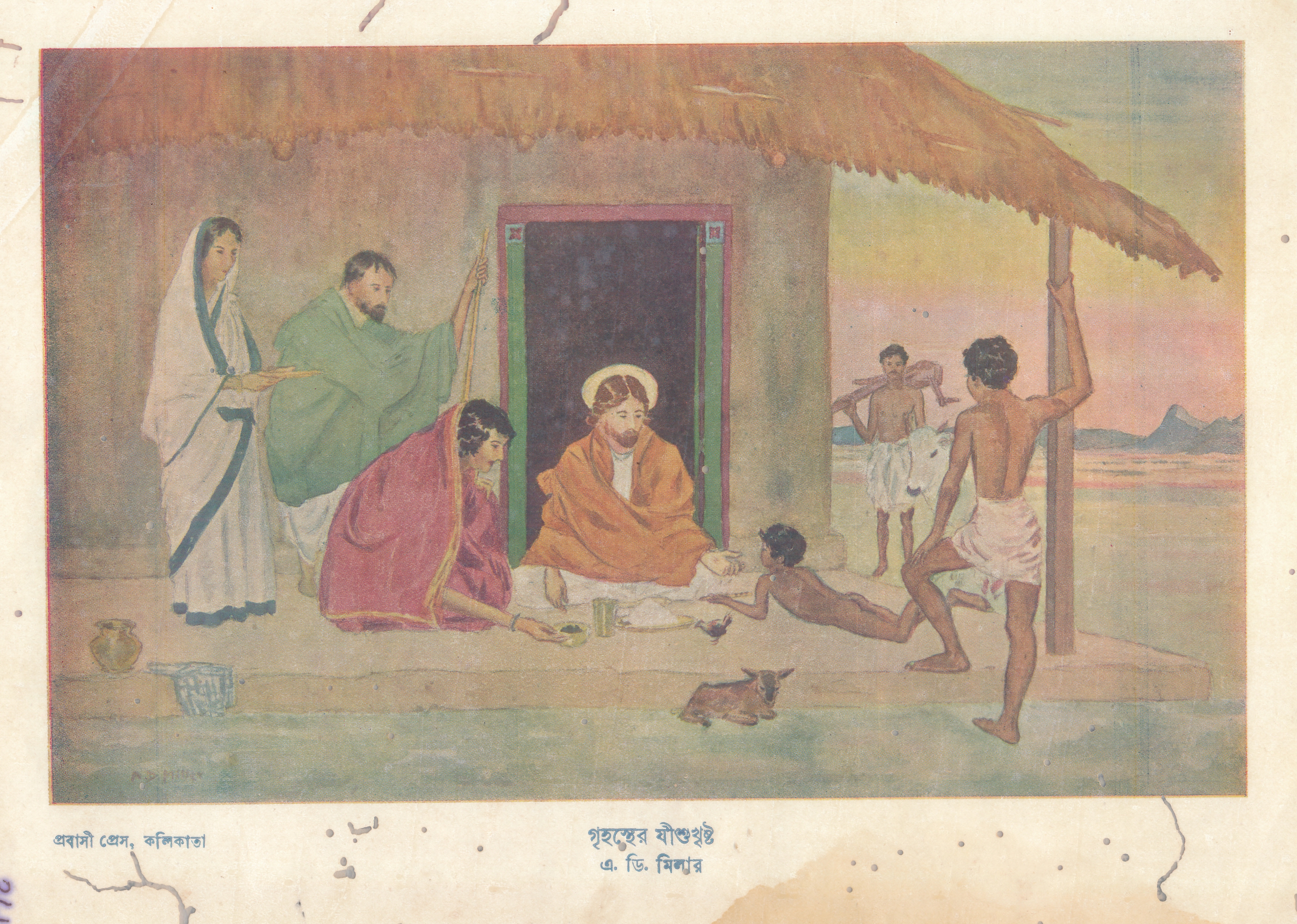
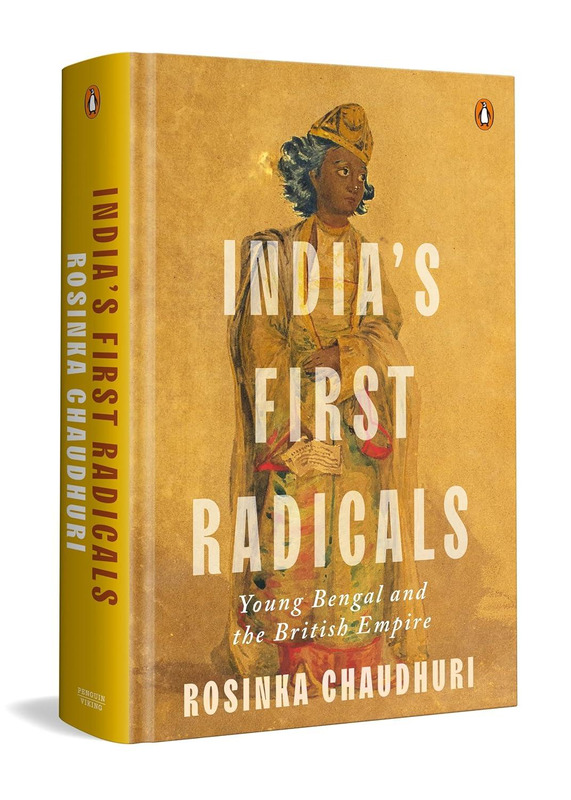
RC: Their anti-caste and anti-Brahminical stance has been repeatedly outlined in the book. Specifically see the chapter on Liberty. Upper-caste dominance in India was first challenged by Young Bengal from 1831 onward in writings, speeches and their own actions, presaging the arguments for individual liberty made by John Stuart Mill. Developments in South India came a century later, and since the nature of politics had changed by then to accommodate the masses, these were also of a different and more effective kind. There was no Hindu-Muslim rivalry in their time, and they were culturally formed by the Muslim inheritance, with a good knowledge of Persian, and wearing Persian dress to College (see cover) among other things.
TDS: Could you share some of the pioneering ideas first raised by the Young Bengal group that were later taken forward by thinkers like Gandhi, Tagore, or Nehru, both in social and political spheres? Also, what do you see as the limitations in the group’s ideas or actions that prevented them from achieving more substantial or lasting success?
All their ideas were ideas championed later by Gandhi, Tagore and Nehru later. Pioneering ideas:
1. Secularism in the form of ‘areligious modernity’.
2. Equality irrespective of caste, creed, race or class.
3. Education and equality for women in public and private spheres.
4. Freedom of the press and freedom of speech for all.
5. Politically, they believed in Bentham and franchise for all, and eventually in representative government.
Limitations: We must not judge the actions of this group by looking back at them from the current day or in light of later developments, but rather, as I have argued, we need to see them in relation to what went before them. They belonged to an age before popular politics, before nationalism, even before liberalism, just after the Nawabi era of absolutism, unquestioned patriarchy, and religious orthodoxy, all of which they challenged. They achieved much, changing the grammar of modern Indian thought forever by their deeds and words, fighting against gender and caste discrimination and for freedom of speech and equality before the law. Their limitations were the same as any political or social leader’s limitations, there is no group or individual in history without limitations.
The interview was taken by Priyam Paul.
Send your articles for Slow Reads to slowreads@thedailystar.net. Check out our submission guidelines for details.

More men are cooking. But is patriarchy leaving the kitchen?
Everyday secularism and the Bangladesh we rarely talk about
Reading Sarat Chandra at 150, with empathy
Who really owned Britain’s royal jewels?

The 25,000-year history of betel nut chewing
The world map we know is distorted. Why does it matter?

Bengal and the coming of Islam: A story of soil and spirit
Xuanzang’s travels to Bengal and beyond : The man, the pilgrim and the Monkey King
Professor Anisur Rahman: The economist who put people at the centre