More men are cooking. But is patriarchy leaving the kitchen?

Cooking has been women's work for much of recorded history, and for most of that time, it was barely counted as work at all. Women turned raw ingredients into meals and carried recipes across generations, an oral inheritance passed from mother to daughter that kept entire cuisines alive without ever being written down.
When cooking was eventually committed to paper, women played a central role there too. Hannah Woolley published practical household guides for the English middle class in the seventeenth century. In the late nineteenth century, Fannie Farmer introduced standardised level measurements, bringing to the home kitchen a degree of precision rarely acknowledged as expertise. Households ran on this accumulated knowledge, even as the labour and skill behind it went largely unrecognised.
Yet men have always cooked, particularly when cooking came with a title, status or pay.
In the nineteenth century, Auguste Escoffier organised professional kitchens along military lines, creating a ranked brigade system that helped turn the restaurant kitchen into male territory and kept women largely outside high-end professional cooking for generations. In the Mughal courts, khansamas were men. They ran the bawarchi khanas, guarded recipes for biryanishome and kebabs made with expensive imported spices, and could wield considerable influence in the process. In Bengal, large community feasts were traditionally cooked by upper-caste Brahmin men, known as bamon thakurs, as caste rules linked the preparation of food to notions of ritual purity.
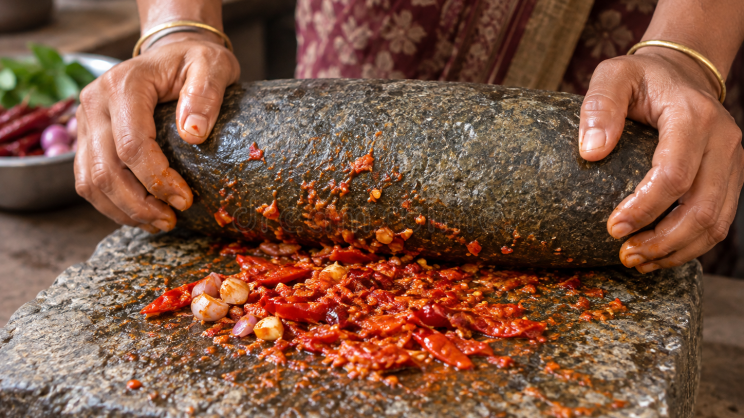
The distinction was never really about skill. The same activity could change gender depending on the conditions attached to it. When cooking was paid, ranked, prestigious or public, it could become a profession, and men did it. When it was unpaid, repetitive, private and necessary, it became a woman's duty.
The two histories therefore sit alongside each other without necessarily contradicting one another. What separates them is not simply who cooks, but under what circumstances and with what recognition: cooking done to be seen, appreciated or rewarded, as opposed to cooking done because somebody has to put food on the table.
Which brings us to the men now entering the kitchens of urban Dhaka.
On a Dhaka subreddit a few months ago, participants agreed, almost without dissent, that a millennial urban man cooking for himself or his family is no longer remarkable. Fardeen, who runs the recipe channel Banglar Rannaghor, says his male viewership has climbed steadily.
COVID-19 accelerated this shift rather than creating it. A joint study by researchers at IRRI, BRRI and BAU found that men's participation in unpaid household work in Bangladesh increased significantly during the pandemic. With restaurants shut and families confined to their homes, cooking became a necessity. But it also became social.
Dalgona coffee turned into a global online challenge. YouTube made unfamiliar recipes and techniques instantly accessible. Social media provided an audience for the results. The kitchen could suddenly be a place to experiment, learn a new skill and display it. Households bought air fryers, grinders and mixers and, having invested in them, continued using them after lockdowns ended.
Other pressures had already been pushing men towards the kitchen. In many millennial households, both partners work full-time, making a rigid division of domestic labour increasingly difficult to sustain. Men who move away from home for university or work have no household division of labour to fall back on: they either learn to cook or buy every meal. Eating out has become more expensive. Younger men may also pay closer attention to what they eat than their fathers did, and cooking at home offers greater control over ingredients, portions and nutrition.
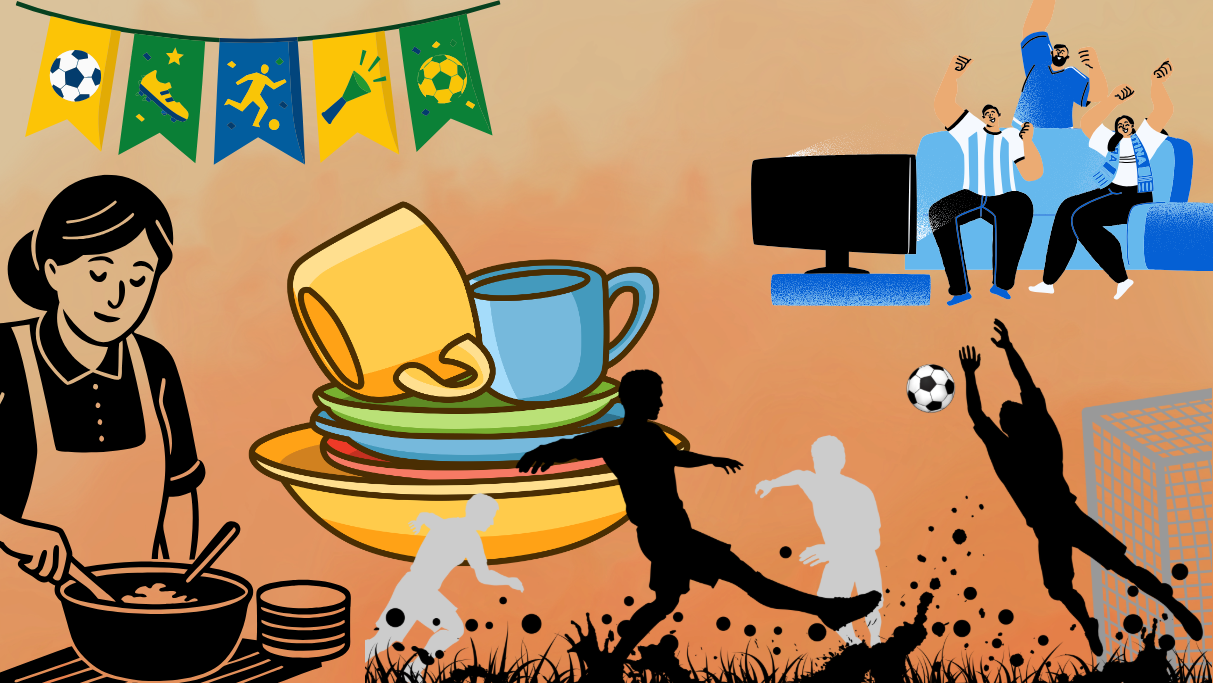
None of these changes necessarily amounts to a fundamental shift in beliefs about whose responsibility cooking is. Rather, changing circumstances have made cooking unavoidable, practical or attractive for men who might otherwise never have entered the kitchen.
So, more men are cooking than before. But does that mean patriarchy is disappearing from the kitchen?
Dr Tania Haque, a professor in the Department of Women and Gender Studies at the University of Dhaka, locates the problem not simply with individual men, but within a wider social system.
"This is not men's fault," she says. "It is that we accept patriarchy and we nurture it. Women themselves believe this is their work, so it is not women's fault either. The fault is a matter of the system."
That system was established long before the present generation of men began cooking. Women's entry into paid employment did not bring with it an equivalent redistribution of unpaid labour at home.
"The labour market opened for women long ago, but it opened while household work stayed allocated to women. We go out to earn, right? Then we come back home, where the household work is still largely left to women."
"The labour market opened for women long ago, but it opened while household work stayed allocated to women. We go out to earn, right? Then we come back home, where the household work is still largely left to women."
Until that division changes, Haque argues, "women will suffer time poverty, they will suffer economic poverty, they will remain unproductive workers."
When it comes specifically to the kitchen, she is equally direct: "Entering the kitchen is a hard thing. Men enter it for particular tasks."
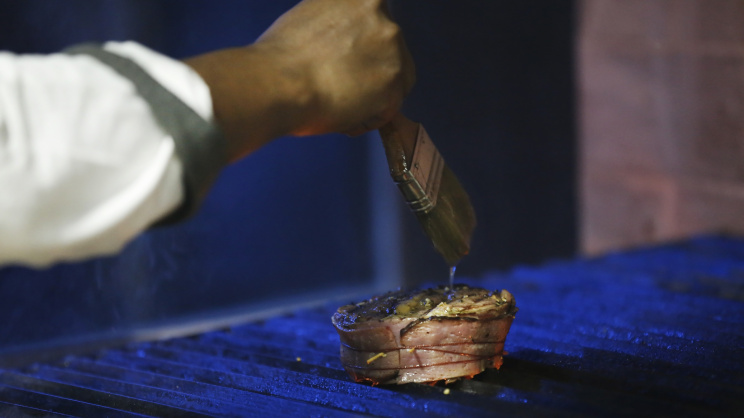
Those tasks are familiar enough: a barbecue with friends on a winter evening, an iftar spread at the office during Ramadan, or the heavy meat dishes prepared after Eid al-Adha. Men who cook little else throughout the year may take on these meals enthusiastically and receive considerable appreciation for doing so.
That distinction matters. The question is not simply whether men are entering the kitchen. It is what they do once they are there, how often they do it, and whether their participation redistributes the repetitive, largely invisible labour required to feed a household every day.
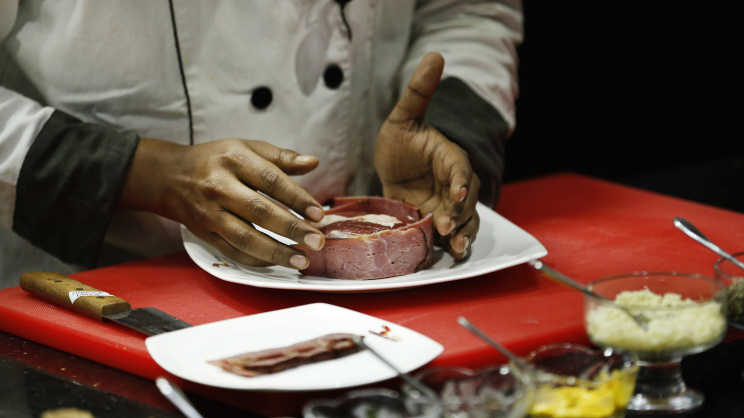
Those occasions have three things in common. They are rare enough to feel like events. They are visible, so effort turns into recognition. And they usually end with a dish that can be attached to the man who made it. A good tehari becomes his tehari. The curry cooked hundreds of times a year belongs to nobody. This kind of cooking has an audience, much like a performance does, and the audience is part of what makes it rewarding.
Nadia, a 26-year-old professional, describes a different kind of cooking. "My husband tries to help me in the kitchen. He prepares breakfast so I can make time to get ready for the office. But it is always my responsibility to plan what is to be cooked."
That planning rarely appears in anybody's account of who does the cooking. "I spend my entire weekdays at a nine-to-five office. Just after I get out of the office, I have to plan what to cook. This planning part, after a whole day at the office, is the toughest."
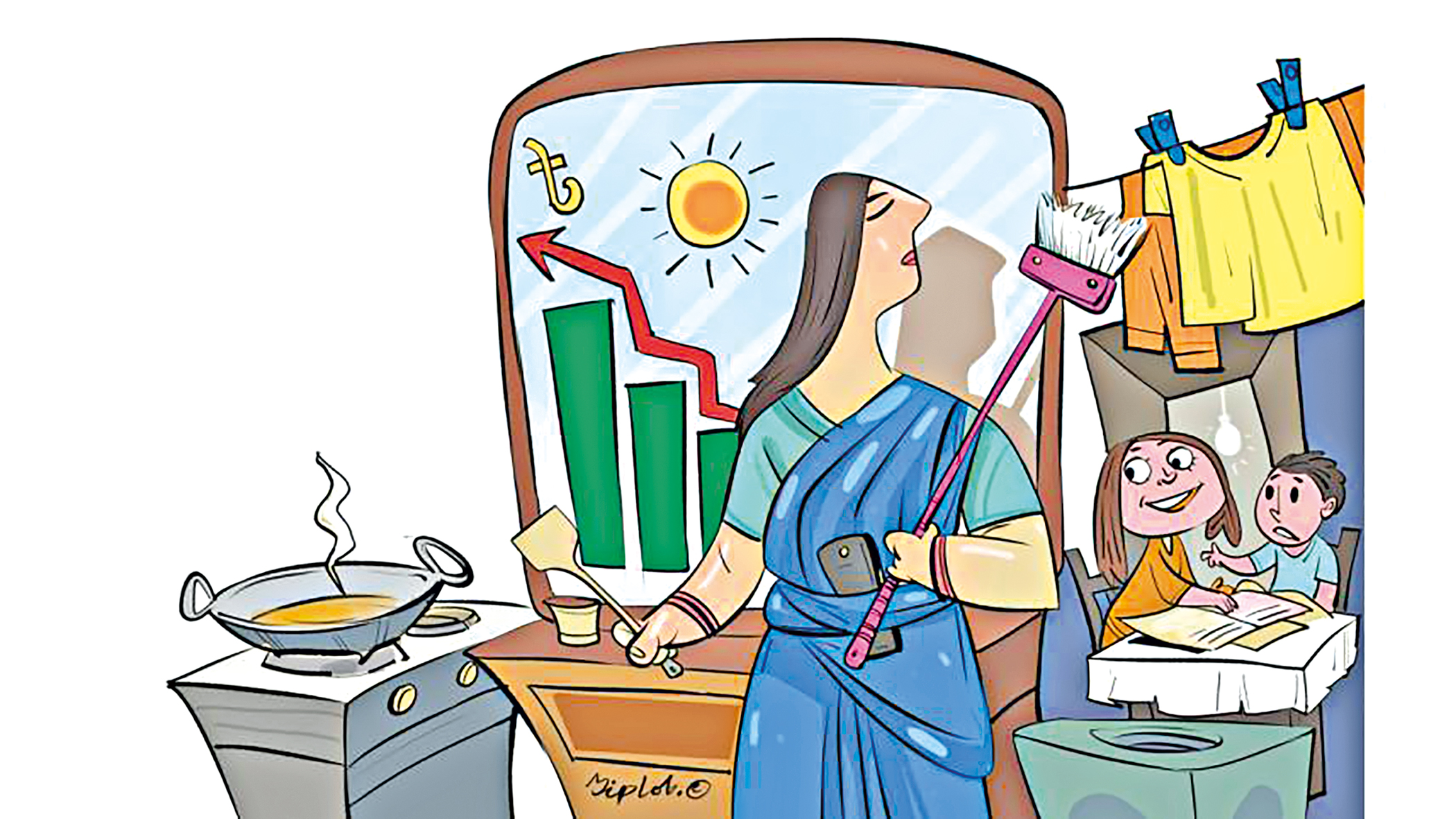
And planning dinner does not necessarily mean planning a single meal. "My father-in-law has been a diabetes patient for a long time. He prefers eating roti, while others prefer rice for dinner."
Her husband, Sifat, is clear about his own contribution. "I try to help my wife with cooking. I help her chop onions and cut vegetables. I also try to cook a special dinner at the weekend or any gathering with friends and family." Then comes the detail that captures the difference: "My cousins are really big fans of my beef tehari."
The two are describing different forms of work under the same word. Sifat largely does execution. Chopping onions has a beginning and an end. The tehari comes out of the pot, gets eaten and, if it is good, gets praised. Nadia does much of the management: deciding what the household will eat, keeping track of what is available, remembering that her father-in-law needs roti while everyone else prefers rice, and thinking about all of this after spending the day at work. It is labour without a clear finishing point, and it leaves little to photograph or praise.
This helps explain how men's participation in cooking can rise without fundamentally changing the arrangement of domestic labour. Men may increasingly take on cooking as a discrete task or project. The part that remains an ongoing responsibility, however, can still fall to women. And it is that responsibility that follows someone through the day.
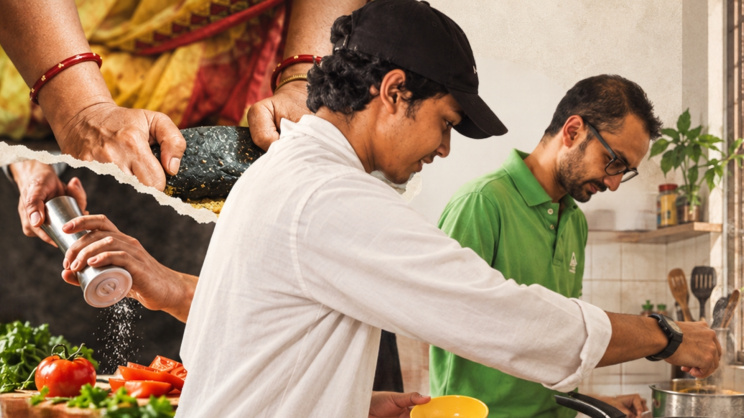
There is another distinction. A particular act of cooking can often be skipped. Managing the household's meals cannot. If Sifat does not cook his special dinner one weekend, the family simply goes without his special dinner. If Nadia does not think about what everyone will eat, somebody still has to. The difference is not simply between who cooks and who does not. It is between work taken on occasionally and responsibility that cannot simply be put aside.
My own family offers a version of the same contradiction. Like Sifat, my father cooked on special days: Eid, birthdays and my parents' anniversary. His cooking genuinely took some of my mother's workload away on those days, and I would not pretend otherwise. But the overall division was never close to equal.
Still, something else about those memories matters. In the Bangladeshi mofussil of the early 2000s, a man in the kitchen could still attract comment, and I heard what relatives said about it behind closed doors. Whatever else my father's cooking did or did not change, it made the sight of a man cooking seem normal in our home. My brother and I therefore grew up knowing that cooking and other domestic work were not responsibilities that belonged only to women.
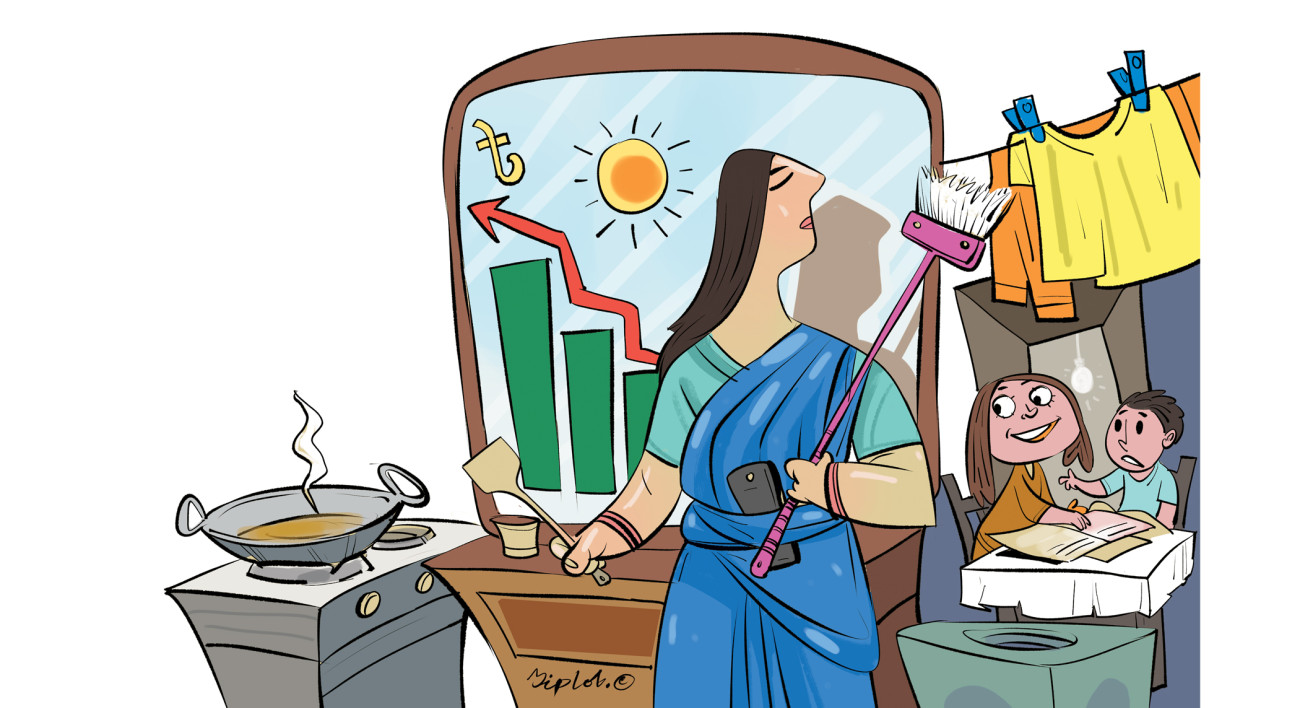
Both things can be true. My father did not overturn the division of labour in our household, but he did make a man doing domestic work seem normal. These are different kinds of change, yet it is easy to mistake one for the other. Seeing men cook can challenge the idea that the kitchen is exclusively women's territory. It does not necessarily redistribute the responsibility of keeping a household fed.
That is why when and how someone learns to cook may tell us more than simply counting how many men cook. Sifat learned as an adult, largely by choice and often for particular occasions. Nadia learned as a girl, as part of what was expected of her. Both can cook. But only one was taught that dinner would ultimately be her responsibility, regardless of how tired she was or what else she had done that day.
The praise my father received for his special dinners was not undeserved. But praise naturally gathered around the most visible moment: the person standing over the pot or holding the serving spoon. Much of what made that meal possible came earlier, in deciding what to cook, buying what was needed, preparing the ingredients and making sure there would be food on the table.
That work is harder to see. And because it is harder to see, it is also easier to overlook who keeps doing it.
Khairul Hassan Jahin is a journalist at The Daily Star. He can be reached at khairul.jahin@thedailystar.net
Send your articles for Slow Reads to slowreads@thedailystar.net. Check out our submission guidelines for details.
Everyday secularism and the Bangladesh we rarely talk about
Reading Sarat Chandra at 150, with empathy

Who really owned Britain’s royal jewels?
The 25,000-year history of betel nut chewing

The world map we know is distorted. Why does it matter?

Bengal and the coming of Islam: A story of soil and spirit
Xuanzang’s travels to Bengal and beyond : The man, the pilgrim and the Monkey King
Professor Anisur Rahman: The economist who put people at the centre

APO 433: Dhaka’s forgotten post office of World War II