Reading Sarat Chandra at 150, with empathy
“He left in the dead of night, holding his daughter’s hand. He had no family in this village, no one to inform. Crossing the yard, he stopped abruptly beneath the familiar tree and suddenly burst into tears. Raising his eyes to the star-studded black sky, he said, ‘Allah! Punish me as you will, but my Mahesh died of thirst. There was no land he could graze on. Do not forgive the sin of whoever it was who did not let him eat the grass you gave us, or quench his thirst with the water you gave us.’”
In this final passage from Sarat Chandra Chattopadhyay’s celebrated short story “Mahesh”, we find Gafoor and his daughter Amina departing their village. Merciless drought has destroyed their lives, resulting in hopeless destitution. In desperate hunger and agonising thirst, his beloved bull, Mahesh, has accidentally smashed their remaining pitcher of water. This is the culmination of Gafoor’s prolonged suffering and continual humiliation, and, in a fit of mindless rage, he kills Mahesh, smashing his head with a plough. Readers watch with Gafoor as Mahesh’s body is taken away to the dumping ground, slung from a pole.
The tragedy of Gafoor could have ended here. However, Sarat does not abandon him at this moment of brutality. He follows him a little further. The last time we see Gafoor is beneath his familiar tree, his heart-wrenching appeal to God echoing through the dead of night. With the narrative attention lingering on the protagonist for this one final scene, Sarat refuses to allow his worst moment to define him. Though powerless before the might of worldly authority, Gafoor leaves us with an appeal to justice. We, as readers, are his final witnesses. This, here, is Sarat asking us to inhabit Gafoor’s grief and agony. Perhaps somewhere in this invitation, we can find the beginning of an answer to why generations of readers have experienced Sarat as daradi.
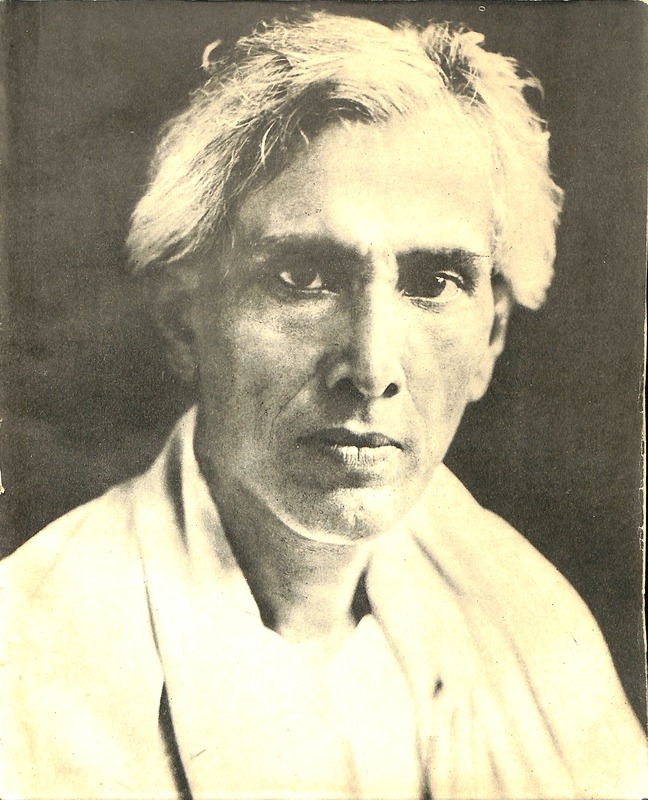
In recent years, Sarat has faced much criticism for, among other things, his approach towards caste and gender. As readers, we may wish for Gafoor not to have been so powerless, and harbour similar wishes for many of Sarat’s women, his poor, his destitute. We may wish they had been more radical, more revolutionary; that they had broken down societal chains more decisively instead of suffering within them. We have all, perhaps, found one or another of his characters to be more lachrymose than we would have liked.
As a woman reader of Sarat, I, for one, have caught myself desperately wishing for more agency for some of his all-suffering women, often almost unconsciously measuring them against their bolder contemporaries in the works of writers such as Tagore. Such desires for his characters contain within them, inevitably perhaps, a wish for Sarat himself to have been more radical in his imagination, to have stretched some of his characters’ possibilities a little further. There may also well be frustration with him for not imagining more structural changes, for not interrogating patriarchy or caste as thoroughly as we might wish him to. It would have been convenient to have our favourite writers hold approximately the same opinions as ours. Sadly, they seldom oblige.
Sarat’s 150th birth anniversary will certainly bring in its wake a fair share of familiar claims: of how far ahead of his time he was, how radical his politics were, how, at times, he appears to fall only a little short of literary sainthood in terms of his social vision. There exists an equally familiar temptation to contend with him, to catalogue all the limitations of his politics and imagination. I believe neither his defence counsel nor his prosecution lacks advocates; there is little need to swell those ranks. This article is not interested in convincing you to admire Sarat, nor in tugging at the ropes around his literary pedestal with a fierce determination to see his reputation demoted. At a hundred and fifty years’ distance, I wonder if we can extend to him some of the compassion and generosity with which he approached some of his own flawed characters.

Reading Sarat with empathy is not the same as idealising him, or furnishing an apologia for everything in his writings that has not aged well, or that we may find unsettling or troubling. There is plenty that Sarat did not see; there is plenty that we may wish he had imagined differently. But, for a moment, let us consider: what did he see? What did he notice in his society that others passed over? What, indeed, have generations of readers in Bengal and across South Asia seen in him, and why has his popularity proved so durable?
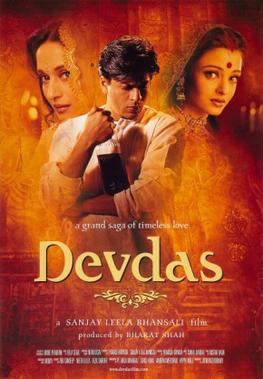
There is, of course, much to turn to Sarat for. The fact that our ideologies may not always align need not obscure the pleasures of reading him: the lucidity of his prose, the naturalness of his conversations, and the seeming effortlessness of his plots. One may call it sentimental realism, but few can surpass his literary ability to summon pathos. There is something undeniably democratic, too, in the intimacy and accessibility of his prose. Moreover, his works have travelled remarkably well into other media, capturing the interest of directors with various imaginative temperaments, who have repeatedly returned to his stories. Devdas, for instance, keeps dying and being resurrected in various avatars across South Asia, across languages and national borders—sometimes as Soumitra Chattopadhyay and sometimes as Shah Rukh Khan. In Bangladesh, Chashi Nazrul Islam felt compelled to return to Devdas’s tragedy twice in his directorial career.
For many of us, our first encounter with Sarat may have been pedagogical. Generations of schoolchildren have encountered him through his short story “Abhagir Swarga”, where the eponymous Abhagi wishes for some dignity, at least in death. True to the name she was given at birth, Abhagi has endured atrociously adverse fortune all her life. Motherless, denied her father’s love, abandoned by her husband, she has had only poverty—and her son—for company. At death’s door, she now wishes to see her deserter husband one last time.
As a young girl reading this story for school exams, I remember feeling monumental frustration at Abhagi pleading for her husband’s blessings: “Tell him…tell him… that all I want is the dust of his feet. Nothing else”; “Tell him he must give me the dust of his feet before I go. And…and my parting must be filled with sindoor and my feet lined with alta.” Fetch the husband, by all means—I remember thinking—but only if Abhagi, in her final moments, could summon whatever strength remained in her to give him one resounding slap! Feverish, Abhagi deliriously dreams aloud, “No one will look down upon me then. No one will shun me for my low birth. Oof!...Fire from my son’s hand! Ah, the glory of it! The chariot will have to come down for me. No one can stop it…for all that I am a poor untouchable…” There is plenty here that might trouble us. We might wish, for instance, that Abhagi would reject the very fiction of ‘high’ and ‘low’ birth. The real question is for Sarat himself: why does he stop short of imagining the desire for a complete obliteration of this hierarchy?
These are valid questions; these are being asked and, I believe, must be asked. It would be foolish to deny that Sarat himself benefited from the very same hierarchies of caste and patriarchy that his fiction asks us to confront. Nor can we comfort ourselves with the idea that these were simply the limits of his time and that no one could see further. Others most certainly did. Sarat lived in a time of feminists, reformers, revolutionaries and anti-caste thinkers, many of whom imagined far more radical social transformations. To give a few obvious examples: Begum Rokeya, only four years his junior, had already published the pioneering feminist science fiction Sultana’s Dream; Ambedkar, born only fifteen years after Sarat, was already striving for a radical dismantling of caste during Sarat’s lifetime, demanding concrete legal and political interventions. Sarat may not have imagined a world where Abhagi or Gafoor could reach for forms of liberation beyond those that their circumstances permitted, but what did his particular ways of seeing make possible?
To read Sarat, I believe, is to be invited into a compassionate way of looking at the world; to notice the deprivations and everyday humiliations that our social arrangements, and our own privilege within them, can obscure; to linger over suffering that might otherwise have remained peripheral to our own lives. His writings ask us, most of all, to feel the weight of another person’s world, bringing into our orbit of imagination lives pushed to the edges of society. Of course, there are lives that remained beyond the horizon of his empathy; there are structures that he did not seek to overhaul and questions he did not raise, or did not raise fiercely enough. However, one hundred and fifty years later, the limits of our empathy need not be the same as his. We can always sharpen the tools we inherit and turn them elsewhere.
In the final passage of Devdas, for example, the narrator tells us, “I have no idea what has become of Parvati now, after so many years. Neither do I want to find out. But sometimes I do feel sorry for Devdas.” The narrator’s preference is to reserve his final thoughts for Devdas. He may turn away from Parvati, but who is to stop us from interrogating him for doing so, or from rearranging the emotional lens through which we read his novel? Interestingly, the final description Sarat himself leaves us with of Devdas is not particularly flattering; he is called an “unruly rascal”. However, alongside these harsh words, Sarat also adds the infinitely more tender “hapless”—hatabhāgya, asaṃyamī pāpiṣṭha in the original Bengali. Why must all contradictions be resolved? We may vehemently disapprove of Devdas for his myriad failings; we may deplore his choices and actions, and yet have compassion to spare. Perhaps this is the kind of generosity that the modern reader can extend towards the writer himself.
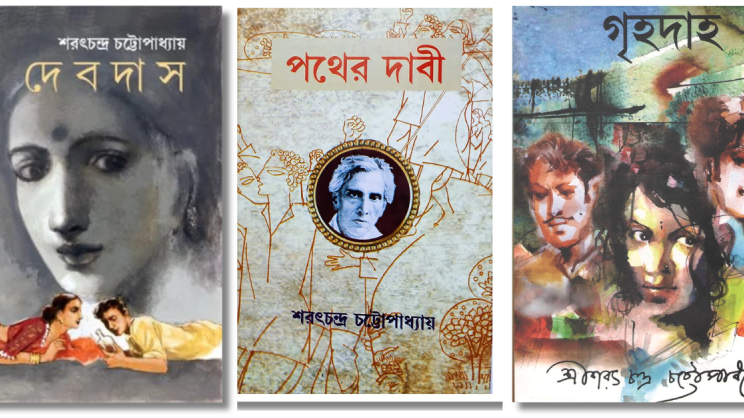
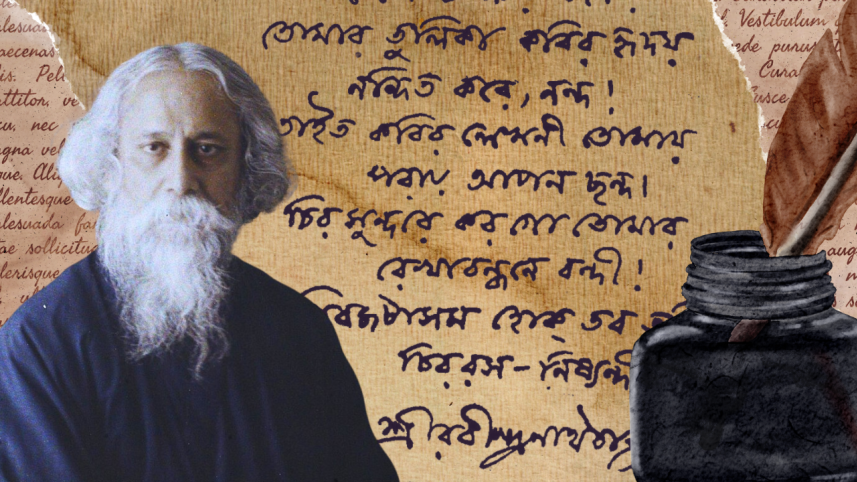
We could begin by forgetting, for a moment, the legendary writer and considering the young Sarat, still a long way from the literary eminence he would later acquire: what did the literary world of Bengal look like from where he stood? Before he became the celebrated kathashilpi whom generations of readers would revere, he was a young man of extraordinary talent and limited means, standing at some distance from Kolkata’s elite metropolitan literary establishment, without anything resembling the extraordinary social and cultural advantages available to many of his contemporaries. What must it have meant for him to publish “Borodidi” anonymously in Bharati, and to have Tagore himself (whose niece, Sarala Devi Chaudhurani, was the editor) find something powerful and impressive in the work of this unknown writer? This was, after all, the same Tagore he had grown up admiring, whose Chokher Bali, by his own admission, he had read twenty-four times and annotated on almost every page.
Sarat would, of course, go on to become tremendously popular. However, having a wide readership did not free him from the tenacious hierarchies of the high and the popular. Sarat himself spoke of falling short of the intellectual ambitions of some of his contemporaries. What led to such self-estimations? What did it mean to spend a lifetime in the shadow of a Nobel laureate whom he himself deeply admired, but with whom he also had disagreements? We might wonder how Sarat felt when Tagore declined to endorse his Pather Dabi after its proscription by the British government; or when, asked to contribute a few words on Sodasi, Tagore instead ended up critiquing what he thought was anachronistic characterisation. Did Sarat feel disappointed, wounded? We cannot know for certain, but, if his fiction offers any clue, he was acutely sensitive to the small humiliations of everyday life. Once we try to recover the human being from beneath the weight of the hero we have made of him, perhaps we can understand him a little more fully as the man of paradoxes and complexities that he was.
Readers, according to their own tastes and temperaments, will find different things in Sarat. They will admire and grow impatient with entirely different aspects of his works. Some will be moved to tears. Others will be frustrated. One could, of course, also be both. A hundred and fifty years later, I believe Sarat does not need unquestioning worship. He does not need to be shielded from every criticism. What he does need, however, like all writers, is readers. Resist him. Argue with him. Read him with affection or read him against the grain. Look further when we find his gaze falling short. But read him we must.
There is still much in Sarat from which we can learn. In our present world, where indifference comes easily, we have much to gain from a writer who repeatedly entreats us to linger over suffering beyond our own. One may ask, with good reason, what there is to gain from this brief act of seeing through another’s eyes. Does reading “Abhagir Swarga” make one less casteist? Does reading about Gafoor’s plight make one less tolerant of injustice? I do not know. But perhaps we could make a smaller claim: that, at least for the duration of a story, it becomes difficult to look away from the suffering of those who have otherwise been abandoned by society. However briefly, these characters enter our imagination and demand our attention. What we do with that attention once the book is closed is up to us. As Sarat himself reminds us, in Srikanta’s words, “It is easy enough to shed a few tears over another’s sorrow, but to step forward and voluntarily take a heavy responsibility upon oneself is a very different matter.”
Dr Madhurima Sen is a researcher at the University of Oxford. Her work focuses on Bengali literature and Bangladesh.
Note: Translations from “Mahesh” are by Arunava Sinha; those from Devdas are by Sreejata Guha; and those from “Abhagir Swarga” and Srikanta are by Aruna Chakravarti.
Send your articles for Slow Reads to slowreads@thedailystar.net. Check out our submission guidelines for details.

Who really owned Britain’s royal jewels?

The 25,000-year history of betel nut chewing
The world map we know is distorted. Why does it matter?

Bengal and the coming of Islam: A story of soil and spirit
Xuanzang’s travels to Bengal and beyond : The man, the pilgrim and the Monkey King
Professor Anisur Rahman: The economist who put people at the centre

APO 433: Dhaka’s forgotten post office of World War II
Dadabhai Naoroji: The man who exposed the economics of British colonialism

Untold stories of 1971 through private letters