


Rising heat puts Bangladesh’s garment workers at risk

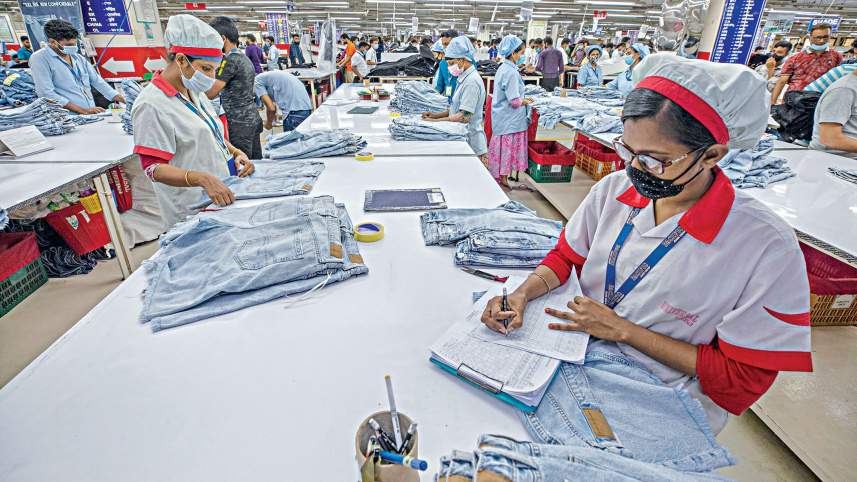
For Bangladesh, where rising temperatures are increasingly threatening the health and productivity of garment workers, a new heat stress management toolkit from the American Apparel and Footwear Association (AAFA) offers manufacturers and global brands a framework to address heat risks in factories.
The toolkit, launched at Cascale’s Annual Meeting 2026 in Athens, Greece, recently, aims to help manufacturers and brands manage heat stress in workplaces.

Rising temperatures are making it difficult for workers to cope with heat generated by heavy machinery, particularly in factories with inadequate cooling systems and ventilation and unhealthy working environments.
The AAFA recommends setting maximum thresholds for workplace heat and implementing structural measures to prevent or reduce heat stress.
It also suggests adjusting workloads, water and bathroom breaks according to heat conditions, and establishing heat stress education and medical monitoring programmes to help workers, supervisors and health staff identify and prevent heat-related illnesses.
The association further recommends regular discussions between buyers and suppliers to reduce heat stress and share responsibility for its impact on workers, suppliers and buyers during extreme heat days.
“As extreme heat becomes an increasingly common reality worldwide, our industry must act to protect the workers who are at the heart of our supply chains,” said AAFA Executive Vice President Nate Herman in an AAFA statement.
Brands and manufacturers should share responsibility for the investments and potential disruption involved in building resilience, creating the commercial conditions needed to protect workers, the AAFA said.
The risks of extreme heat in Bangladesh are exacerbated by the country’s high-humidity climate, labour-intensive economy and limited financial capacity for adaptation, according to a study by Climate Rights International (CRI) referred to by the AAFA.
A recent study by the Global Labor Institute at Cornell University found that, over the past two decades, 17 of 23 apparel production centres studied recorded increases of more than 10 percent in the average number of days with temperatures of 35°C (95°F) or more.
A separate Cornell study, released on September 21, found that heat stress was associated with an average 4.1 percent loss in working-time productivity across eight garment factories studied in Bangladesh.
Addressing high heat stress across Bangladesh’s apparel export industry would require an estimated $239 million in capital expenditure, equivalent to 0.2 percent of 2025 apparel export revenue if spread over three years, the study said.
Global Labor Institute says that Dhaka experienced a seven-month heat-stress season in 2025, describing it as “the new norm.”
Back in 2020, an estimated 70 million workers in Bangladesh were exposed to excessive heat on the job, a 51 percent increase over the previous 20 years, according to CRI, citing International Labour Organization (ILO) calculations.
Heat-related labour losses in Bangladesh were also more than two-and-a-half times the global average as of 2020.
Without adequate adaptation measures, Bangladesh is projected to lose 4.84 percent of working hours by 2030 due to heat stress, equivalent to 3.8 million full-time jobs, according to research cited by CRI.
The ILO estimated that excessive workplace heat is linked to 18,970 deaths and 22.85 million occupational injuries.
The ILO has described heat stress as “an invisible killer” because it can cause sudden and severe illnesses, such as heatstroke, as well as chronic and debilitating diseases affecting the cardiovascular and respiratory systems and kidneys.
Md Towhidur Rahman, president of Bangladesh Apparel Workers Federation, said he was not aware of the AAFA’s heat stress toolkit yet, but his organisation has been conducting training on heat and other just transition-related issues for workers over the last few years.
Because climate change has been causing floods, droughts, stagnation and water-borne diseases, workers are directly affected and are victims, and the issue must be jointly addressed by international retailers and brands along with local manufacturers, Towhidur said.
 For all latest news, follow The Daily Star's Google News channel.
 Mahmud Hasan Khan, president of Bangladesh Garment Manufacturers and Exporters Association (BGMEA), said the AAFA had not sent any letter to the BGMEA officially yet, although many individual factories had received such instructions from their buyers.
Heat stress in the workplace during certain seasons, especially in summer in Bangladesh, is a health risk for workers as temperatures rise, he said.
Comments