


Private ICDs raise six charges 9.85% after fuel price hike
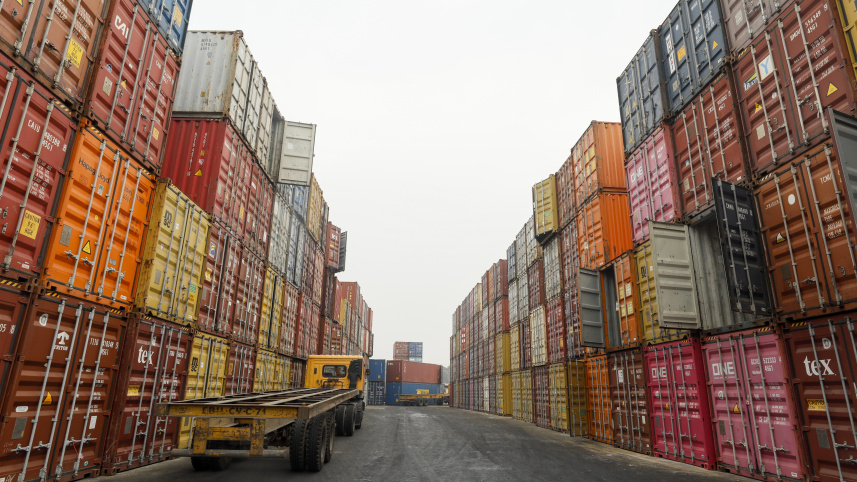
The Bangladesh Inland Container Depots Association (BICDA) today announced a 9.85 percent increase in six types of service charges for handling import, export and empty containers, citing fuel price hikes.
The new charges will take effect from today, September 21, according to a circular issued by BICDA in line with the government’s latest fuel price increase.

The circular said diesel prices had increased by 17.4 percent and that the resulting rise in fuel-related operating costs at private ICDs, or off-docks, had prompted the association to raise the six charges by 9.85 percent.
“The decision was taken to adjust the additional fuel cost,” said BICDA Secretary General Md Ruhul Amin Sikder after a meeting of the association’s members this morning.
The government yesterday raised the prices of all four major petroleum products by Tk 20 a litre, passing on to consumers a large share of the high import cost that has been mounting since the US war on Iran. The new prices, effective from today, take diesel to Tk 135 a litre from Tk 115, octane to Tk 165 from Tk 145, petrol to Tk 160 from Tk 140, and kerosene to Tk 155 from Tk 135.
THE SIX CHARGES
The six charges are for empty container transportation between Chattogram port and ICDs; empty container transportation between Patenga Container Terminal (PCT), also known as RSGT Chattogram, and ICDs; empty container lift-on and lift-off; export goods stuffing and handling; export loaded container VGM (Verified Gross Mass); and import goods delivery.
Under the current tariff, the export goods stuffing and handling package charge is Tk 8,056 for a 20-foot container and Tk 10,742 for a 40-foot container.
About 93 percent of export goods are stuffed into containers at the 19 private ICDs, commonly known as off-docks, located in and around Chattogram before being shipped through Chattogram port.
The ICDs also handle a portion of the port’s import containers. About 21 percent of import containers are sent from the port to the private ICDs, where the goods are delivered to importers.
Besides, the import containers that become empty after the goods are delivered directly from the port are also sent to the ICDs, a portion of which are stored there for a particular time and the rest are used for stuffing export cargoes.
 For all latest news, follow The Daily Star's Google News channel.
Comments