


Does Payra Port have any business model?

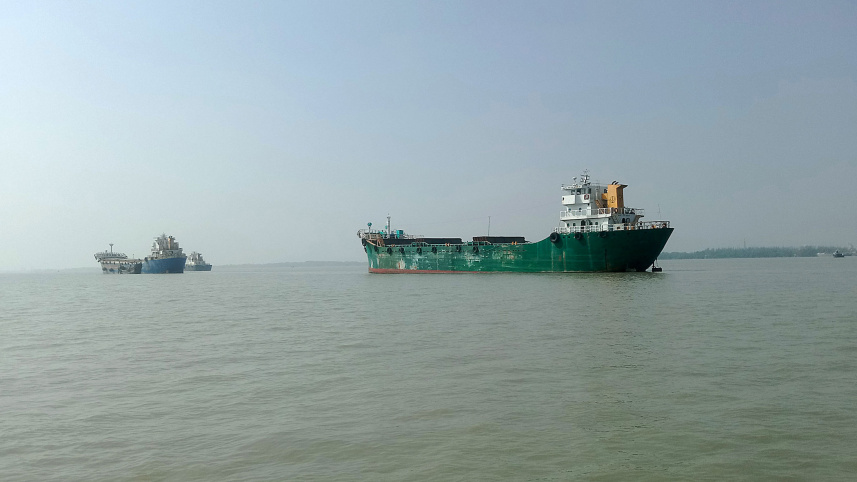
Over the past 13 years, Bangladesh has spent Tk 15,691 crore developing Payra Port, once billed as a catalyst for industrialising the country’s southern belt. Yet, as The Daily Star recently reported, the port remains largely inactive. Only 29 of the 2,962 vessels that called at the port in FY2025-26 were foreign. During this period, it handled around 55 lakh tonnes of imports, almost all of it coal for the nearby Payra Power Plant. There were no exports, and domestic vessels carried 99 percent of the cargo.
These figures raise a question more fundamental than whether Payra needs another terminal, another road, or another round of dredging: what is Payra Port’s business model?

A port does not create cargo merely because infrastructure is built. It succeeds when vessel economics, cargo demand, hinterland connectivity, regulatory services, and the channel’s physical characteristics come together in a commercially sustainable system—elements that have never been fully aligned at Payra.
The original vision for Payra was far more ambitious than the port operating today. Official planning material from 2015 described the Rabnabad channel—the port’s main navigational route—as suitable for a major seaport, envisaged deep-draught vessels and regional transshipment, and linked the project to future trade growth. Yet the same planning material listed approach-channel design, capital and maintenance dredging, economic viability, and techno-economic studies among the major tasks still being undertaken.
This does not mean the port was built without technical studies. It suggests that an expansive commercial vision was being advanced while some of the most important questions about navigability, dredging and economic viability were still being worked through.
The project later changed fundamentally. In 2021, the government abandoned the deep-sea-port configuration and shifted to a regular seaport, with much smaller vessels envisaged than under the original plan. That should also have triggered a fundamental reassessment of Payra’s commercial role. A port conceived around one level of vessel access cannot simply retain the same business assumptions after its navigational ambition changes.
Payra’s central physical constraint is Rabnabad, whose depth routinely falls to 5-6 metres during peak monsoon. The problem here is not just dredging or the lack thereof; it is the recurring cost of maintaining a commercially useful depth in a highly sediment-prone environment. This concern was identified early. Marine geologist Hermann Kudras warned in 2017 that Payra had no natural deep-water access and that maintaining a long artificial approach channel through highly mobile sediments would be exceptionally difficult and expensive. Subsequent operating experience has made this underlying concern difficult to dismiss.
The capital and maintenance dredging programme was financed heavily from Bangladesh’s foreign-exchange reserves. Financing of 524 million euro was arranged for the programme. Major dredging subsequently enabled vessels of around 10.5 metres draft to use the channel. But the improvement proved difficult to sustain. By late 2024, the channel had again lost substantial depth, preventing mother vessels from reaching the jetty and forcing coal importers back into costly lightering. By March 2025, The Daily Star reported that some coal cargo was being discharged through Chattogram and then carried to Payra by lighter vessels because of insufficient navigability.
This sequence should change the policy conversation from “How deep can we make Payra?” to “What depth can Payra sustainably maintain year after year, at what cost, and what cargo volume is needed to justify that cost?” And depth, an economic variable in Payra’s case, should determine its business model.
At present, Payra’s most reliable cargo base is essentially captive cargo—coal for nearby power generation. That creates tonnage, but not yet a diversified commercial port. Payra has substantial physical facilities, including a 650-metre jetty and large backup areas. But infrastructure capacity without cargo generation risks becoming idle capacity.
So before committing further investment in the port, the government needs a serious cargo and commercial development plan. It should identify realistic cargo catchments over five, 10 and 15 years; commodities that could economically use Payra rather than Chattogram or Mongla; prospective industrial users; vessel sizes and sailing frequencies; inland transport costs; and the recurring dredging expenditure required to support them.
The planned Patuakhali EPZ may eventually provide an important cargo base. But ports cannot simply wait for industries and shipping lines to appear. Port planning, industrial development, roads, inland waterways and border management need to be aligned around a common cargo strategy.
Furthermore, a credible business model cannot function without a fully operational Customs House. Payra has had Customs House jurisdiction since 2016, yet legal designation is not the same as having sufficient manpower, systems, examination, scanning and on-port regulatory presence. After Tk 15,691 crore of public investment, completing that institutional architecture should be a modest but urgent task. Customs should also sit alongside the port authority when Payra approaches shipping lines, importers, exporters and investors, because clearance procedures are part of the service an international port sells.
Payra does not need to become another Chattogram. Its future should instead be built around what its geography and sustainable draft allow it to do competitively. That may mean a more specialised role: captive energy cargo, selected bulk commodities, project cargo, coastal and feeder shipping, Patuakhali EPZ traffic, and inland-water connections with Dhaka and other markets. Its protected river route towards the interior—sheltered from the harsh conditions of the bay—could remain an important advantage for smaller vessels and barges.
But these possibilities must be tested commercially. Shipping routes should emerge from cargo demand and cost, not from infrastructure availability alone. So, define Payra properly before expanding it further. Payra can still perform useful national logistics functions. Sunk cost—money already invested in the port—should encourage better utilisation of existing assets, not automatic continuation of earlier assumptions.
The government should now undertake a transparent commercial and navigational review that brings together four variables: sustainable channel depth, annual dredging cost, realistic cargo volume and revenue potential. Those four variables should determine the next phase of Payra. What it needs is a commercially credible definition of the kind of port it can sustainably be and a business model soon.
Ahamedul Karim Chowdhury, a maritime, logistics and supply chain policy analyst, is former head of Kamalapur Inland Container Depot and Pangaon Inland Container Terminal.
Views expressed in this article are the author's own.
Follow The Daily Star Opinion on Facebook for the latest opinions, commentaries, and analyses by experts and professionals. To contribute your article or letter to The Daily Star Opinion, see our guidelines for submission.
 For all latest news, follow The Daily Star's Google News channel.
Comments