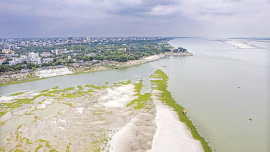
Could the Teesta redraw the map of India-Bangladesh diplomacy?
Is the Teesta merely a river, or has its flow become a measure of the political equations between Delhi, Kolkata and Dhaka?
For more than a decade, the unresolved Teesta water-sharing agreement has remained one of the most sensitive issues in India-Bangladesh relations. But the dispute is no longer simply about how much water each country should receive. It increasingly sits at the intersection of federal politics, agricultural security, climate change, river management and the wider strategic relationship between the two neighbours. In 2011, India and Bangladesh came close to signing a Teesta water-sharing agreement. The proposed arrangement envisaged allocating 42.5 per cent of the dry-season flow to India and 37.5 per cent to Bangladesh. But objections from the West Bengal government prevented the agreement from being concluded.
Fifteen years later, however, the central question has changed. The river itself has changed, climate patterns have shifted, and the water requirements of both countries have evolved. The real challenge may therefore no longer be simply about dividing a fixed quantity of water. It is about designing a water-sharing mechanism capable of responding to an increasingly unpredictable river.
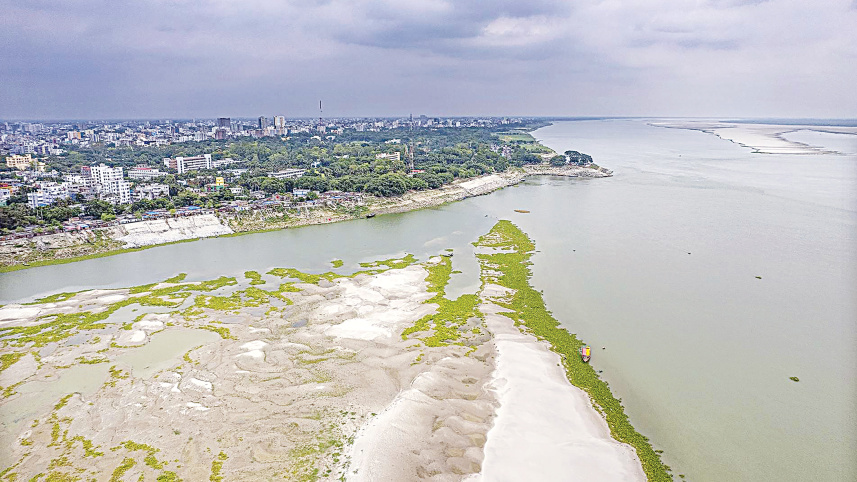
The Teesta: One river, two countries, multiple political equations
Originating in the Himalayas, the Teesta flows through Sikkim and West Bengal before entering Bangladesh. Its waters are closely linked to agriculture and livelihoods in both West Bengal's northern districts and Bangladesh's Rangpur region. For Bangladesh, the stakes are particularly high during the dry season, when declining flows can directly affect irrigation and agricultural production in the country's north.
The scale of Bangladesh's dependence on water for agriculture underscores the importance of the issue. A recent study cited in the debate over water security estimates that agriculture accounts for around 93 per cent of the country's total water demand, while roughly 40 per cent of the population is engaged in agriculture.
But the Indian side of the equation is equally important.
Data from India's Central Water Commission indicate that the Teesta's average decadal flow at Domohani in West Bengal was around 21.318 billion cubic metres during 2001-11, rising to approximately 24.094 billion cubic metres during 2011-21. That makes the water-sharing debate far more complicated than a binary argument over whether there is "enough" or "not enough" water. The critical questions are increasingly: When is the water available? Where is it available? And how much is required during each season?
The river itself has changed, climate patterns have shifted, and the water requirements of both countries have evolved. The real challenge may therefore no longer be simply about dividing a fixed quantity of water. It is about designing a water-sharing mechanism capable of responding to an increasingly unpredictable river.
Fifty-four common rivers: The Teesta is only one chapter
India and Bangladesh share 54 transboundary rivers, and the Teesta is only one component of a much larger hydro-diplomatic landscape. The Ganges, Dharla, Dudhkumar, Feni, Manu, Muhuri, Khowai and Gomati are among the rivers whose flows influence agriculture, ecology and livelihoods on both sides of the border. At the 2021 India-Bangladesh summit, the two countries also discussed the possibility of finalising interim water-sharing arrangements for six common rivers: Manu, Muhuri, Khowai, Gomati, Dharla and Dudhkumar. This makes the Teesta agreement potentially more consequential than a single bilateral water-sharing deal. A settlement could establish a precedent for how the two countries approach other transboundary rivers in the future.
And that is precisely where Kolkata enters the equation.
Why Kolkata matters to a treaty negotiated by Delhi and Dhaka
India's foreign policy is constitutionally a Union subject. Yet transboundary river management inevitably brings state governments into the equation.
The Teesta is perhaps the clearest illustration of this federal dimension of Indian foreign policy. When Delhi and Dhaka were close to reaching an agreement in 2011, objections from West Bengal effectively prevented the proposed deal from moving forward. This does not mean that an Indian state government determines the country's foreign policy. Rather, the Teesta experience demonstrates how difficult it can be to implement international commitments when their consequences directly affect a state government's responsibilities towards farmers, irrigation, drinking water and local political constituencies.
Delhi has to consider its relationship with Bangladesh, regional connectivity, border management and the strategic interests of eastern and northeastern India. Kolkata, meanwhile, has to calculate the implications for agriculture, irrigation, drinking water and the state's own political economy.
The two governments may therefore operate with different priorities.
But the river remains the same.
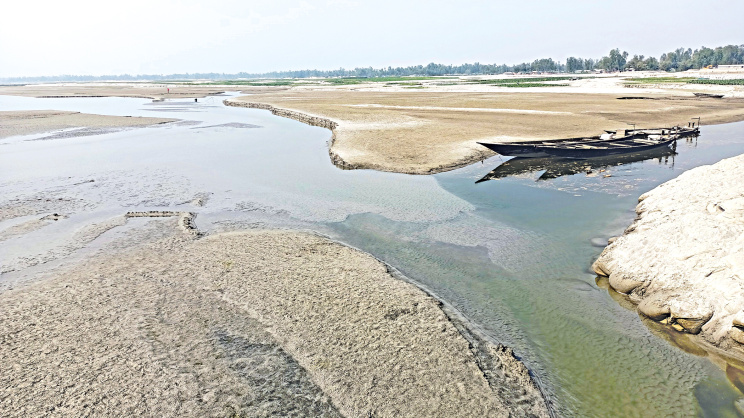
2026: The year when the Ganges and Teesta questions converge
The Teesta's unresolved status has acquired additional significance because 2026 is also a crucial year for the wider India-Bangladesh water relationship. The 1996 Ganges Water Sharing Treaty has a 30-year term, meaning its current framework is due to expire in 2026. Under the existing arrangement, water allocation at Farakka is determined according to different flow levels. When the flow is 70,000 cusecs or below, the two countries receive 50 per cent each. At flows between 70,000 and 75,000 cusecs, Bangladesh receives 35,000 cusecs, while at flows above 75,000 cusecs, India receives 40,000 cusecs and Bangladesh receives the remainder.
The agreement also provides for guaranteed allocations of 35,000 cusecs for each country during specified periods between March 11 and May 10. Therefore, 2026 is not merely another year in the long-running Teesta impasse. It could become a broader moment of reassessment for India-Bangladesh water diplomacy.
The Ganges and the Teesta are the subjects of separate negotiations, but together they illustrate a larger question: Can a water-sharing framework designed for an earlier climatic and demographic reality remain adequate for the future?
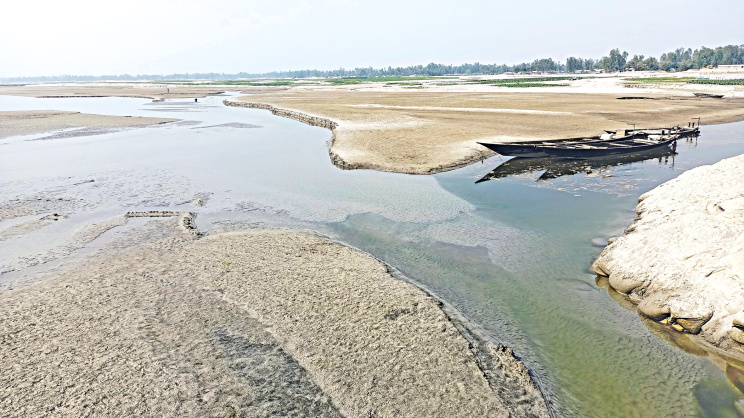
Climate change is making old percentages increasingly complicated
This is where the Teesta debate enters a new phase. A study published in Water International in July 2026 examined the growing mismatch between water supply and demand in the Teesta basin, taking into account climate change and human intervention. Its broader implication is significant: simply fixing a percentage for each country may not be sufficient to address future water stress.
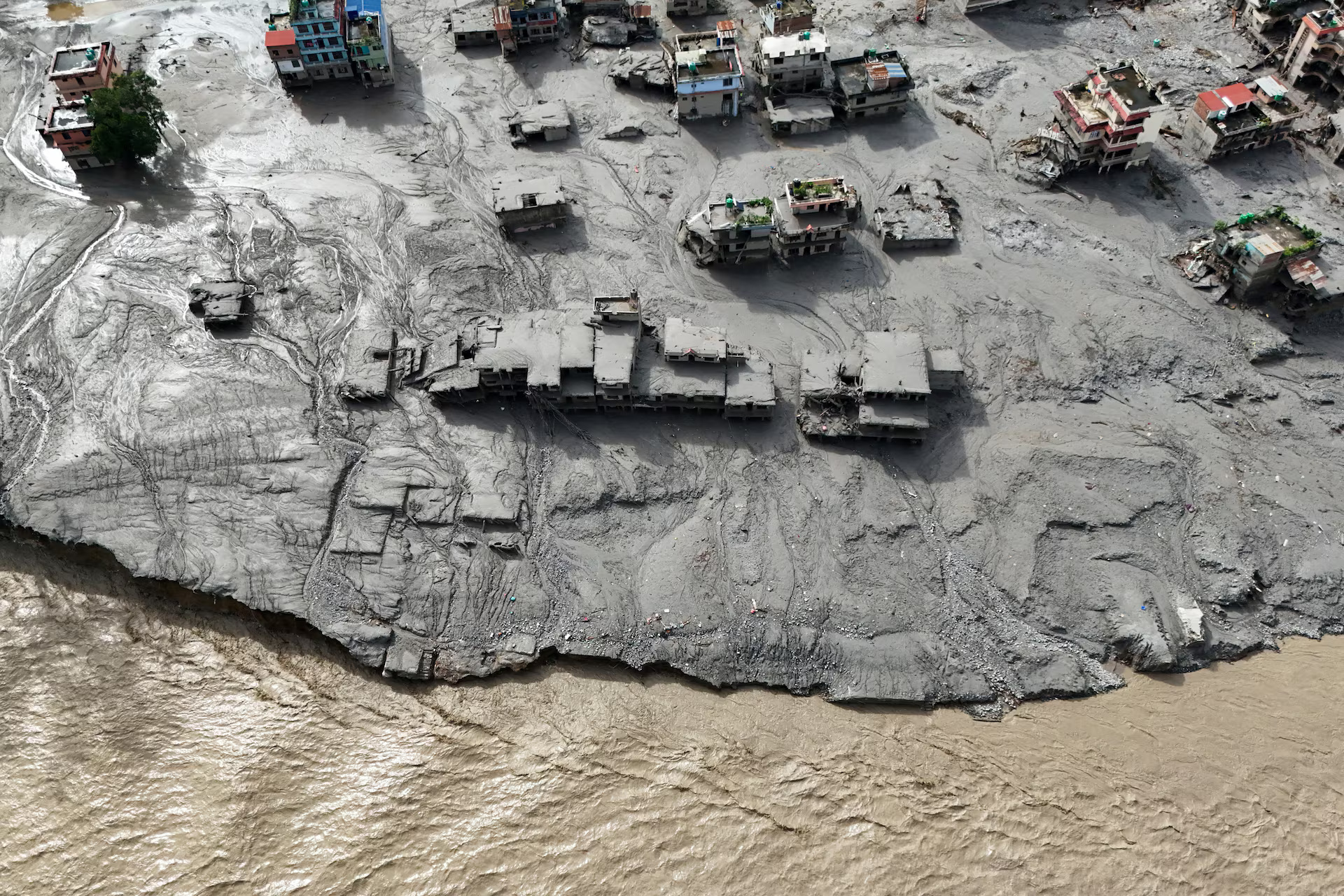
What may be required instead is a more adaptive and climate-resilient river-management framework. The reason is straightforward. A river does not behave according to a treaty's fixed percentages. During the monsoon, excessive flows can contribute to flooding. During the dry season, declining flows can threaten irrigation and agricultural production.
Climate variability could make that contrast even sharper. The future debate, therefore, may not be confined to the old arithmetic of 37.5 per cent versus 42.5 per cent. It may have to address much more difficult questions.
What happens when the available flow falls below an agreed threshold?
How should surplus water be managed during periods of extreme rainfall?
What happens if climate change fundamentally alters seasonal river flows?
And how often should an agreement be reviewed when the hydrological conditions themselves are changing?
The Teesta is also about the future of India-Bangladesh ties
The water question cannot be isolated from the broader trajectory of India-Bangladesh relations. Bilateral trade exceeded $14 billion in the 2023-24 financial year, compared with less than $3 billion in 2009. Bangladesh has also emerged as an important component of India's connectivity strategy with its northeastern states and the wider eastern sub-region. This means that water, connectivity, border management and commerce are not entirely separate policy compartments. They increasingly intersect. The Teesta is therefore more than a bilateral water dispute. It is a test of whether the two countries can build institutional mechanisms capable of managing multiple, overlapping interests in an era of climate uncertainty.
For Dhaka, the issue is fundamentally linked to equitable access to water and agricultural security.
For northern West Bengal, it is closely connected to irrigation and livelihoods.
For New Delhi, it forms part of a much wider neighbourhood diplomacy and regional connectivity equation.
For Kolkata, it is also a question of state-level water security and domestic political realities. These perspectives do not necessarily have to be mutually exclusive. But they need to be accommodated within the same negotiating architecture.
The Teesta is therefore more than a bilateral water dispute. It is a test of whether the two countries can build institutional mechanisms capable of managing multiple, overlapping interests in an era of climate uncertainty.
Can India build a new model of federal water diplomacy?
The question is no longer simply whether India and Bangladesh can divide the waters of one river.
It is whether India can develop a more sophisticated model of federal diplomacy in which the Union government, state governments and neighbouring countries are able to negotiate transboundary resources within a common framework.
The Teesta has already demonstrated the limitations of a purely bilateral approach when the consequences of an international agreement are felt most directly at the state level. If Delhi and Dhaka eventually find a way forward, the significance could extend well beyond the Teesta. It could offer a template for managing other shared rivers, climate-induced water stress and the increasingly complex relationship between foreign policy and federal politics. The river will continue to flow across borders. The bigger question is whether diplomacy can evolve at the same pace.
The author is The Daily Star’s Kolkata correspondent.
Send your articles for Slow Reads to slowreads@thedailystar.net. Check out our submission guidelines for details.
The Indo-Pacific at a crossroads: What it means for Bangladesh
Iran’s China moment? From isolation to regional hegemony

Makkah Pact: The geopolitics beyond Islamic solidarity
Myanmar’s deteriorating crisis and the political future of the Rohingya
Bangladesh between India and China: The dilemma of defence diversification

What Bangladesh should ask before joining the Makkah Pact

Nepal’s difficult passage: Political change meets ecological crisis
BRICS at 20: Why the New Delhi Summit matters to the Global South
From Balfour to sanctions: Why the UK’s ban on Israeli settlement trade matters