


Ecological overshoot and the limits of endless growth

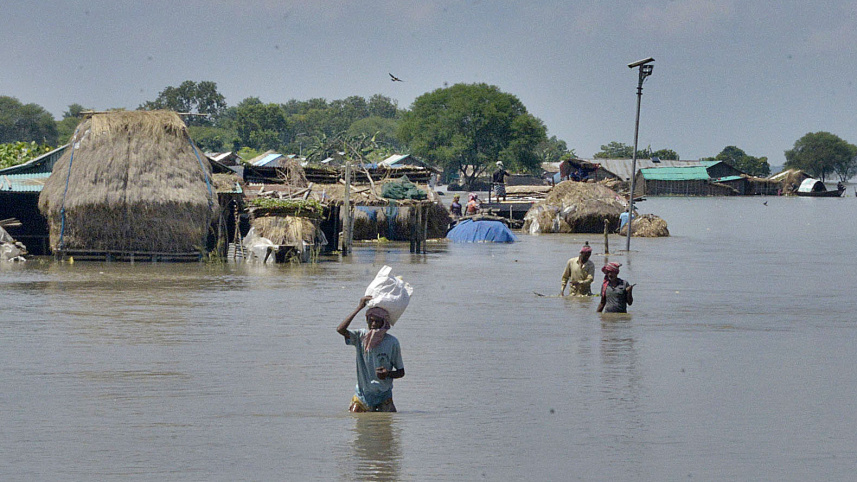
Not long ago, a flood outside of the season used to be a departure from the ordinary. A heatwave was a temporary crisis, a cyclone an anomaly, a drought a tragic exception. Now, we live in a world where the exception is increasingly becoming the condition, and where we demand infinite yield from a finite ecosystem. We built our institutions around averages, around predictable conditions. We planned cities, agriculture, economies, and even insurance around the assumption that tomorrow would, more or less, resemble yesterday. But what happens when the average itself stops being a reliable guide?
Perhaps the frightening thing about ecological collapse is not simply that the world is getting warmer. It is that the world is becoming less and less predictable. In a recent episode of The Great Simplification, Olivier Hamant, a researcher at the French National Research Institute for Agriculture, Food and Environment, speaks of a world in which variability and uncertainty are becoming increasingly important. We may, he suggests, be moving away from an era governed by the mean and towards one defined more by deviation. It is a striking way of thinking about the ecological crisis. We tend to speak of climate change, pollution, biodiversity loss, and energy insecurity as separate problems. Undoubtedly, they are real problems, but they are symptoms of something deeper: ecological overshoot.

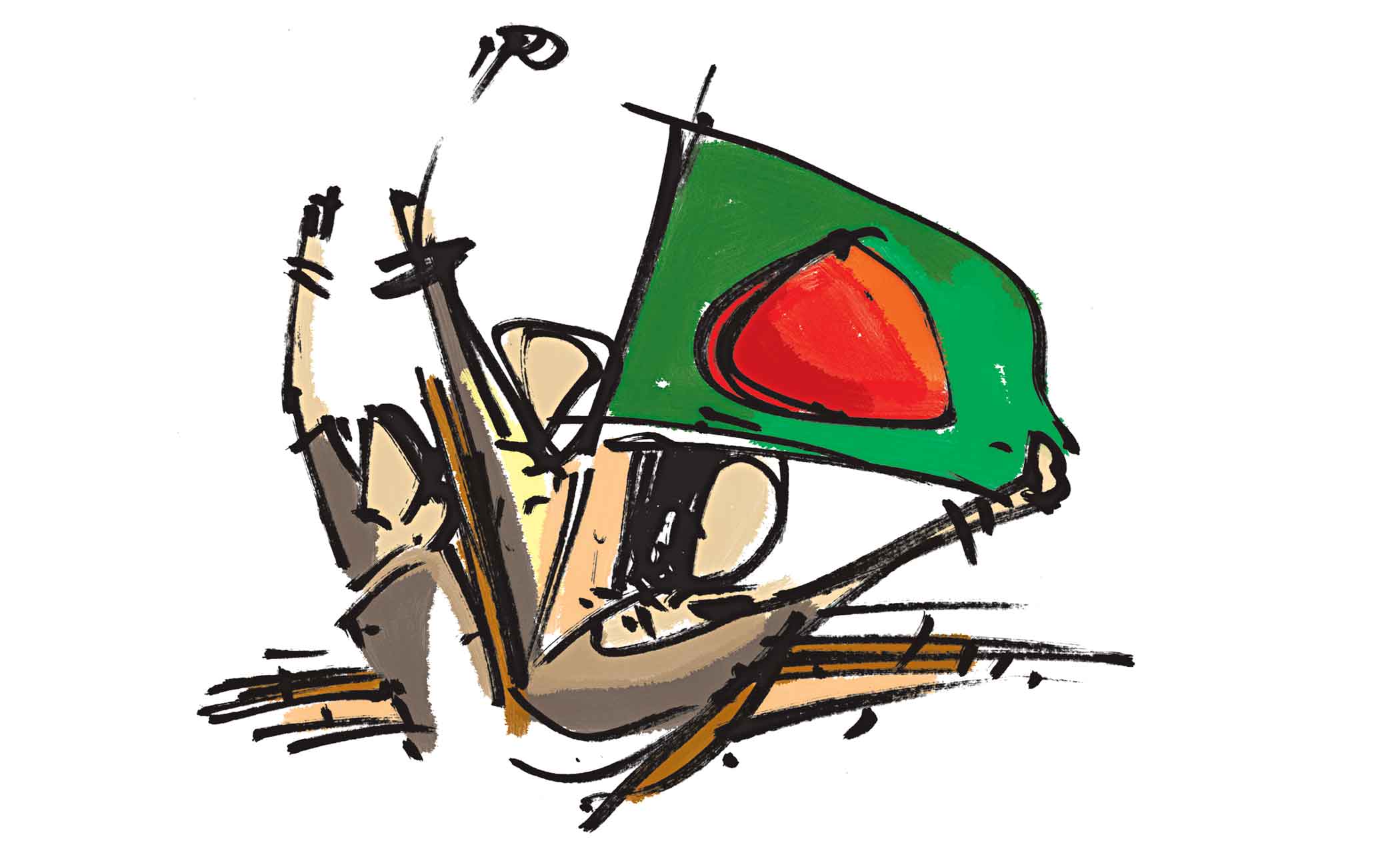
We are asking more of the earth than its systems can reliably regenerate. Yet, strangely, the answer offered by the economic system we have built is almost always the same: more. We have designed an economic system whose success depends upon continuously increasing the amount of energy, material, and ecological capacity it commands. Growth is treated not merely as desirable but as necessary. Governments depend on it, businesses are organised around it, employment is tied to it, financial markets anticipate it, and our political imagination is constrained by it. But there is a peculiar contradiction here: we are trying to solve an ecological crisis caused, in part, by the scale of our material demands while insisting that the solution must come through further expansion.
This is where anthropologist Jason Edward Hickel's argument on degrowth is unsettling (yet a reality check) in the best possible way. Degrowth is often presented as an economics of less: consume less, produce less, grow less. It sounds, at first, almost like an invitation to austerity. But Hickel turns the argument around. He rather insists that the question is not how to make everyone accept less but to make it possible for people to live well with enough. His argument begins with a concept that is older than our present climate crisis: enclosure. It is the historical and ongoing process of turning the commons—resources and spaces that were once shared, free, and self-sustaining into private property owned by elites. According to Hickel, it is the foundational engine of capitalism. Land, forests, housing, and other forms of shared wealth can be enclosed, privatised, and transformed into commodities. What was once available as a shared resource becomes something we need money to access. And once access to the necessities of life depends upon money, we have to work for that money.
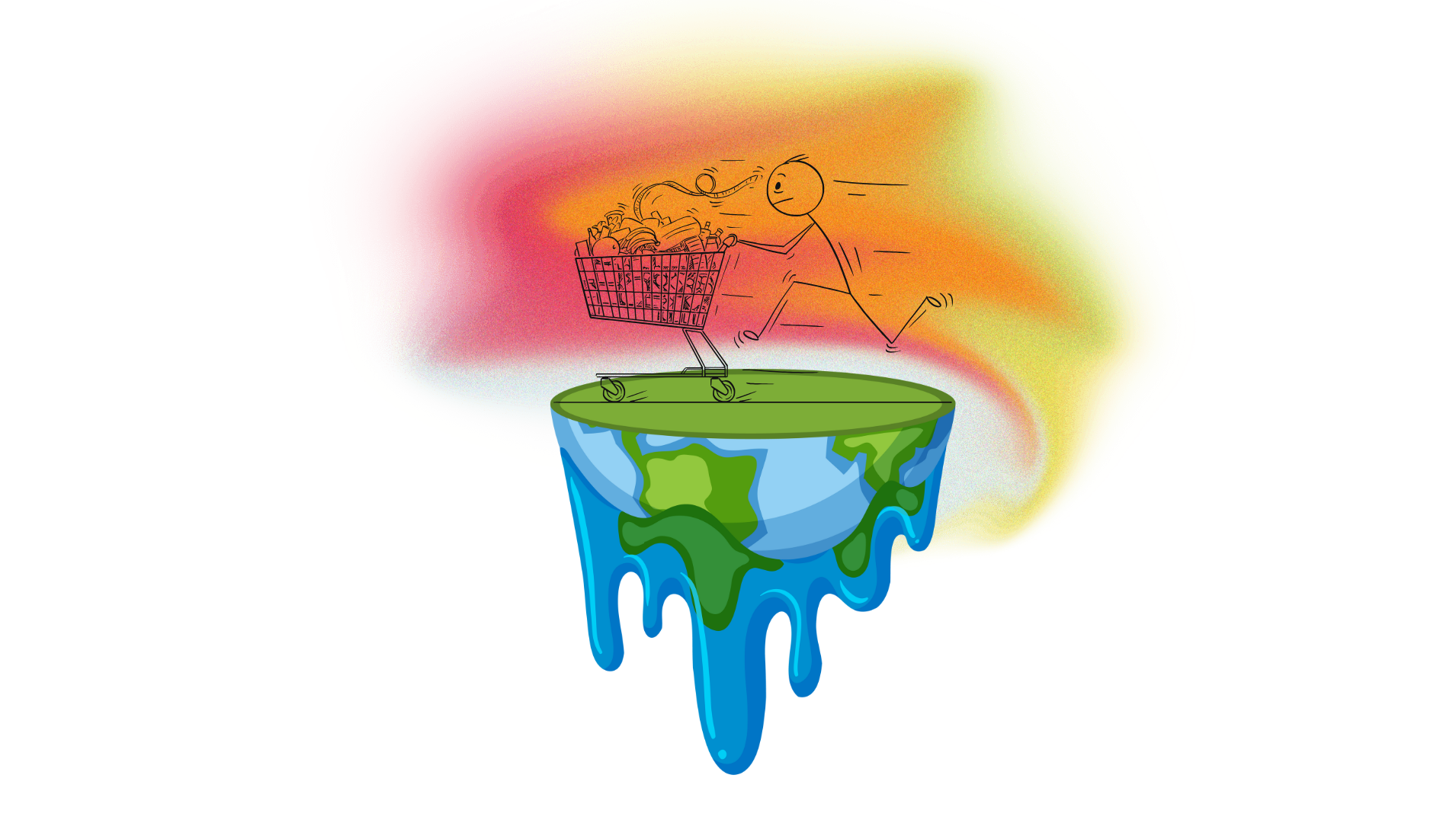
The logic becomes almost circular. We work more because things cost more. We need to earn more because we work more. More income creates more purchasing power, which creates more consumption. More consumption requires more production. More production requires more energy and materials. And the whole machinery demands still more growth. But enclosure does not happen only through the slow, quiet transformation of commons into commodities. Sometimes it happens in the chaos of a crisis when the rules that govern who owns, controls, and has access to something suddenly become unsettled. This is where Naomi Klein's The Shock Doctrine offers another piece of the puzzle. Klein examines how, in moments of profound disruption (war, economic collapse, natural disaster, political crisis), ordinary political arrangements can become temporarily unsettled. Ideas that once seemed impossible can suddenly become possible. Privatisation, deregulation, and the restructuring of public resources can move quickly while people are still trying to recover from the shock.
The crisis becomes an opening. For example, in the aftermath of the 2004 tsunami in Sri Lanka, the reconstruction of the coastline became entangled with plans for tourism development, while fishing communities faced restrictions on rebuilding near the sea. The disaster had destroyed homes and livelihoods. But what followed was not simply reconstruction. It was also a struggle over who would have access to the land and coastline that remained. Put together, Hickel and Klein suggest a disturbing possibility which has turned into a reality: a disaster does not only destroy what exists. It can also create a moment in which someone gets to decide what will replace it.
What we must not overlook is that ecological disasters do not arrive in an economic vacuum. They arrive in societies already structured by inequality, ownership, and power. Those who lose homes, land, and livelihoods may experience the disaster as a catastrophe. Others may experience the same moment as an opportunity for acquisition, investment, redevelopment, and reconstruction. Our economic system contributes to ecological overshoot. Ecological overshoot produces increasingly severe and unpredictable disruptions. Those disruptions create moments of political and economic instability. And those moments can, in turn, become opportunities to deepen the very market relations that helped produce our vulnerability in the first place.
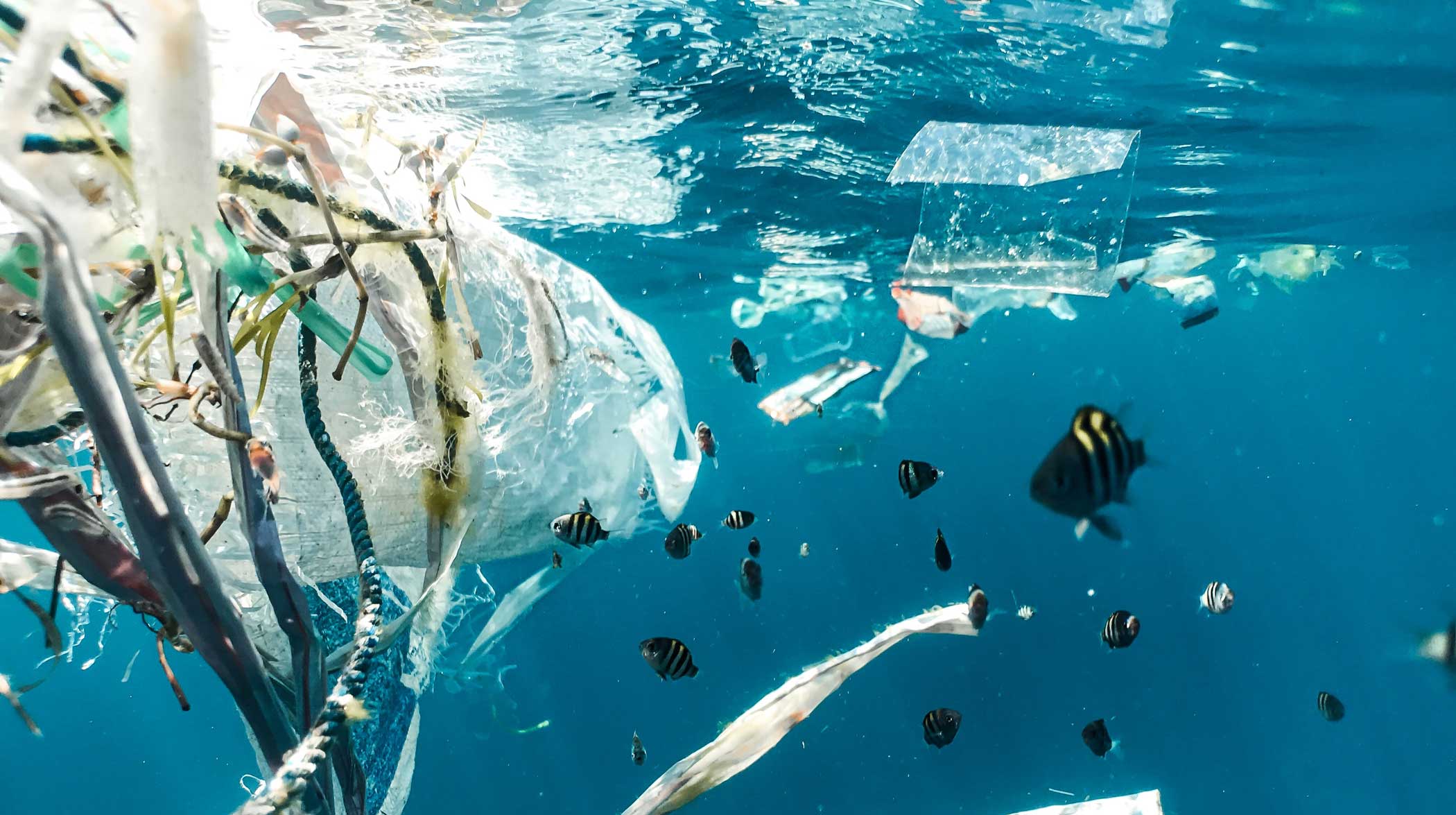
The usual climate conversation asks how we can replace fossil fuels, reduce emissions, protect forests, improve energy efficiency, and build resilience. But there is a question underneath all of them: how much is enough? At what point of growth are we planning to stop? While we are busy with “more” extraction and expansion, we are forgetting that the earth does not negotiate with GDP targets. The planet has physical limits even when our economic imagination does not. This does not mean that everyone should have less. Billions of people still need better housing, healthcare, education, nutrition, infrastructure and security. The question is not whether humanity should pursue wellbeing. It is whether wellbeing requires an endlessly expanding material economy. Imagine measuring prosperity not only by how much an economy produces, but by how securely people can live within the ecological limits of the place they inhabit. That would require us to rethink what we mean by wealth.
For generations, we have behaved as though the great human achievement is to overcome limits. We built machines to overcome distance, markets to overcome scarcity, technologies to overcome natural constraints. We became extraordinarily good at producing more. But perhaps we have reached the point where the more important human achievement is learning where to stop. We keep asking how much more the Earth can give us. It is time to ask a different question: how much is really enough for us?
S Arzooman Chowdhury is researcher and practitioner in gender justice and human rights. She can be reached via arzooman.sarah@gmail.com.
Views expressed in this article are the author's own.
Follow The Daily Star Opinion on Facebook for the latest opinions, commentaries, and analyses by experts and professionals. To contribute your article or letter to The Daily Star Opinion, see our guidelines for submission.
 For all latest news, follow The Daily Star's Google News channel.
Comments