


What did I learn from Citi and PwC?

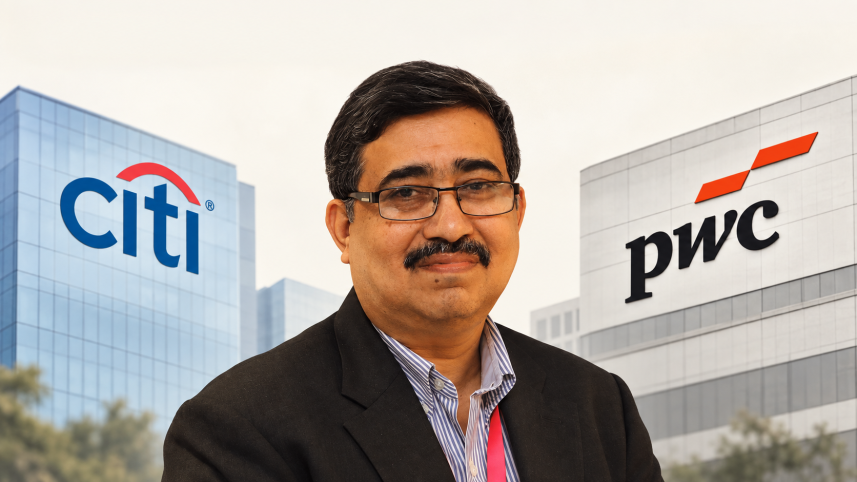
Citi and PwC taught me different things, but the most important lessons from both institutions were surprisingly similar. Whether you are running a bank, advising a business or leading a team, you are ultimately dealing with the same thing: trust. It takes years to build, but only moments to lose.
Looking back at my years with Citibank N.A. and PwC, I realise that the most valuable lessons were about how institutions are built, how decisions are made, and what it takes to earn the confidence of customers, employees and other stakeholders.

At Citi, I learned early that compliance is not the enemy of business. It is a foundation of sustainable business. In a financial institution, a weak control or overlooked risk can have consequences far beyond one transaction. Compliance is every department’s responsibility, and people need to understand not only what the rules are, but why they matter.
My experience at PwC reinforced this principle from a different perspective. In professional services, credibility is everything. Clients expect independence, confidentiality, competence and integrity. These principles cannot be compromised simply because an assignment is commercially attractive.
The same thinking applies to governance. Strong organisations are not created simply by having capable people at the top. They become stronger when responsibilities are clear, decisions are accountable and difficult questions can be asked. Good governance is about asking the right questions before important decisions and ensuring accountability.
This is also why I have always regarded reputation as a serious business asset. Financial losses can often be measured and recovered. Reputational damage is harder to quantify and can be impossible to reverse.
Leaders must look beyond immediate gains and ask: What does this decision mean for the institution’s reputation five or 10 years from now? Another lesson from both organisations is that leadership is a team sport.
The strongest teams I worked with were not those where everyone agreed. They were teams where people trusted one another enough to disagree. Complex problems rarely have one-dimensional answers. Bringing together people with different experiences and expertise often produces better outcomes.
PwC also taught me the importance of asking the right question before searching for the right answer. Data is important, but data alone does not solve problems. Good analysis requires curiosity, a willingness to challenge assumptions and the ability to distinguish problems from symptoms.
Digital platforms, data analytics, automation and artificial intelligence are changing how companies operate and engage with customers. But technology without governance can create new risks. The challenge is not simply to adopt technology, but to do so responsibly while protecting data, managing cybersecurity risks and preserving human judgement.
These lessons are particularly relevant for Bangladesh today. Our businesses are becoming more sophisticated, globally connected and technology-driven. We need organisations where compliance is respected, governance works, ethical behaviour is valued, and people are encouraged to collaborate and keep learning.
Looking back, Citi gave me a deep appreciation of discipline, risk management, governance and institutional responsibility. PwC strengthened my understanding of problem-solving, teamwork, curiosity and continuous learning.
But if I had to reduce everything I learned from both to one lesson, it would be this: institutions are built on trust, but trust is never inherited. It has to be earned every day through the decisions we make, the way we govern, the way we treat people and the way we conduct ourselves when nobody is watching.
The writer is the founding managing partner of PwC Bangladesh and former CEO of Citibank N.A., Bangladesh
 For all latest news, follow The Daily Star's Google News channel.
Comments