




Essay / Out of the archives, into the feed
11 September 2026
•
Books & Literature
Essay / Whose literary production?: Anthropic’s Project Panama
5 September 2026
•
Essay

Essay / When writing needs an alibi
3 September 2026
•
Essay
Essay / Poet Shamsur Rahman’s drama translation: Eugene O’Neill’s ‘Marco Millions’
15 August 2026
•
Essay
Essay / Rabindranath, Nazrul, Jibanananda: Predecessor and contemporary
7 August 2026
•
Essay
Essay / The writing’s boring, so he’s a third-class writer
25 July 2026
•
Essay

Essay / Let there be monsters: On AI mythology
16 July 2026
•
Essay

Essay / A cruel radiance of vibrant yearning
11 July 2026
•
Essay
Essay / Anti-colonial resistance in Kazi Nazrul Islam’s essays
23 May 2026
•
Essay
‘The Odyssey’ and what we lose when myth belongs only to its heroes
Christopher Nolan’s The Odyssey (2026) is everything audiences expect from a modern mythological epic: grand battles, brutal violence and a hero caught between glory and guilt. Adapted from Homer’s ancient Greek poem, the film is an impressive feat of action-adventure cinema. But for all its spectacle, it loses something when the myth remains so firmly centred on its hero: the women whose stories are left underwritten.
4 HOUR(s)
Out of the archives, into the feed
Open Instagram or TikTok for 10 minutes and you will likely run into him: a nervous Prague insurance clerk, dead for a century now, staring out from a grainy black-and-white photo with a quote about cages and birds stamped across it. Beside him sits a brooding Russian novelist who once faced a firing squad and lived to write about it afterward.
11 September 2026
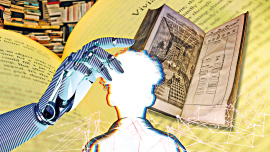
Whose literary production?: Anthropic’s Project Panama
Publishers in Bangladesh expressed that the recent surge in AI activity has not yet had a significant impact on their publishing practices or the Bangladeshi book market.
5 September 2026

When writing needs an alibi
Literature has survived censorship, plagiarism, ghostwriters, bad editors, worse reviewers, and the occasional panic that a book might be dangerous enough to ban.
3 September 2026
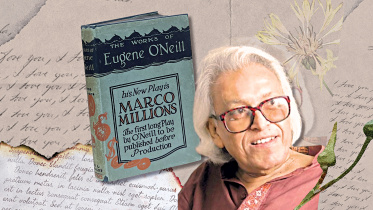
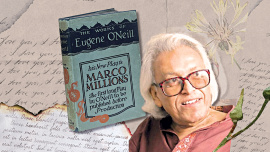
Poet Shamsur Rahman’s drama translation: Eugene O’Neill’s ‘Marco Millions’
John Dryden, an English poet, literary critic, and social reformist of the 17th century, believed that “it is only for poets to translate a poet”.
15 August 2026
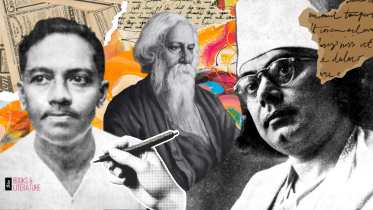
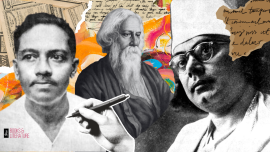
Rabindranath, Nazrul, Jibanananda: Predecessor and contemporary
So, unlike Rabindranath Tagore, who left documented comments on Jibanananda, Nazrul did not leave an authenticated body of criticism on him. What survives is essentially that famous humorous remark, whose authenticity cannot be verified beyond later recollections.
7 August 2026
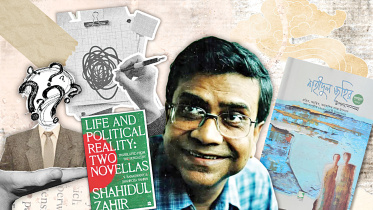
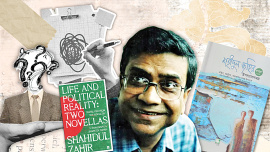
The writing’s boring, so he’s a third-class writer
Some authors are gadflies, ever stinging and nettling the established order. Some write for more or less the same reason a carpenter works with wood, or a sous-chef does mise en place.
25 July 2026

Let there be monsters: On AI mythology
Ask any room of people about their deepest fears regarding artificial intelligence, and eight out of 10 will likely invoke a takeover narrative—the “Frankenstein syndrome”, where the creation turns against the creator.
16 July 2026

A cruel radiance of vibrant yearning
In this essay, Jibanananda Das’s poem “In Camp” is presented within a new theoretical framework. My primary objective is to dissect it in the light of my proposed “Existential-Imagism.” (The Daily Star, 2026).
11 July 2026
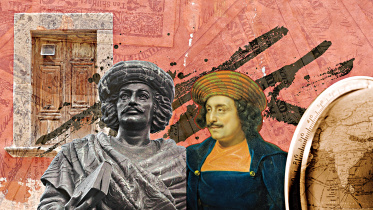
Raja Rammohun Roy: An architect of Asian cosmopolitan modernity
Raja Rammohun Roy was a trailblazer in South Asian and, arguably, Asian culture, literature, journalism, and education. He is often described as the “Father of Modern India,” the “Prophet of Indian Nationalism,” a pioneer of the Bengal Renaissance, and a founder of Asian Anglophone literature.
23 May 2026
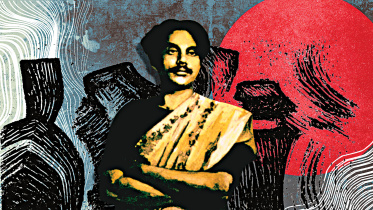
Anti-colonial resistance in Kazi Nazrul Islam’s essays
Famously known to Bengalis as the rebel poet, Kazi Nazrul Islam in most of his poems and verse-lyrics raised a strong voice against every form of oppression the British colonisers, representing the capitalist West, systematically unleashed on their subjects in India.
23 May 2026
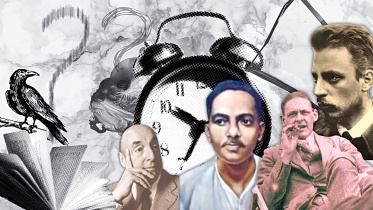
Diverse articulations in Jibanananda, Rilke, Eliot, and Neruda
At the beginning of “A Day Eight Years Ago” (originally published in 1954) by Jibananda Das, we learn that a man has been taken to the morgue.
16 May 2026
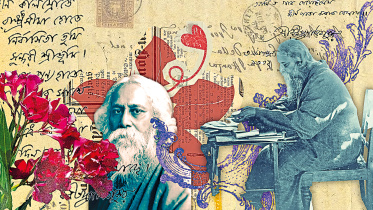
The quiet burden of love: Silence, separation, and the lives unfulfilled in Tagore
Though his characters breathe through very human emotions, yearning, hesitation, separation, regret, Tagore lifts love gently away from the limits of the human hand. It becomes something inwardly vast, where feeling matters more than outcome, and presence matters more than possession. This is why his lovers often come close, yet never arrive.
9 May 2026

Ghosts in the secretariat: Mapping the Bangladeshi Gothic
It is a Tuesday afternoon in Dhaka. Cars are honking, fumes are rising. A banker named Anirban rear-ends another car—typical for the city. Until he steps out. He sees that the other driver has been dead for what seems like days but is still moving. And he wants to talk.
7 May 2026
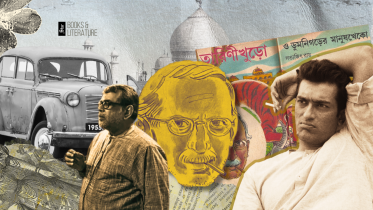
How I became Tarini Khuro’s uninvited sixth listener
Bengali literature had already seen its fair share of tall-tale storytellers—most notably Ghana Da by Premendra Mitra and Tenny Da by Narayan Gangopadhyay. Tarinicharan Banerjee, or Tarini Khuro, is not entirely different in essence. He lives in Beniatola Lane and walks to Ballygunge to narrate his stories to a group of eager listeners—among them Poltu, the narrator, and Napla, a slightly rebellious boy who delights in interrupting him. As I read those stories late into the night, I found myself, willingly or not, becoming the sixth member of their circle.
2 May 2026

The unheard theory: What the female voice in Sufi rituals reveals about modern life
It always felt like modernity flatters itself with a simple story: history moves from darkness to light, from superstition to reason, from inherited authority to critique.
25 April 2026
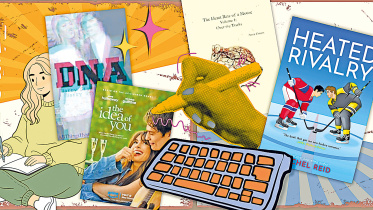
When fanfiction swapped out fans for publishing deals
It sounds flippant to put it that way but, the Aeneid, at its core, really is a continuation fic—picking up where Homer’s Trojan War ended and following Aeneas, a minor character in the canon, as he stumbles through an entirely new narrative along with original characters and incredibly expanded lore.
16 April 2026
Rabindranath Tagore and the evolving spirit of Pohela Baishakh
But it goes without saying that Rabindranath, as the most famous member of the Tagore family and one of the cornerstones of Bengali culture, is thoroughly intertwined with the most significant day of the Bengali calendar. His thoughts on PohelaBaishakh are complex and evolved over the years, alongside his own development as an artist and the changing societal circumstances, as can be seen through his three essays on this day.
13 April 2026

On ‘Bridgerton’: When romantic escapism clashes with the realities of class
Romance has never existed apart from inequality. The genre depends on distance—on obstacles that make love feel hard-won.
10 April 2026
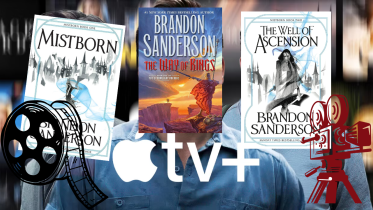
The Cosmere is getting adapted: Here is where to start reading
Earlier this year, Brandon Sanderson finalised what has been described as an “unprecedented deal” with Apple TV+ to adapt his Cosmere universe for film and television, specifically his Mistborn and The Stormlight Archive series. For years, Hollywood had shown interest in acquiring the rights to his massive fantasy catalogue. But they could not guarantee him creative control. This is the biggest reason Sanderson had not sold the rights until now. With this Apple TV+ deal, Sanderson gets full creative power and will oversee each project personally.
14 March 2026