


‘The Odyssey’ and what we lose when myth belongs only to its heroes

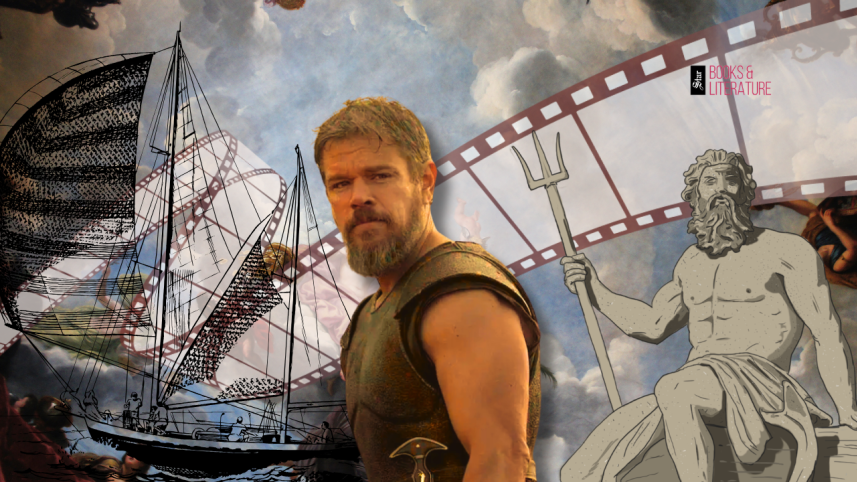
Christopher Nolan’s The Odyssey (2026) is everything audiences expect from a modern mythological epic: grand battles, brutal violence and a hero caught between glory and guilt. Adapted from Homer’s ancient Greek poem, the film is an impressive feat of action-adventure cinema. But for all its spectacle, it loses something when the myth remains so firmly centred on its hero: the women whose stories are left underwritten.
Hollywood has long been drawn to the ancient world. The early 2000s produced a wave of films inspired by myths, histories and legends, including Gladiator (2000), Troy (2004), and 300 (2006). In these films, women largely remained on the edges of the action: loyal wives, helpless victims, or seductive obstacles in the journeys of male heroes. By the late 2000s, popular interest had shifted from ancient warriors and kings to superheroes. Batman and the Avengers dominated the box office from 2008 onwards, including Nolan’s own Dark Knight trilogy. The Odyssey may now signal a return to the myths that once shaped blockbuster cinema.

In recent years, social media has helped drive a resurgence of revisionist retellings of Greek mythology, bringing renewed attention to characters once pushed to the edges of familiar stories. Madeline Miller’s The Song of Achilles (2011) reached a new peak of popularity in 2021, becoming one of BookTok’s most celebrated tearjerkers. Narrated by Patroclus, it traces his relationship with Achilles from childhood friendship into romantic partnership as they grow up and face the Trojan War, giving that bond the emotional weight Homer leaves largely unspoken. Her Circe (2018) reimagines the witch who turns Odysseus’s men into pigs as a woman who, having experienced sexual violence at the hands of men landing on her island, uses her magic as a means of self-protection. Natalie Haynes’s A Thousand Ships (2019) widens the Trojan War to its many women, revealing a conflict that was never really only about the men who fought it. Claire North’s Songs of Penelope trilogy begins with Ithaca (2022), set seventeen years after Odysseus sailed for Troy, with his wife Penelope, the queen of Ithaca, governing the island under siege from suitors, pirates and invaders while secretly building a network of women capable of defending it. These retellings suggest that the old myths have plenty of stories left to tell—if we are willing to look beyond the heroes.
There are flashes of that sensibility in Nolan’s film. With Penelope (Anne Hathaway), the film comes closest to reconsidering the women of Homer’s world. She knows she has effectively ruled Ithaca during Odysseus’s (Matt Damon) absence, even if the society around her refuses to grant her that authority. Her frustration erupts in an exchange with her son Telemachus (Tom Holland): “Empty throne! I’ve been sitting on an empty throne for twenty years! My knowledge, my years of experience, that’s nothing compared to the bristles on your chin.”
She survives through intelligence as much as endurance. As in the poem, she promises to choose a new husband once she finishes weaving a burial shroud for Odysseus’s father, only to unravel her work each night, delaying the suitors who seek to claim her hand and her husband’s throne. It’s a glimpse of the strategic mind a patriarchal world refuses to recognise—one that treats even its queens as property, a cruelty chillingly teased when Telemachus learns the fates of the twin sisters Helen and Clytemnestra, both played with brief, red-hot ferocity by Lupita Nyong’o. Samantha Morton’s Circe, meanwhile, is closer to the vulnerable, wrathful figure of Miller’s novel than to Homer’s dangerous enchantress, muttering, “Back into your disguises,” as she transforms the pigs back into their human forms.
Still, the women feel underwritten beside Odysseus, his crew, Telemachus and even the suitor Antinous (Robert Pattinson). Although Penelope appears confined to waiting and weeping for much of the poem, Homer gives her a cunning that rivals Odysseus’s own. When he returns, she tests him by asking that their bed be moved, understanding that only the true Odysseus would know that it was built around a living olive tree. Nolan replaces this test with a gold pin depicting Athena, a token Penelope gives Odysseus before he leaves for Troy so she will recognise him when he returns. The choice is telling: Athena represents wisdom and protection, while the gold can be read as reinforcing the idea that those qualities, and Odysseus’s bond with Penelope, are meant to endure.
Where Homer gives us a climax in which husband and wife match wits, Nolan opts for a sentimental gold pin, turning a test of shared intelligence into a more conventional romantic gesture.
The bow contest is Penelope’s idea, an act of strategy from a woman who has spent years quietly outmanoeuvring the men around her. But the film ultimately keeps her intelligence within the boundaries of the love story; her cunning exists in service of Odysseus and the reunion she awaits. Nolan’s film centres on a revered man returning home to the wife and son he left behind, with Penelope serving as its emotional anchor.
The same pattern follows elsewhere. Charlize Theron’s Calypso gets considerable screen time but little else. She is never angry, never funny, never sharp-tongued and never consumed by lust for Odysseus. She’s a device that enables him to tell his story, a caretaker whose purpose is to advance his emotional journey rather than her own. Zendaya’s Athena, too, is filtered through his guilt and conscience rather than presented as a power with her own agenda.
Nolan has cited the opening line of Emily Wilson’s 2017 translation, “Tell me about a complicated man,” as one of his inspirations for the film, and he is clearly interested in the nuances of Odysseus: a brilliant strategist whose cunning exists alongside his capacity for violence, deception and grief. But Wilson’s version, the first complete English translation of the poem produced by a woman, went further. She calls the people working in the Ithacan household “slaves” rather than reaching for the euphemistic language earlier translations relied on, and refuses to shy away from the text’s sexual violence, especially against the enslaved women. Wilson has since distanced herself from the film. In a scathing London Review of Books essay titled “An Uncomplicated Man,” she said she would be ashamed to have written any part of the script, criticising its thin characterisation.
Nolan’s adaptation focuses on the nuances of its hero while smoothing over some of the darker realities of the world around him, in favour of a more accessible, marketable blockbuster. The very tensions Wilson brings to the surface are where the film feels most constrained. Nolan avoids the sexual violence inflicted on the enslaved women and their hanging at Telemachus’s command. Their only representative is Mia Goth’s Melantho, who is given the illusion of romantic agency with Antinous, glossing over the power imbalance inherent to her status. An enslaved woman couldn’t have entered a genuinely consensual relationship with a suitor she was obligated to serve.
The next Hollywood mythological adaptations need not belong only to warriors and kings. The women of The Odyssey, and the many others still waiting at the margins of myth, deserve the same scale, nuance and seriousness long given to the heroes who have dominated these stories. And if BookTok is anything to go by, audiences are ready.
Shababa Iqbal is a journalist with a background in entertainment, fashion, lifestyle, literature, and youth-focused stories. Reach her at shababa@icloud.com.
 For all latest news, follow The Daily Star's Google News channel.
Comments