


The winter ballot
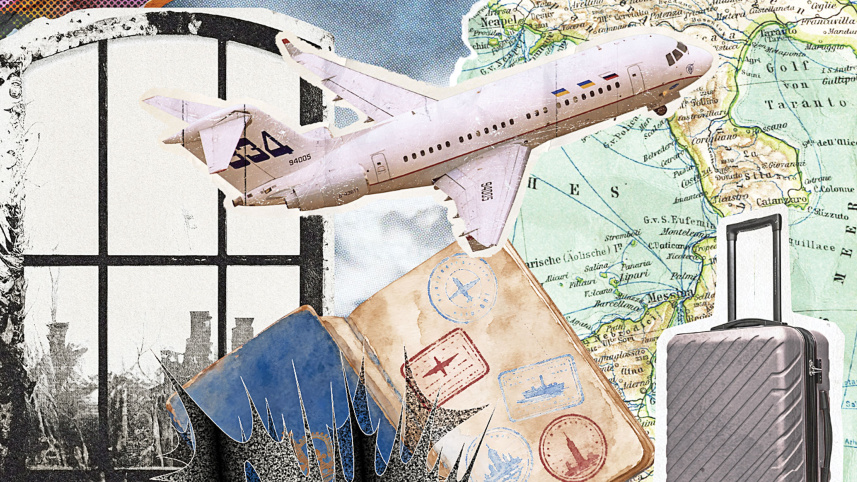
“I’m sorry, but choosing anywhere near the capital will delay your citizenship process by at least five years,” said the woman at the counter of the immigration office. “The capital itself will cost you a lifetime.”
“We can’t really afford to wait that long,” pleaded Afzal, “As you can see in our application, we can’t risk going back to our country. Is there a more remote area where you can place us that’ll get us sorted for citizenship faster? Please, we’re desperate.”

And desperate they were. Afzal and his wife Aisha had left their country for good. The two of them caught the flight to Italy last year. But upon arrival, they tore their passports, crossed the borders illegally, and moved across Europe. 13 months later, they landed in the most remote corner of the Nordic region, in Petrovia.
Petrovia was a peculiar choice. With a population of 500,000 and summer lasting only one month a year, the country was not the most popular among immigrants. However, with more and more countries turning their faces away from immigrants, Afzal knew he had to choose a country which had not yet been saturated by immigrants. “How do you think our ancestors made it to England?” Afzal would tell Aisha, “They hit England back when the market was still untapped by our countrymen. They were the first generation of immigrants and became rich with almost nothing. Look at them now! Mayors, councilmen, and whatnot!”
“We do have a place where we can set you up at,” said the immigration officer, “It’s been deserted for a while but the government’s trying to get the place up and running again. There’s no one currently living there and the nearest town is 28 miles north. However, if you do intend to live there, the government will offer you a fully furnished home and some financial incentives to help you get started.”
“We’ll be the only ones there?” asked Afzal.
“For now, yes.” the woman replied, “But with so many asylum applicants, I’m sure we’ll get more people settled there in no time. And the citizenship process will take a few months only.”
The citizenship offer was enough to reel Afzal in. Aisha was a bit hesitant at first, but there was no going back now. They were far away from home and there was nothing left for them back where they came from.
The area was called Odenstall, occupied by a nomadic tribe for some time until the 1950s and deserted ever since. It took some time to adjust to temperatures below minus 30℃. Fortunately, Afzal and Aisha got plenty of support to settle in—clothes, food, house, car—the whole package. With a roof over their heads and warm beds, Afzal could now focus on his Petrovian dream.
He’d heard tales of Sheikh Firoze Ahmed, the local legend who left the country for England after the second World War and built his own empire there, the empire being his own taxicab company. Firoze had become a legend at Brick Lane and back home in Afzal’s village as a first-generation immigrant who had built a foundation for aspiring immigrants like Afzal. Firoze’s grandson had recently run for ward councillor back in England and intended to run for mayor someday.
Afzal was certain that new flocks of immigrants would soon crowd Odenstall. A king needed his subjects and Afzal had to make sure that when the people arrived, they would find a leader waiting to rule over them. To fulfil his dream of becoming the mayor of Odenstall, Afzal would require political backing. He decided to join PTP–Petrovian Traditionalist Party, the fastest-growing political party in all of Petrovia.
But there was a slight hiccup. The PTP was an extreme far-right organization whose entire political manifesto relied on playing the victim and blaming immigrants. Although the General Secretary of PTP liked the idea of taking hold of Odenstall before its population rose and securing one more seat in parliament, nominating an immigrant like Afzal would put them under scrutiny. But Afzal wasn’t ready to give up on the bargain just yet.
Although Afzal’s citizenship application had been accepted within three months, Aisha’s application was still under process. PTP’s men at the immigration office made sure it remained pending and gave citizenship to one Ingrid Jansberg, a white woman in her 40s who settled in Odenstall two months back. Aisha was now Ingrid Jansberg and as a white woman, she could now be safely nominated by PTP for the mayoral election.
Aisha a.k.a. Ingrid Jansberg, had always been a dreamer. Sure, she came to the other side of the globe with her husband, but she was no less ambitious than Afzal. With the major elections up ahead, Aisha knew it was time to take control of things from the very beginning rather than letting her husband dictate everything. The people of Odenstall, no matter how small that number, deserved more than a puppet mayor. Aisha believed that her decision of rebellion at such an early stage would go on to create a culture of fairness and transparency in Odenstallian politics.
It started with the inclusion of a year of paid maternity leave for the women of Odenstall in Aisha’s election manifesto. Soon, it was equal-pay, mandatory formation of daycares in offices, reserved seats for women in the mayor office, tax-exemptions for women entrepreneurs and so on. With each inclusion, it was becoming increasingly harder for Afzal to convince the people upstairs at PTP that he and Aisha were still as right-wing as the next PTP member.
When the election-day came, Afzal decided not to vote. The election commission required at least two-thirds of voters to participate for an election to be considered valid. With Afzal not voting, 50% of Odenstall’s population was out of the picture. The mayor election was nullified.
The cold war in the Afzal household was now affecting Petrovian politics. In the next election, Afzal ran as an independent candidate, but this time, Aisha voted for herself and Afzal for himself, so the election was a tie. The stalemate went on for months.
Soon, the national elections came up and the anti-immigrant narrative by PTP showed its magic. PTP won by a landslide and formed the cabinet. And as per their election manifesto, they shut down all immigration until further notice. With a majority in parliament already in their hands, Odenstall was no longer important enough for the PTP to pay attention to. Suddenly, Afzal’s dreams of ruling over a repopulated Odenstall were over.
Months went by as Afzal and Aisha started going back to living their normal lives without the obsession of mayorship engulfing their domestic life.
“I think we should try having a baby now,” Afzal said one morning during their regular walks across the snow.
 For all latest news, follow The Daily Star's Google News channel.
 “What? Why are you saying this now?” Aisha looked stupefied by the proposal.
“What do you mean why?” smiled Afzal. “That’s why we came this far, didn’t we? To live a better life than back home, and ensure our kids have a more comfortable childhood than we had! What’s the point of coming this far if we don’t have a legacy to leave, a family with our name on it?”
“You said more people were going to settle in Odenstall!” shouted Aisha, “I thought our legacy would be you and I being the founders of this town! It’s been 3 years, Afzal! Where’s my town? Where are our people?”
“What does that have to do with us trying to have a baby, having our own family?” asked Afzal, “We ought to have a family of our own regardless of whether any of us is a mayor!”
“Well, you didn’t tell me that before,” mumbled Aisha as she walked away, “It’s too late for that anyways.”
“What do you mean it’s too late?” Afzal caught up to Aisha and held her hand.
After a small scuffle between the two, Aisha broke down in tears, “After the first few times the elections got cancelled, I realised you’d go to any extent to not let me win and run the city on my own. I went through your files, Afzal. I got to know about this little loophole you found that women more than 6-months into pregnancy weren’t allowed to run for elections. That was your plan, wasn’t it? To impregnate me and apply for the re-elections right when I’d be six months into having our baby.”
“Aisha, that was a long time ago,” Afzal tried to console her, “They’ve shut the country down! There’s no one else coming to Odenstall. It’s just you and me! We can start trying now, it’s not too late, is it?”
Aisha shouted, “So that you can indoctrinate our child into voting for you once they grow up? No way! With the child in Odenstall, it’d be the two of you versus me. If I cannot be the mayor of Odenstall, no one else can. Right after I found out about your little plan, I went to the city and had my tubes tied.”
With bloodshot eyes, Afzal stood on the snow looking at Aisha. The red of the broken veins in his eyes mirrored the blood that slowly covered the snow around Aisha as her fractured skull lay cold on the ice.
Afzal surrendered to the police two days later. As Afzal looked back at his home in Odenstall through the window of the prison van, it looked the same as how Aisha and Afzal had seen it for the first time–deserted, quiet, and homely.
Hasib Ur Rashid Ifti is a teacher in the morning and a writer by night. Reach him at hasiburrashidifti@gmail.com.
Comments