


Taxpayers should not have to bear the cost of bad loans


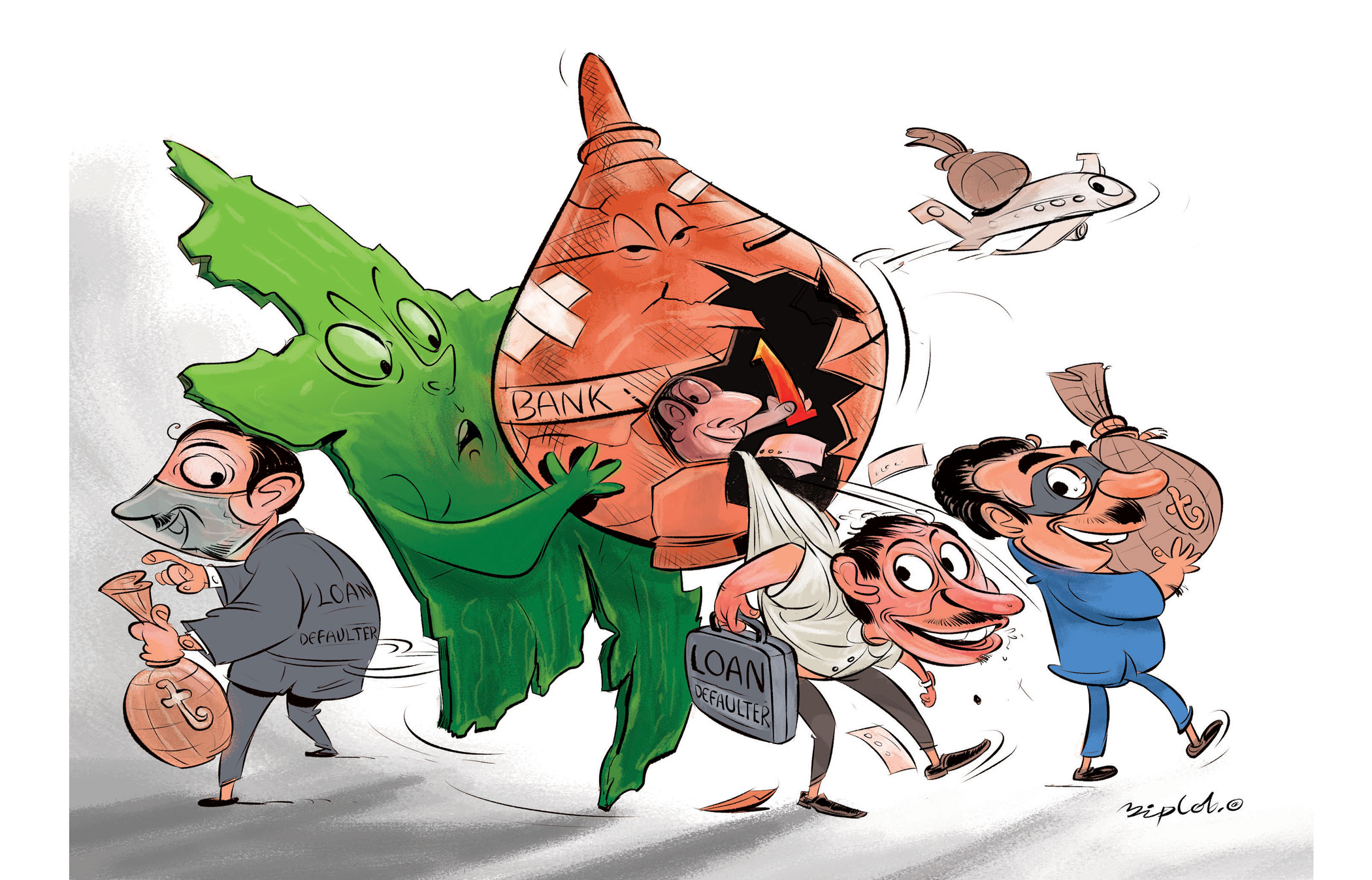
Bangladesh’s bad loan situation raises a question that accounting alone cannot answer: who should bear the losses? At the end of June 2026, non-performing loans (NPLs) reached about Tk 6,06,555 crore, or 32.78 percent of bank loans. A New Age report says Bangladesh Bank is considering extending the overdue period for classification from three months to nine. That would improve the reported NPL ratio without recovering any money. Delaying recognition leaves the loss where it was.
Besides, repeated loan rescheduling has brought little lasting relief. As a recent commentary published in The Daily Star argues, concessions to large defaulters can make non-payment seem acceptable. Bangladesh needs to acknowledge losses, establish which borrowers can recover to pay off loans, and rebuild viable banks. Further concessions without these decisions will only prolong the problem.

Notably, much of the debate treats loan classification, provisioning, restructuring, write-offs and recapitalisation as interchangeable. Each serves a different purpose, and each has different consequences for the public purse.

Provisions—amounts banks set aside to cover potential losses in case a borrower fails to pay—reduce a bank’s income and capital. They are not government expenditure. Writing off a fully provisioned loan removes it from the bank’s balance sheet, but the borrower’s obligation and the bank’s recovery efforts continue. Public funding becomes relevant only when private capital cannot absorb losses and intervention is needed to protect systemic stability.
The Tk 6,06,555 crore NPL stock therefore does not imply an equivalent taxpayer bill, i.e., it is not an automatic government liability. Banks should first absorb the losses from these NPLs through provisioning and write-offs. Several studies co-authored by me show that how a bank provisions for its loans depends on a number of factors, ranging from institutional incentives to changes in accounting standards and provisioning regulations. Discretionary provisioning can also reduce a bank’s liquidity.
Therefore, the Bangladesh Bank’s move towards risk-based supervision of banks and IFRS 9—an international accounting standard for banks to classify, measure and report loans—requires credible asset-quality reviews of individual banks to establish losses. Besides, the IMF emphasises addressing undercapitalisation in the banking sector, depositor protection, and minimising the fiscal cost of restructuring banks.
Some businesses default because currency shocks, import disruptions, energy shortages or higher interest rates undermine their cash flow. Therefore, restructuring is justified where an independent assessment shows that recovery is possible. Borrowers should contribute equity by putting in more of their own capital, disclose information on beneficial ownership (actual owners who control the business) and accept restrictions on dividends and related-party transfers, and agree on measurable repayment milestones. Non-viable firms, serial reschedulers and diverted funds—used for purposes other than the stated business purpose—warrant different treatment.
Recovery also depends on how quickly disputes are settled. An article in The Daily Star describes Thailand’s out-of-court workouts and specialised bankruptcy procedures. Bangladesh already has a legal basis for mediation: section 22 of the Artha Rin Adalat Ain, 2003, requires court-referred mediation after the defendant (in this case the borrower) has submitted a written statement; section 23 allows a further attempt at alternative dispute resolution (ADR) before judgment.
Banks should use these provisions through mediation lasting 60-90 days, with independent mediators and representatives authorised to settle. Borrowers must disclose their assets and beneficial ownership, and settlements must be enforceable. Recovery proceedings should resume promptly if mediation fails. Parliament could introduce a pre-litigation ADR window for small and medium enterprises and viable corporate borrowers. Clear eligibility rules would help prevent willful defaulters from using mediation to obtain another waiver.
Professionally managed distressed asset companies—specialised firms that buy and manage troubled financial assets—could help banks recover value under Bangladesh Bank oversight. Their usefulness depends on honest transfer prices. Suppose a Tk 100 bad loan has a recovery value of Tk 30. Selling it to an asset management company (AMC) for Tk 90 with a public guarantee conceals a Tk 60 recapitalisation cost, which the taxpayer ultimately bears.
South Korea’s KAMCO and Malaysia’s Danaharta illustrate the importance of credible valuations, professional management, recovery powers and a limited operating life. Ukraine wrote off fully provisioned loans while continuing recovery. These experiences suggest that asset sales work best alongside borrower restructuring, bank recapitalisation and efficient foreclosure, backed by political commitment.
The FY2026-27 budget allocates Tk 36,706 crore to bank mergers and restructuring; the revised FY2025-26 allocation was Tk 41,558 crore. Before drawing on these funds, banks should absorb losses through earnings and capital. Shareholders should face dilution or loss of their investment, and culpable insiders should face clawbacks. Borrower repayments, collateral recoveries and asset sales should reduce the remaining gap. Viable banks should then seek private capital. Taxpayers should supply only the residual capital needed by systemically important banks.
Any public recapitalisation should secure an equity stake in the bank or another recoverable claim. Management changes, recovery targets and a timetable for government exit should be conditions of support.

Bonds issued by the government to recapitalise banks defer cash payments but add to public debt. At an assumed 10 percent financing cost, Tk 36,706 crore would require roughly Tk 3,671 crore in annual interest, alongside about Tk 1,27,500 crore already budgeted for interest payments. Financing insolvency by printing money would create further pressure. Therefore, central bank liquidity should serve only solvent banks experiencing temporary stress.
A three-year timetable should be set up for bad loan clean-up. During the first six months, the asset-quality-review results must be published, distinguishing viable from non-viable banks and restricting dividends at undercapitalised institutions. Over the following 18 months, viable borrowers should be restructured through disciplined workouts and ADR; distressed assets should be sold and fully provisioned loans written off without abandoning recovery. Then, government should recapitalise viable banks and resolve or merge those that cannot survive.
The final year should concentrate on preventing another accumulation of bad loans. Better underwriting (assessment of borrower risk), fit-and-proper tests (strict screening of bank management/directors), board accountability, disclosure of related-party lending and faster collateral enforcement must become routine practice.
A lower reported NPL ratio will mean little if banks still cannot recover their loans. The test is whether Bangladesh restores credible balance sheets, preserves viable businesses and recovers diverted assets while protecting depositors. Taxpayers have a role where stability requires public support, but they should not carry the losses that borrowers, bank owners and responsible insiders can bear.
 For all latest news, follow The Daily Star's Google News channel.
 Dr M Kabir Hassan is professor and Moffett Chair in finance at LSU-New Orleans, US, and member of the AAOIFI Ethics and Governance Board and chairman of its education board.
Views expressed in this article are the author's own.
Follow The Daily Star Opinion on Facebook for the latest opinions, commentaries, and analyses by experts and professionals. To contribute your article or letter to The Daily Star Opinion, see our guidelines for submission.
Comments