


Biman's fleet ambition needs a business case
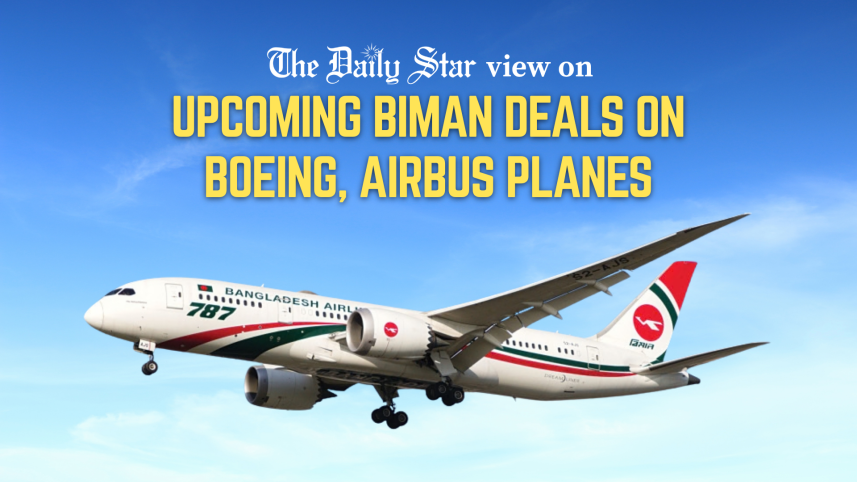
Bangladesh's national airline flies 19 aircraft. But within weeks, it may have 21 more on order. As this newspaper reported, Biman Bangladesh Airlines is preparing to sign for 11 Boeing jets around the UN General Assembly and 10 Airbus aircraft in October. These would come on top of the $3.7 billion agreement signed in April for 14 Boeings. Taken together, this would be the largest fleet expansion in the carrier's history.
It deserves far more scrutiny than it has received. Let's start with the sequence. The April order was already large for an airline of Biman's size. The prospect of 11 more Boeings did not emerge from a board presentation in Dhaka. It surfaced on August 30 in a social media post by Sergio Gor, the US special envoy for South and Central Asia, who praised "another incredible deal" between President Donald Trump and Prime Minister Tarique Rahman. The Bangladesh government insists Washington applied no pressure and that the decision is "all business of Bangladesh". That may be so, but when Washington announces Biman's orders before Biman does, it is fair to ask who is making the decisions.

Europe has since made its own case. The EU ambassador has called for a "level playing field" based on "commercial merit". The British high commissioner raised the Airbus purchase with the aviation minister this week. The minister, for his part, has said Bangladesh would buy aircraft from France, Britain and Germany, where Airbus parts are built.
The commercial logic here is unclear because nobody has set it out. Biman has not published a consolidated business case explaining how a mixed fleet would be deployed, which routes the new aircraft would serve, or when older planes would be retired. Today, its jet fleet is entirely Boeing. Large, well-capitalised carriers manage mixed fleets. For a small state carrier like Biman, however, the added complexity has real costs. Timing is also a problem. The aviation minister says Biman faces an urgent aircraft shortage, but the April Boeing order is not due for delivery until 2031, with the last aircraft arriving in 2035. New orders placed with manufacturers carrying multiyear backlogs will not fix a shortage this year or next.
Then there is the question of money. The value and financing structure of the additional planes have not been disclosed. A state airline should not take on billions in debt before telling the public the price. Whatever the financing structure, the ultimate risk sits with the taxpayers. If the airline cannot service the debt, the state will bear the cost, whether through guarantees or capital injections. Parliament and the public are therefore entitled to know the total commitment across all the deals. Officials say that decisions will follow the recommendations of a high-level negotiation committee, but it is crucial that those recommendations, together with a fleet plan, are published first before any signature.
 For all latest news, follow The Daily Star's Google News channel.
Comments