


Birthdays to remember

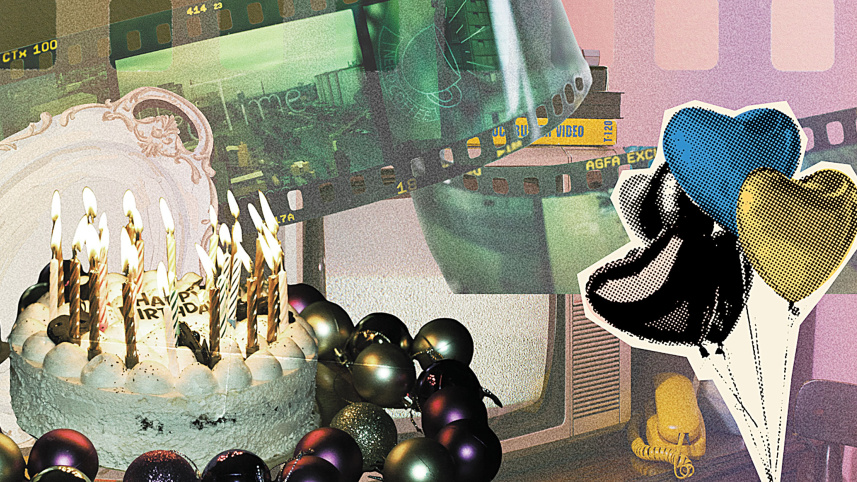
I was born a long time back. Born in an era when birthdays were not always celebrated with cakes and balloons—at least not every year. Our parents told stories about our eldest brother Chinku Bhaiya’s first birthday. That birthday was celebrated with pomp. A piñata showered the children with little presents and lozenges.
We were four children born within eight years of each other. Our fourth sibling was born four years after me, the third. Our parents had no shortage of love; it was abundant, but their means were modest. So birthdays were not about candles or confections every year. They were quieter things.

My seventh birthday: On October 21, 1961, I turned seven.
When I got down from the school bus that afternoon, I stopped in surprise. People, young and old, in ragged clothes, lined up outside the gate. Some faces were creased by fatigue, their saris and lungis worn thin by years of use. They looked both patient and expectant.
Amma came out to hug me, her eyes tired but glowing. “They’ve come for the feast,” she said. “We’re feeding them today—to celebrate your birthday.”
I recollect standing still, swinging my small leather suitcase, as I looked at the strangers who had gathered for my birthday lunch under the shade of the garden tree. My mother smiled at me with her hazel eyes. I could trace a bit of pain in those eyes. Dark circles under her eyes spoke of a sleepless night. Feeding people living in poverty was her way of making amends.
This unusual birthday celebration dated back to an afternoon when I was only 18 months old. My two elder brothers—Chinku Bhaiya, five and a half, and Pincho Bhaiya, three—and I were playing in the veranda of our Nana’s house in Wari. We were visiting Dhaka with Amma to attend my younger khala’s wedding. Abba was at his post in West Pakistan. Our youngest sister was not yet born.
That afternoon, we children had bathed and eaten and we were playing on the veranda. It was Amma’s turn to bathe now. She moved a chair near the parapet, just out of habit to keep everything tidy. As the story goes, the next sound she heard was a thud—a sound that, she said, still remained in her mind.
A family lived downstairs. It was a still summer afternoon and they were lounging on the veranda downstairs when they saw a small green-eyed child topple over the parapet and fall to the grass below. That child was me.
Within minutes, my mother was there. She was barefoot, out of breath as she rushed down the staircase with Khilai and Abdul, our old help, at her heels. The family downstairs immediately lent their car, with their son at the wheel. Amma cradled me in her lap as we sped to the Medical College Hospital. She told me that as the car jolted through the streets, my head began to swell.
“It was the longest drive of my life,” she would tell us later.
But I survived. Slowly, I came back to my senses. My recovery took a month. Every day, Amma used to sit by my bed and read Chhora O Chobi, a Bangla book of nursery rhymes. Apparently, by the time I recovered a month down the line, I had all the rhymes memorised.
Amma never forgave herself for placing that chair near the parapet that afternoon. And on my seventh birthday, the feast for people experiencing poverty was her quiet way of saying thank you—for my life, for my survival.
I did not protest. No one expected all birthdays to have cakes and balloons. I was not the sort of child to make demands. I was, as everyone said, a docile child. In Bangla, there is a name for it: “Lokkhi meye.”
The 13th birthday: Six years later, everything changed.
It was 1967. My eldest brother, Chinku Bhaiya, turned 17 on October 7, and I turned 13 two weeks later. He decided, perhaps with the intent of a love pursuit, that we should have a joint October birthday celebration. I was thrilled.
Cakes, fruits, and meringues covered the table. And warm beef patties filled the house with their savoury scent. My friends from school came in their prettiest dresses, called mini shifts, and they were as short as they could get. The record player spun on the table; “And I Saw Her Stand In There” played as loud as possible.
For us girls of 13, it was an afternoon of dizzy joy. For my brother and his friends, it was something else. By then, 13-year-old girls were creatures of fascination. I saw how my brother looked, especially at my best friend Yasmine, with particular interest. She was radiant, and I saw a trace of something between them that day, though I did not name it then.
I especially remember that moment of joy. I stood next to Chinku Bhaiya to cut the cake; I felt proud—his little sister was allowed to share the stage. I ignored the fact that the party might have been his elaborate plan to invite Yasmine. For me, it was pure celebration—growing up, being seen.
The next few years played out with pranks and the pleasure of teenage haunts. We swooned over handsome boys who passed by on bicycles, and they, in turn, began to notice us.
 For all latest news, follow The Daily Star's Google News channel.
 Daytime parties became the norm; giggles, whispers, and small secrets became our language. My 13th birthday marked the beginning of those footloose and fancy-free times—the doorway to adolescence, filled with music, laughter, and the thrilling possibilities of adolescence.
Four years later, in ’71, everything would change again—but that is a story for another day.
Sara Zaker is a Bangladeshi theatre and television actor, director, business entrepreneur, and social activist. She was awarded Ekushey Padak by the government of Bangladesh in 2017.
Comments