


Chayanika Chowdhury: 25 years and countless stories

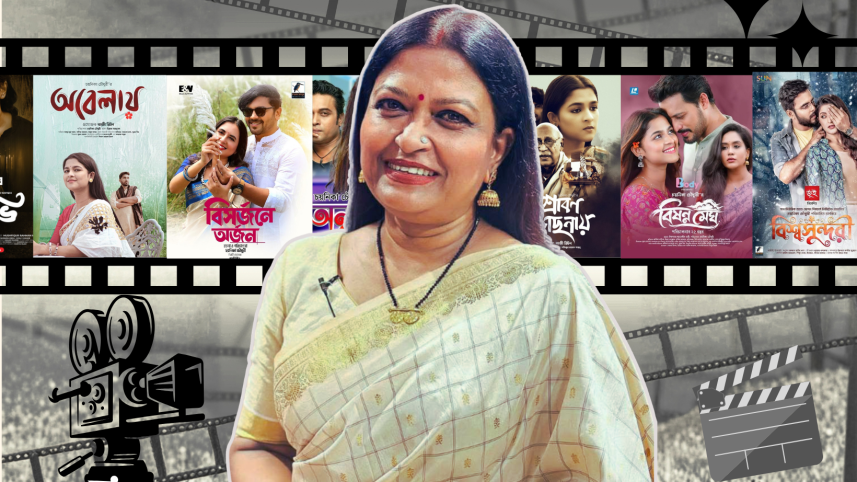
For 25 years, Chayanika Chowdhury has remained closely connected to the world of television drama in Bangladesh. From her first directorial work in 2001 to her journey into cinema, she has built a career around stories of love, relationships and family. Yet, despite the years she has spent behind the camera, she says the nervousness before a shoot has never really gone away.
“I was scared on the first day, and even today I feel equally nervous the day before a shoot,” Chayanika said. “The only difference is that people did not know me as a director then. Now there is an expectation.”
In a recent interview with The Daily Star, the director reflected on her 25-year journey, her unexpected entry into direction, the people who helped shape her career, and the changes she has witnessed in the country’s entertainment industry.
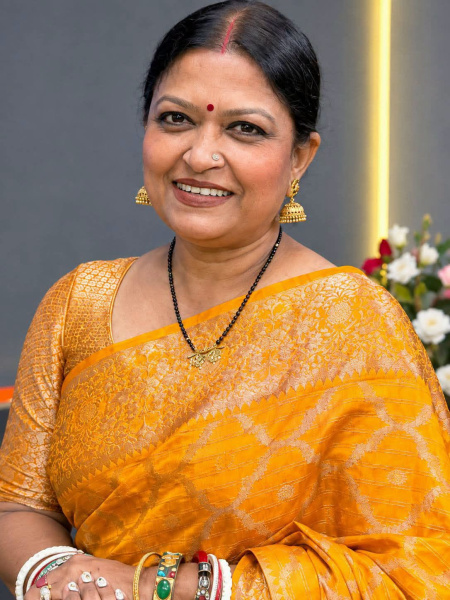
In September 2001, Chayanika went to the production house Light & Shadow to collect her remuneration for another project. A new drama was being discussed on the set, and she asked producer Mujibur Rahman who would direct it. His answer caught her off guard: “You.”
There was no long period of hesitation. Chayanika agreed almost immediately. “I act first and think later,” she laughs. “Within two seconds I said ‘yes’.”
That impulsive “yes” marked the beginning of a 25-year journey behind the camera, taking her from television dramas to cinema and establishing her as one of Bangladesh’s familiar names in directing.
On October 28, 2001, at exactly 8:40pm, her first televised directorial drama, “Ek Jibone”, was broadcast on Bangladesh Television. Actress Tamalika Karmakar served as executive producer, while Zaigan Rabbi backed the production under the Ad Media banner.
There was hardly a budget to work with. “I carried everything from home – costumes, candles, even a blower to fake rain,” Chayanika recalls.
However, “Ek Jibone” was not actually the first drama she started shooting. She considers “Shesh Belay” her first production as a director. “I started shooting ‘Shesh Belay’ first. Ishita and Jaya acted in it. Mujibur Rahman of Light & Shadow gave me that first platform,” she says.
Her connection with arts, however, began long before she stepped behind the camera. She had been involved in dance, music and recitation from an early age, even receiving awards for her performances in the late 1970s. “I was involved with dance, singing and recitation from a very young age,” she said. “In 1977 and 1978, I also received awards. After eight or nine years, my mother asked me why I was not doing anything.”

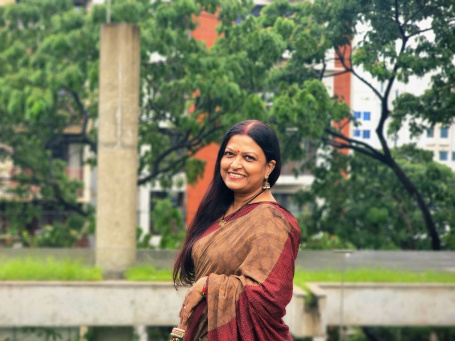
At the time, her husband, Arun Chowdhury, was already a recognised director. Chayanika had written a drama and shown it to him, hoping for his opinion. “He told me that I should try doing it myself so that I would not become dependent on someone else,” she recalled. “Then Bipasha Hayat, who was my neighbour and an actress, read the writing and praised it.”
Her association with scriptwriting had already begun by then. In 1998, she made her debut as a screenwriter with the drama “Bodh”. That first step into writing gradually opened a path towards directing, which would eventually become the defining part of her professional life.
The opportunity to make that transition came soon after.
Her early years in television were also shaped by a very different viewing culture. Bangladesh Television was then the dominant platform, and a drama could bring millions of viewers together at the same time.
“Almost 10 crore people used to watch a drama together,” she said. “After a drama was aired, I would receive so many phone calls. People would call and praise the work.”
The launch of NTV in 2003 brought another platform for her work. Soon, her dramas were being aired across different channels, particularly during special occasions.
“After NTV started in 2003, my dramas were also aired there,” she said. “People gradually came to know that there was a new director named Chayanika Chowdhury who was doing really good work. After that, on Valentine’s Day, Mother’s Day and Father’s Day, my dramas would be aired on different channels.”
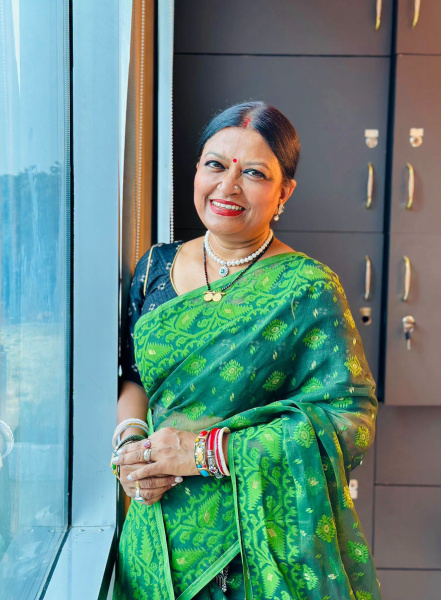
Today, the audience landscape is very different. A drama’s success can be measured within hours through online views. Her recent drama “Bishonno Megh” reached three million views within four days of being uploaded on YouTube.
But Chayanika says numbers have never been her primary motivation. “I am not hungry for views,” she said. “I believe in a good story, a good set, beautiful cinematography and quality acting. Those are the things that matter to me.”
As a female director, however, the journey was not without its difficulties. While she received strong support from her family, she also encountered doubts within the industry. “From the family side, I received a lot of support,” she said. “I would wake up at 6am, finish the cooking and organise everything at home, and then go to the set.”
“There were people in the industry who perhaps wondered how a woman director would work,” she added. “Some even tried to exclude me. But I never took those things personally. I proved myself through my work at the channel previews.”
For Chayanika, directing eventually became much more than a career. “To me, work is a kind of love and deep affection,” she said. This emotional connection is particularly evident in the subjects she has returned to throughout her career. Relationships, family and romance have remained central to her storytelling.
“I feel most comfortable making stories about relationships, family drama and love,” she said. “I have also worked on thrillers and OTT projects, but I understand the emotion of love very well.”
Among the works that remain especially meaningful to her are “Onumoti Prarthona”, which she wrote and directed, and “Chander Aloy”, written by Tanni.
“‘Onumoti Prarthona’ and ‘Chander Aloy’ are two very special dramas for me,” she said. “‘Chander Aloy’ was particularly important because after watching it, Suborna Mustafa wrote on Facebook that it was time for Chayanika to make a film.”
That encouragement eventually led to her move into cinema. Her first film, “Bishwoshundori”, was released in 2019 and went on to receive eight National Film Awards. She later directed “Prohelika”.
After 25 years, Chayanika says she has directed 475 single-episode dramas, 18 serials and three films. Along the way, she has worked repeatedly with many artistes and producers who have become important parts of her professional journey.
“I am grateful to Mujibur Rahman of Light & Shadow, who gave me my first opportunity, and Zaigan Rabbi of Ad Media,” she said. “I am also grateful to the artistes from my early work, including Tamalika, Shahed Sharif Khan, Aupee Karim, Srabanti, Ishita and Jaya.”
She also expressed gratitude to those she considers her teachers and mentors, including Imdadul Haq Milan, Mahfuz Ahmed, Mustafa Kamal Syed, Faridur Reza Sagar, Nawazish Ali Khan and Chanda Reza, along with the producers she has worked with. She named film producers Anjan Chowdhury, Ajoy Kumar Kundu and Jamal Hossain among those to whom she remains indebted.
Some artistes have appeared particularly frequently in her work. Abul Hayat has played around 280 supporting roles in her dramas, while Dilara Zaman have appeared in roughly 230 to 260. Ziaul Faruq Apurba has been her most frequent male lead, appearing in 161 single-episode dramas and four serials. Tareen Jahan has been her most frequent female lead, appearing in around 100 dramas.
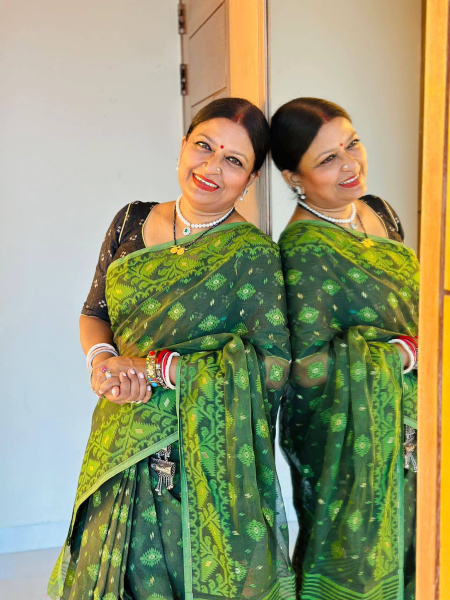
Yet, even after 25 years, Chayanika does not appear ready to slow down. “I still have the same concentration and dedication towards my work,” she said. “I follow the same discipline of organising the set.”
She now starts shooting at around 9:30am and tries to finish by 11pm, a routine she follows to ensure that the unit members get enough rest. “I strictly maintain this rule,” she said. “The people working in the unit also need adequate rest.”
From an unexpected “yes” in 2001 to 25 years of work, Chayanika’s journey has crossed television, cinema and a rapidly changing entertainment landscape. Yet, after a quarter of a century behind the camera, the nervousness remains, as does the dedication that first took her to a set in 2001.
 For all latest news, follow The Daily Star's Google News channel.
Comments