


Dinu Billah celebrated through music and memories
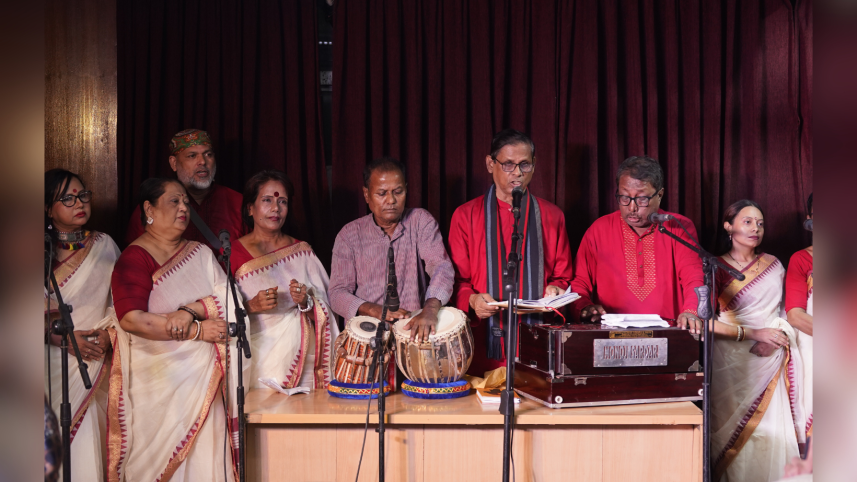
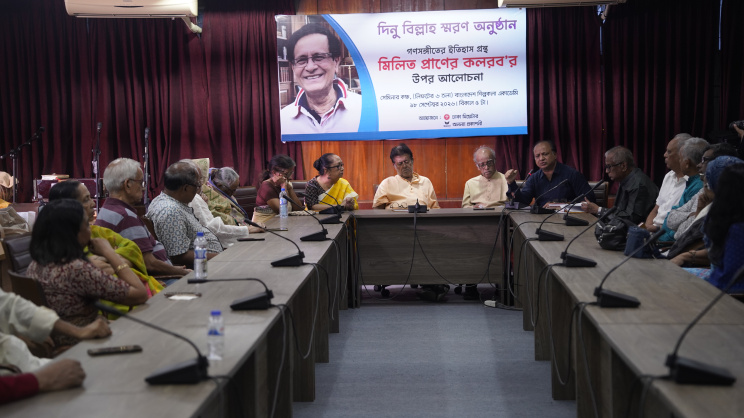
A memorial programme commemorating writer, researcher, folk musician and freedom fighter Dinu Billah was held on September 18 at the National Theatre Seminar Hall of Bangladesh Shilpakala Academy in Dhaka. The programme began at 5pm and concluded at 7:30pm.
Dinu Billah was a Bangladeshi writer, researcher, cultural organiser and freedom fighter whose work connected the history of the Liberation War with the country’s post-war cultural movement. Billah became closely associated with the cultural institutions that emerged around the 1971 generation.
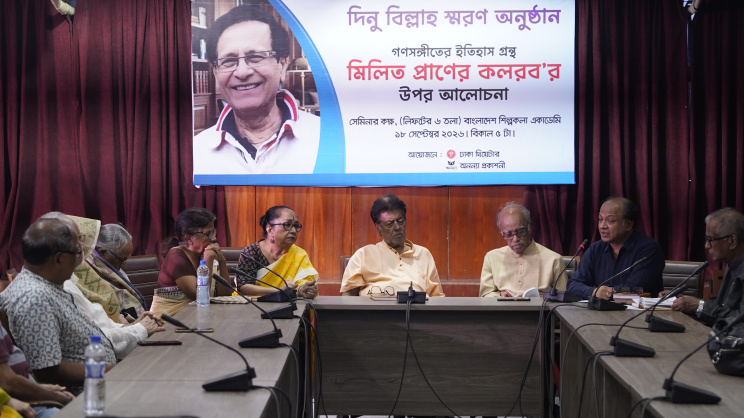
Billah died last year in Canada of a brain haemorrhage. He was involved in the formation of the Shaheed Altaf Mahmud Sangeet Vidyaniketan and Dhaka Theatre, and maintained links with the Bangladesh Film Society, Chhayanaut and Kranti Shilpi Goshthi. He was one of the founding members of Dhaka Theatre, which was established on July 29, 1973, by a group of young theatre practitioners, including Billah, who had returned from the Liberation War. Its founding conveners included Selim Al Deen, Nasiruddin Yousuff and M Hamid.
The event was arranged to honour his contribution to Bangladesh’s cultural and musical heritage. The programme included a discussion on his recently published book, “Milito Praner Kolorob”, which examines the history of folk music in Bangladesh.

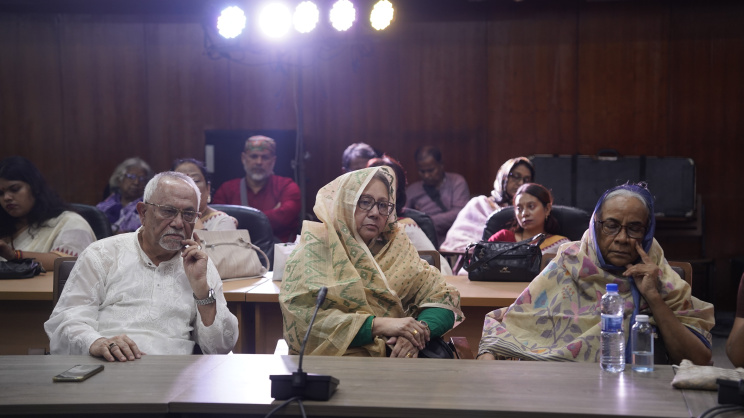
The event, intended for Dinu Billah’s friends, relatives, fellow artistes, researchers and members of the cultural community, also included members of the public, all of whom participated in remembering his work and cultural contributions.
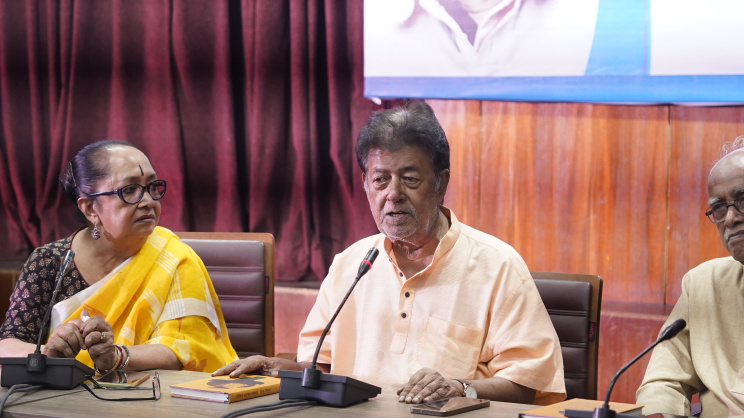
Artiste, critic and cultural figure Mofidul Haque; theatre director, actor and freedom fighter Mamunur Rashid; music researcher and teacher Sayeem Rana; and Dinu Billah’s life partner Mahbuba Khanam Kunja were the main speakers.
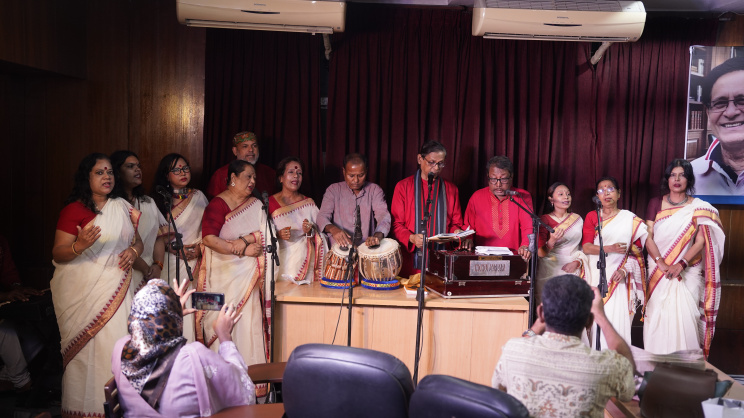
The programme also featured a folk music performance by a group of folk artistes, complementing the discussion of Dinu Billah’s work and his engagement with music.
Dinu Billah worked across writing, research and folk music during his association with Dhaka Theatre. His final publication, “Milito Praner Kolorob”, focused on the historical development of folk music and represents a significant part of his research on the subject.
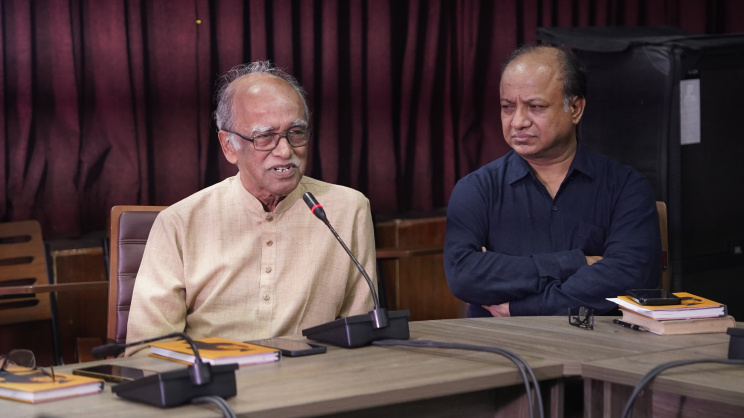
Filmmaker and theatre director Nasiruddin Yousuff was among the 25–30 people present in the wider discussion surrounding Dinu Billah, Altaf Mahmud and their generation. Reflecting on that circle, he noted that many of those associated with projects such as the Shaheed Altaf Mahmud School, as well as figures from theatre, the film society and the broader cultural movement, have passed away since being mentioned in Billah’s published works. He was the only one left.
Yousuff mentioned how Billah, through his books, documented the lives, memories and experiences of those around him, and admired the friendship and camaraderie that existed between them.
Once you hear their stories, it becomes clear why their bond ran so deep. They endured life-and-death situations together, including being captured by the Pakistan Army in August 1971 alongside composer Altaf Mahmud, his brothers and Abul Barak Alvi, and subsequently tortured. At the 2015 publication of “Surer Borputra”, Billah explained that Mahmud protected him and his brothers during their interrogation by taking responsibility for their involvement in the resistance. That experience became part of Billah’s later historical work.
“They never missed an opportunity to mention each other. Their stories were always intertwined with gratitude, and in many ways, they lived through one another. The work Billah did before his death was truly remarkable. The people may have passed away, but Billah preserved an entire generation through his stories,” said Yousuff.
The memorial programme was organised jointly by Dhaka Theatre and Anannya Prokashani.
 For all latest news, follow The Daily Star's Google News channel.
Comments