


Depression during pregnancy may shape a child’s development
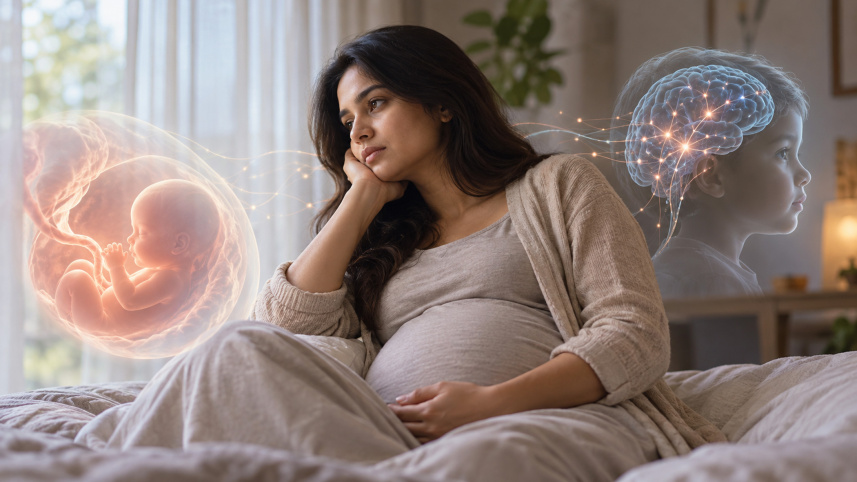
Depression during pregnancy may have effects that reach beyond the mother’s own health. A large study from the UK suggests that children born to mothers who experienced depression during pregnancy were more likely to need extra educational or developmental support later in childhood.
Researchers studied health and education records from more than 167,000 children born in Wales between 2009 and 2016 and followed them until 2022. They looked at whether mothers had depression, whether they had been prescribed antidepressants during pregnancy, and whether their children later developed conditions or difficulties affecting learning and development. These included autism, attention deficit hyperactivity disorder (ADHD), communication problems, learning difficulties and emotional or behavioural problems.

Among children whose mothers had neither depression nor antidepressant exposure during pregnancy, about 20 in every 100 were predicted to have special educational needs. This rose to around 24 in 100 among children whose mothers had depression but did not receive antidepressants, and to about 27 in 100 when mothers had depression and were treated with antidepressants.
However, the researchers stress that these figures do not prove that antidepressants cause developmental problems.
Women who need medication may have more severe depression in the first place. That makes it difficult to separate the possible effect of the medicine from the effect of the underlying illness. The study was observational, meaning it can show an association but cannot establish direct cause and effect.
The findings also highlight an important message for expectant mothers: stopping antidepressants without medical advice may not be the safer option. Untreated depression during pregnancy carries risks of its own for both mother and baby. The researchers therefore say treatment decisions should be made individually with a doctor or midwife rather than automatically stopping medication.
The study may also help doctors and schools identify children who could benefit from closer developmental monitoring or additional educational support.
Source: PLOS Medicine
 For all latest news, follow The Daily Star's Google News channel.
Comments