


Pressed from clay, pulled from memory: A K M Sayif’s tepa putul journey
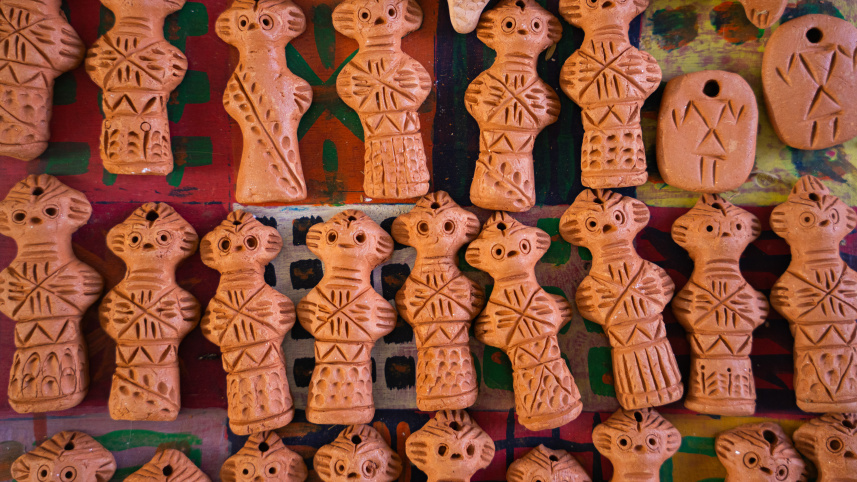
At first glance, a tepa putul can seem deceptively simple: a rounded face, a pair of eyes, a body shaped from clay. However, in the hands of A K M Sayif, also known as Binod Bihari, that simplicity opens up a much larger conversation about heritage, identity, craftsmanship and how easily a culture can become unfamiliar to its own people.
Sayif is currently studying Computer Science and Engineering, but his real fascination lies far from coding and algorithms. It is in soil, terracotta and the tactile process of shaping clay by hand.

“I am a son of Bengal,” he says. “I was born and raised in Dhaka, but nature and the soil still draw me.”
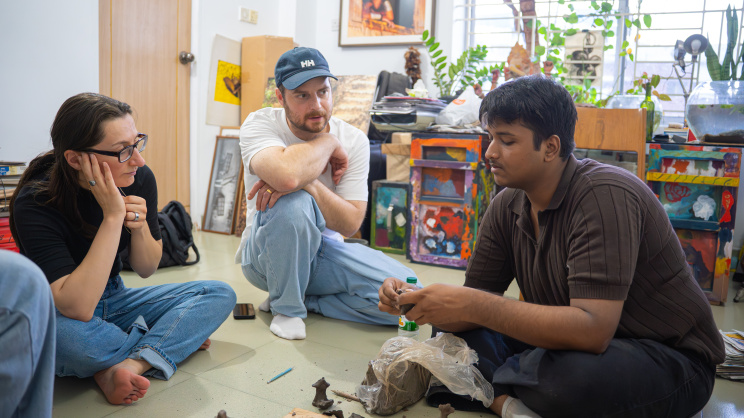
In 2024, during a period when his HSC examinations were disrupted, Sayif went to Narsingdi and visited a Pala Para, or potters’ village.
“I started learning from scratch how to prepare the clay,” he recalls. “First clay processing, then making moulded dolls, and later they taught me how to make handmade dolls.”
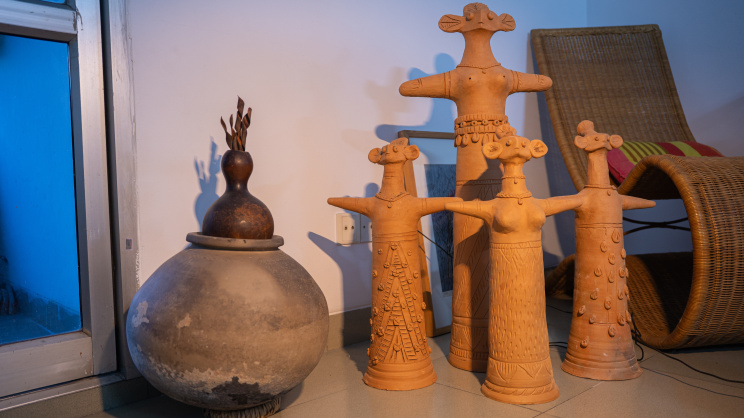
From there came months of practice. He refined the surfaces, experimented with form and gradually began making larger pieces. Where he once worked with tiny dolls, he now produces tepa putul one, two and even three feet tall!
What makes a tepa putul ‘tepa’?
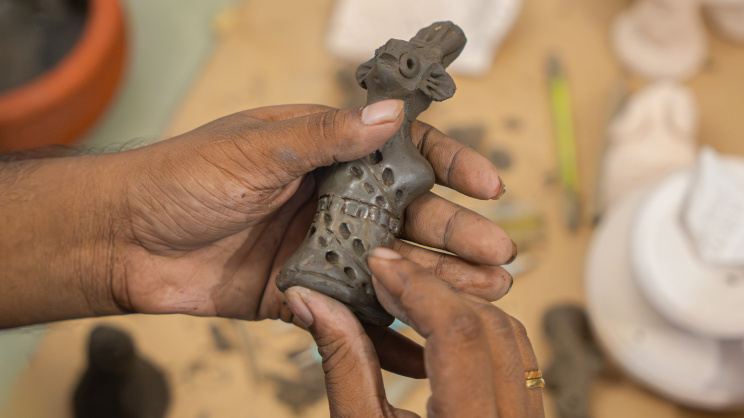
For Sayif, the distinction between a genuinely handmade tepa putul and a moulded clay doll is crucial.
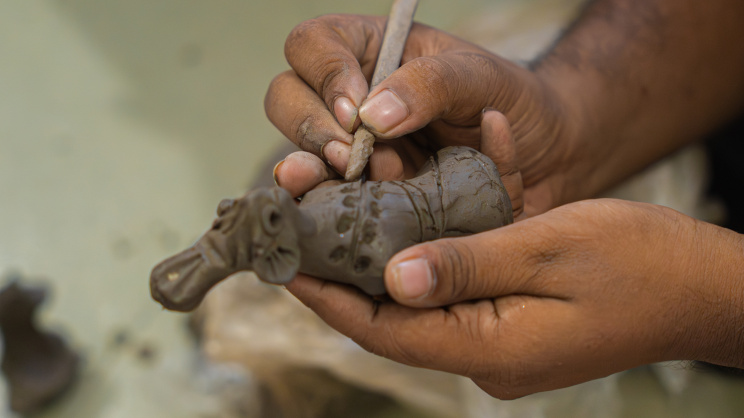
“Tepa putul literally means shaping by pinching or pressing with fingers,” he explains. “Moulded ones aren't fully shaped by hand.”
His concern with authenticity began when he went to Doyel Chattar to buy traditional dolls and found many of them were mould-made, despite being described as handmade. He felt the price often did not reflect the craftsmanship.
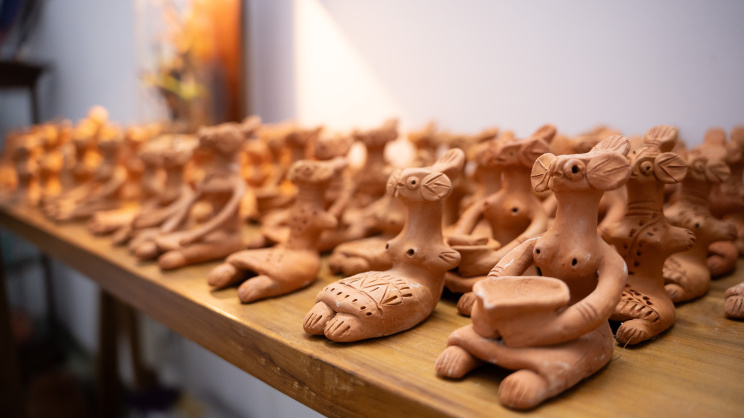
Eventually, friends encouraged him to open an online shop. He began experimenting with tepa putul jewellery, including tiny pieces made using only the doll’s head.
“It became a point of conviction for me to create tepa dolls that are genuinely worth it,” he says. “If someone buys a doll for Tk 200, it should truly deliver value worth Tk 200.”
His approach is not about preserving tradition in a frozen form. Rather, he wants to make it relevant.
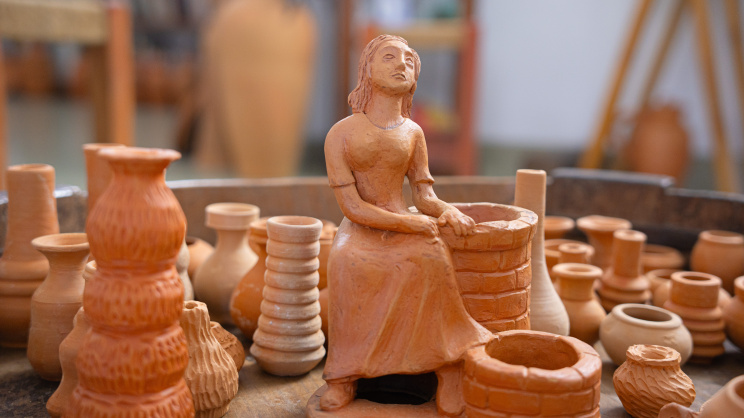
Teaching a tradition people are forgetting
A major turning point came when Sayif met photojournalist Mahmud Rahman, founder of the 55 Kodomtola initiative. Sayif later worked as an artist-in-residence under him for around six months, gaining space to create larger pieces, conduct workshops and organise exhibitions.
Many of those workshops were attended by foreigners interested in Bangladeshi culture.
“I taught them how to make various terracotta clay dolls,” Sayif says. “Among those, I primarily work with tepa putul, focusing on how tepa art can be utilised.”
The experience also made him notice an irony.
 For all latest news, follow The Daily Star's Google News channel.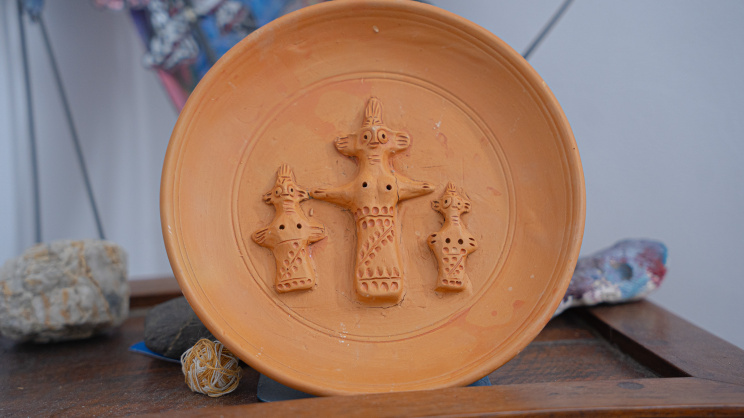
“Foreigners are appreciating it, but I feel that we Bengalis have drifted far away from our own roots,” he says. “Most of the attendees at my workshops and exhibitions have been foreigners.”
Some local participants assume the craft can be learned almost instantly.
“They say, ‘I thought I'd master it today; it looked so easy.’ But nothing is easy, actually.”
That observation goes to the heart of many traditional crafts. Simplicity of material does not mean simplicity of skill. Tepa putul relies on knowledge held in the hands: pressure, balance, moisture, proportion and patience.
Choosing clay over convention
Sayif’s journey has not been without resistance. Some relatives objected to his making figurative clay work on religious grounds, and the pressure became so intense that he stopped practising pottery for several months.
“The first obstacle usually comes from family,” he shares.
He later resumed after starting university and, through his residency, produced enough work for an exhibition. The exhibition also proved that creative work could have practical value.
“I raised an entire semester's tuition fees from my exhibition,” he says.
That experience has shaped his belief that young people should be allowed to pursue paths that may not fit conventional expectations.
“Parents should listen to their children and let them do what they want,” he says. “If their children are allowed to pursue what they truly want, then I believe they will also do better.”
For now, CSE feels increasingly distant from the future Sayif imagines. He plans to sit for IELTS and hopes to study ceramics, possibly in Italy, or explore fashion design in Europe.
“If I secure a scholarship in ceramics, I will represent Bengal's culture over there as well,” he says.
Perhaps that is what makes his work especially compelling. Sayif is not preserving tepa putul by locking it into nostalgia. He is enlarging it, turning it into jewellery, teaching it to new audiences and imagining taking it beyond Bangladesh.
Clay survives by being reshaped. So does culture.
Comments