


Rohingya crisis a ‘grave human crisis’
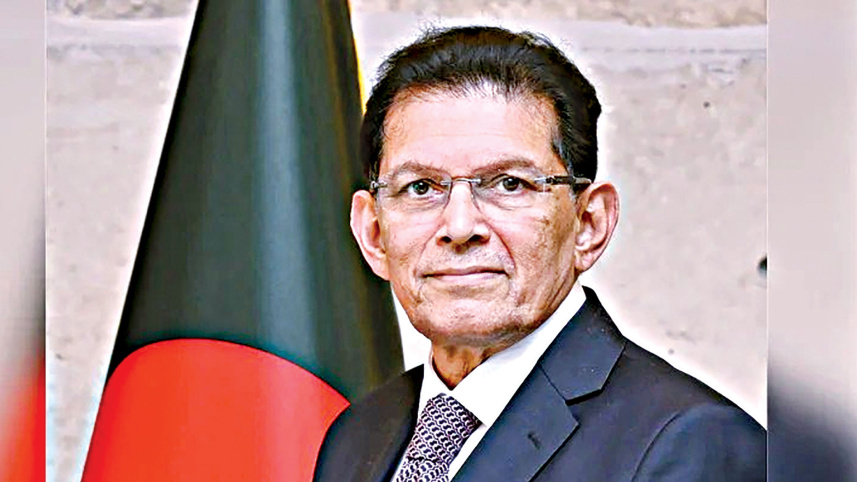
President of the UN General Assembly’s 81st session Dr Khalilur Rahman has described the Rohingya crisis as a “grave human crisis” and said violence cannot solve problems.
“The lesson I carry is this: violence will not solve any problem. It will only defer it and make it worse. Only through talks and negotiation, only by coming together, we can resolve these issues,” he told UN News in a recent interview.

Khalilur said the Rohingya crisis involved “a population attacked, their homes bombed, their villages burned, chased out by their own country’s people while pregnant mothers’ abdomens were cut open and the foetuses thrown into fire”.
“But I also saw their resilience, their ability to survive and their yearning to go home,” he said.
Khalilur spoke to UN News as the General Assembly’s high-level week began, discussing his priorities for the presidency, the Rohingya crisis, reform of the UN and challenges posed by artificial intelligence.
Bangladesh is hosting over 1.3 million Rohingyas in Cox’s Bazar and Bhasan Char Island, a senior official told UNB.
Prime Minister Tarique Rahman, during his general assembly address, will seek to draw renewed international attention to the protracted crisis and mobilise stronger global cooperation towards its resolution, the official said.
He is also scheduled to attend a Bangladesh-hosted side event on the Rohingya issue on September 23, where he will seek international cooperation for the earliest possible repatriation of the forcibly displaced Rohingyas to Myanmar.
Khalilur, meanwhile, said restoring trust in the UN would be a central focus of his one-year presidency.
“One of the things I’m looking for most closely is what they say about reviving trust in the organisation,” he said of world leaders attending the high-level week. “I’ve made it my own theme, and I want to draw on their views as a guide for my work on this agenda.”
He also pointed to human rights as the UN’s third pillar.
“We spend only four per cent of our total spending on it. We’ve made major strides, but much remains to be done,” he said.
On artificial intelligence, Khalilur said the technology could be “a great accelerator of human endeavour”, but could also pose serious dangers.
He said governments as well as those involved in developing and using AI needed to take part in discussions on safeguards.
 For all latest news, follow The Daily Star's Google News channel.
Comments