An emergency action plan for a 100% renewable Bangladesh

The Earth is an active tinderbox. More than simply experiencing global warming, the Earth is experiencing Global Burning. Europe has had more than 1,700 fires since the start of 2026, burning nearly 620,600 hectares (roughly 1,500,000 acres) of land. The USA, during the same period, has had over 50,000 fires, burning over 7,700,000 acres of land. Canada has had over 4,900 fires, burning more than 4,329,000 hectares (roughly 10,700,000 acres, or nearly twice the size of Vermont). This is not to mention the lives lost, properties destroyed, forests charred, and species displaced or burnt alive. Fires are continuing to spread, and many remain out of control. The years are getting hotter. Ocean waters are warming, and sea levels are rising higher than ever. Himalayan glaciers are melting. Permafrost is thawing. Burning in fires and drowning in the ocean—the Earth is trapped between two colliding forces.
Climate change speaks louder than ever.
The complex climate change crisis will require multifaceted, infrastructural and holistic solutions. One fundamental solution lies in the revolutionary potential of accelerating the transition from the non-renewable, rapidly depleting and unsustainable fossil fuel/nuclear path to a climate-friendly and sustainable renewable energy path. Inherent in this transition is also the promise of economic revitalisation, environmental conservation, energy security, and a more peaceful future. Time is of the essence.
The hope is that such a transition is possible.
There is more than enough renewable energy. According to one estimate, the amount of sunlight that hits the Earth’s surface in around one hour is equivalent to what the planet uses in an entire year.
The renewable revolution is already here.
There is more than enough renewable energy. According to one estimate, the amount of sunlight that hits the Earth’s surface in around one hour is equivalent to what the planet uses in an entire year. “The Earth receives 23,000 TW of solar energy, while global energy consumption is 16 TW. Therefore, [100 per cent renewable energy] could be possible even if we capture only 0.07 per cent of the solar energy,” says Professor Xiao Yu Wu, an energy expert from MIT.
The Sun channels renewable energy through the subsystems of light, heat, wind, water movement and photosynthesis. The challenge is—in addition to natural and direct uses—how to tap into these renewable energy sources technologically so that the energy can be stored and released at will, cost-effectively, environmentally responsibly, equitably and sustainably. And—despite educational, social and political barriers (“Drill, Baby, Drill”, “climate change is a hoax”), and a desperate industrial push to sell obsolete technologies with a new façade (“clean coal”, SMRs)—that, too, is happening, offering an ever-wider range of appropriate technological options to meet the diverse energy needs of different settings and scales.
Costs have been plummeting. Innovations and advancements in the technology, design, efficiency, financing and application of renewable energy technologies continue to boom. Simultaneously, an industry dedicated to recycling end-of-life solar panels and reutilising the recovered materials to manufacture new solar products for the supply chain has been born and is thriving. The same is happening with decommissioned wind turbines.
A variety of options are at a theoretical or conceptual stage. The ones I list here are some examples of technologies, applications and scales. And these are accessible today. The purpose of the long list is not to overwhelm, but to counter a common impression or myth that renewable energy technologies are limited in their capacity to power a 100% renewable global economy, and that there is no choice but to remain on the non-renewable path. A simple Google search will provide more information or show the listed technologies visually.
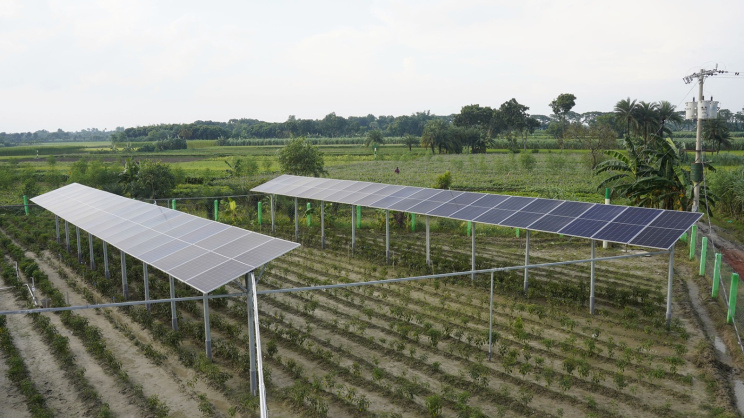
The options include: stand-alone, hybrid, grid-connected and utility-scale systems; centralised and distributed generation systems; photovoltaic-integrated buildings; high-rise buildings integrated with micro wind turbines; backyard (or front-yard) tree-shaped micro wind power plants and solar trees; microgrids; community solar systems; combined wind turbine/agricultural farms; biomass plants; combined biomass/agricultural farms; agrivoltaics—utility-scale PV fields combined with agricultural farms, producing energy and food simultaneously, resolving the food-versus-energy dilemma and potentially doubling the value of the land; photovoltaic fields for agriculture and livestock farming; vertical agrivoltaics that minimise land use, conserve water and eliminate fossil fuel emissions; “solar breeders”—solar-powered manufacturing plants for solar panels and other components; wind farms; solar-wind hybrid energy farms; solar pumps; solar-powered tractors; solar-powered refrigeration units; solar irrigation systems; irrigation canals covered with solar panels that generate electricity, save space and water, cool the solar panels, and reduce carbon footprints; solar instant power supply (IPS) systems as backup in case of power outages; solar-powered wheelchairs; offshore wind farms; floating wind farms; underwater wind power systems; ecologically scaled hydropower plants and micro-hydropower systems; tidal, wave and ocean energy technologies; floatovoltaics—floating solar plants that simultaneously help prevent water evaporation; floatovoltaic-powered fish farming; solar-powered floating agricultural farms; transparent solar cells; buildings with transparent solar glass for windows, façades and skylights that generate energy while allowing light to pass through; solar-powered aeroplanes; solar-powered satellites; solar-powered space stations; solar slates and solar tiles; solar-powered electric-vehicle charging stations and infrastructure; solar-built sound barriers that reduce highway noise in adjacent communities; solar-powered roads; balcony solar systems; solar garden lights; solar- and solar-wind-powered desalination stations; solar-powered water management and purification systems; solar-powered boats, ships and ferries; solar-powered trains (Australia); solar-powered passenger coaches with rooftop panels for lights, fans and mobile charging (India); renewable energy-powered sky trains (China); wind-powered electric trains (the Netherlands); multiple-scale solar greenhouses; home-scale to industrial-scale biogas plants for cooking fuel and lighting; solar thermal systems for hot water; Passive House designs with highly efficient solar heating and cooling systems; geothermal systems; batteries for energy storage; green hydrogen produced from renewable sources to power fuel cells; and an increasing variety of solar cookers—including some with the option of connecting to a solar electric system so that they can be used for solar cooking day or night, rain or shine!
The transition is happening—but not fast enough.
We have more than enough renewable energy and a wide variety of technologies to tap into, appropriately matching different needs, places and budgets across the Earth. The good news is that the global transition to a renewable energy future is happening—in fact, at record speed. But it is still not fast enough. Limiting global warming to 1.5°C remains a cornerstone of the Paris Agreement, but a recent UN report warns that the current pace of the transition is set to exceed that limit. So, the transition needs to be accelerated with the utmost urgency—holistically planned and combined with the best possible conservation and efficiency measures. And it must happen concurrently with a moratorium on further entrenchment in the fossil fuel/nuclear path, while utilising those energy sources only as transitional fuels towards a renewable energy future. Without such a moratorium to halt the diversion of resources into the catastrophic, dead-end and unsustainable fossil fuel/nuclear path—and the resulting loss of valuable time—a transition to a renewable energy path could prove futile. The short and rapid implementation period of renewable energy projects, from manufacturing to deployment, compared with the lengthier and costlier development and construction periods of fossil fuel/nuclear projects, is a revolutionary advantage for the transition.
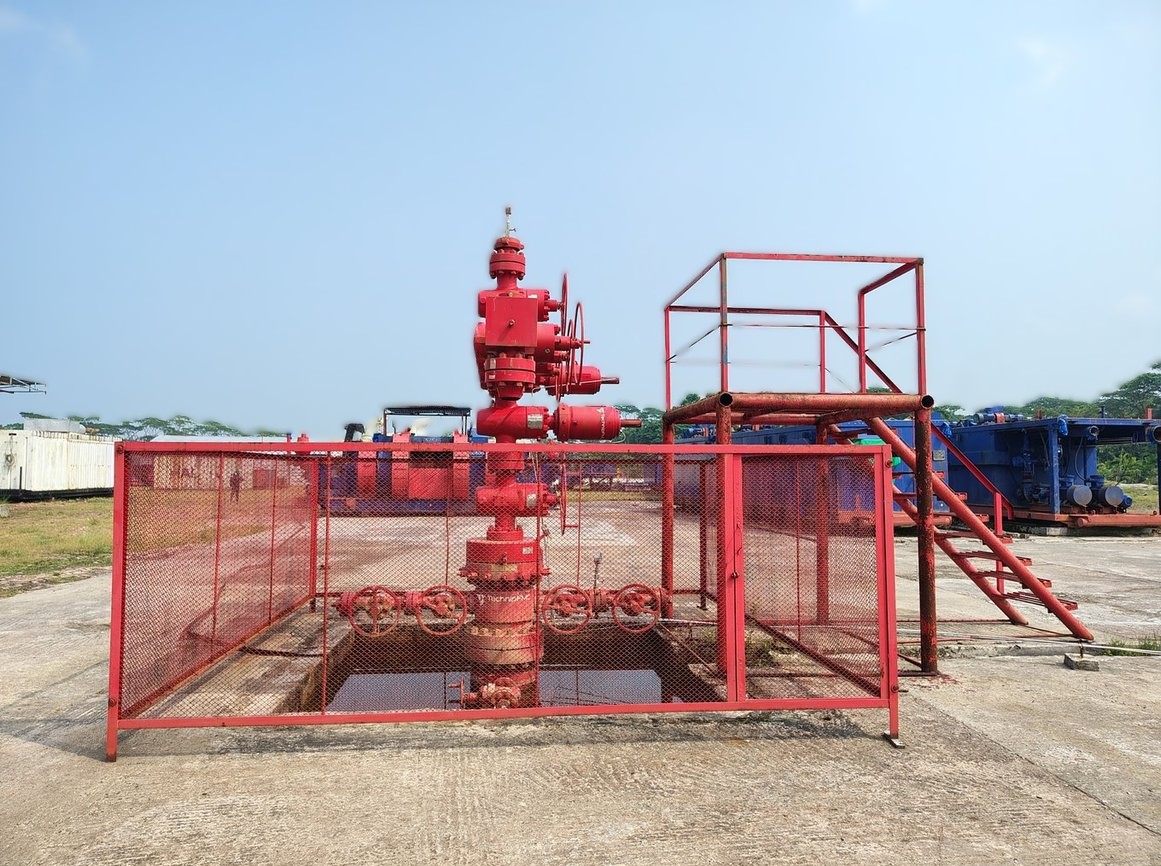
No place on Earth is immune; there is no room for complacency (“It’s happening on the other side of the ocean” or “the other side of the country”, or even “the other side of the world”). Fire, like several other impacts of climate change—heatwaves, floods, droughts and other extreme weather events—knows no borders. “Think globally, act locally” has never been more relevant. Massive public awareness campaigns about both the crisis and the solutions, leading to concrete action, are key. In short, education for action.
Political will is imperative, and so is public will. Ultimately, when people are educated, they act and demand action, politics follows. Compared with the centralised and oligopolistic concentration of power associated with the fossil fuel/nuclear path, the renewable energy path offers the revolutionary prospect of a decentralised and distributed power structure, with opportunities to act at every level of society, anywhere in the world.
Every action counts—they add up. The stakes are high: let’s not allow the Earth—“a beautiful blue dot”—to drown in the ocean or turn increasingly into an infernal red flame!
Implications for Bangladesh: An untapped energy mine
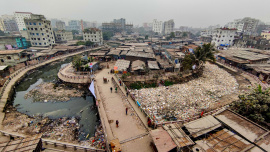
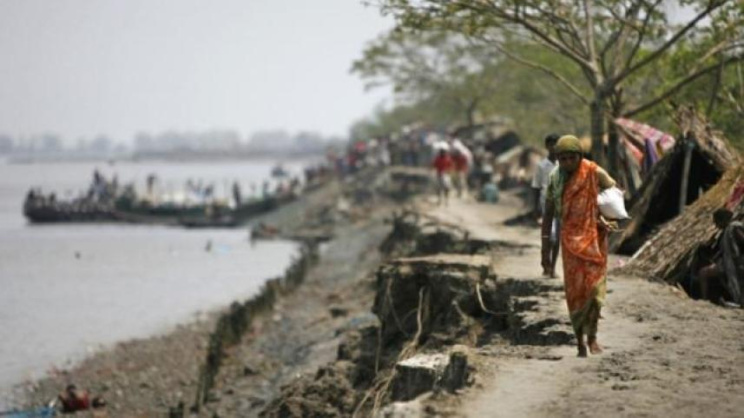
Bangladesh, often considered “ground zero” for climate change, experiences multiple and catastrophic impacts of climate change: rising sea levels, cyclones, floods, river erosion, climate-induced migration, droughts and extreme heat—all with increasing frequency and intensity. Adaptation, however necessary and ingenious, often proves inadequate. The lush green landscapes that have characterised Bangladesh for centuries can, under drought conditions, become highly inflammable vegetation capable of fuelling uncontrollable fires. The current situation, in short, constitutes an emergency.
Bangladesh emits only 0.31% of global CO2 emissions. As such, it bears minimal responsibility for global emissions, and solutions will, to a large extent, depend on a global transition to renewable energy. But Bangladesh can do its part—both to mitigate impacts locally and to become a significant contributor to, and a strong voice for, the global transition. Fortunately, Bangladesh has that potential.
Bangladesh is naturally endowed with a rich combination of renewable energy sources, including sunlight, heat, wind, water movement and biomass derived through photosynthesis. Sunlight is abundant year-round in this subtropical region. Even during the monsoon season, solar radiation remains substantial relative to the annual average. In addition to ample light and heat, the country’s 710 km (441 miles) of coastline—which includes the 120 km (75-mile) unbroken stretch of beach at Cox’s Bazar—along with its hilly areas and islands, provides considerable potential for wind turbines, both onshore and offshore; waterways of varied forms and flow speeds provide opportunities for wave energy and gravity-driven water flows that could support ecologically balanced hydroelectric generation; and lush vegetation provides abundant biomass that can be used as fuel for a variety of purposes, such as producing heat and biogas for cooking and electricity. Compared with Germany—an inspiring example of a country pursuing a transition towards a renewable energy future—Bangladesh receives roughly twice as much solar radiation.
Bangladesh is truly an exceptional, naturally endowed and integrated renewable energy mine—one that remains practically untapped!
Bangladesh is truly an exceptional, naturally endowed and integrated renewable energy mine—one that remains practically untapped! Judiciously harnessed, this energy mine has enormous and potentially inexhaustible capacity to contribute far beyond the country’s current energy supply, both now and in the future. It is a country with revolutionary potential to benefit from a wide range of types, designs and scales of cost-competitive, appropriate and ecologically implemented renewable energy technologies. Furthermore, compared with industrially developed countries, Bangladesh is, as of now, less deeply entrenched in the fossil fuel/nuclear path, which gives the country considerable cost, technological and socio-political advantages in laying down and building upon renewable energy infrastructure.
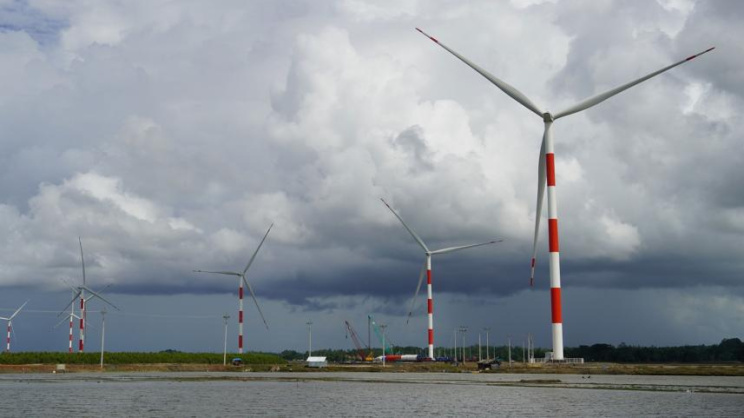
Multiple scientific, economic and environmental studies and analyses of international stature—combined with the results of renewable energy applications in Bangladesh since the 1990s—confirm this potential. Among these are the joint report by the Renewable & Appropriate Energy Laboratory at the University of California, Berkeley (RAEL) and the International Centre for Climate Change and Development (ICCCAD, Bangladesh); the report by the Institute for Energy Economics and Financial Analysis (IEEFA, USA); and the joint report by the National Renewable Energy Laboratory (NREL, USA), Harness Energy, and the National Center for Atmospheric Research on the wind energy potential of Bangladesh.
Renewable energy accounts for 2.3% of Bangladesh’s power generation from grid supply, rising to 3.5% when non-grid supply is included. This achievement can be credited to multiple players: among them, homeowners, shopkeepers, NGOs, health centres, schools, colleges, universities, mosques, banks, business owners, garment factories, community organisations, environmental organisations, donor agencies, journalists, educators, the media, civil society campaigns, government policies and agencies, public-private partnerships, investments, and international collaboration. It has been achieved through the installation of multiple types, designs, and scales of technology for a wide range of purposes, distributed throughout the country. It has also created employment opportunities and boosted the local production of certain technological components, such as solar batteries, charge controllers and photovoltaic modules—a step towards technological self-reliance and an antidote to techno-colonialism. The scenario reflects an evolving infrastructural transition that is highly commendable.
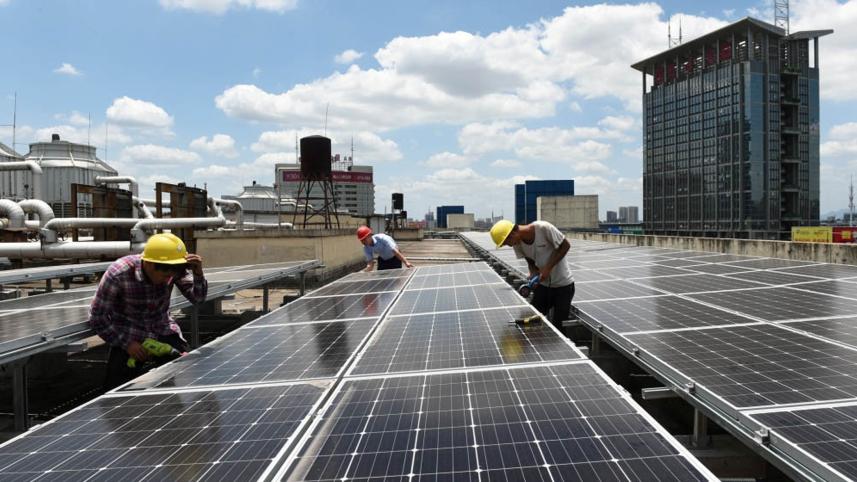
The transition must be accelerated. Crippling energy shortages affecting both domestic consumption and industrial operations, heavy reliance on external energy supplies compounded by uncertainties arising from political tensions and energy wars, energy insecurity, and mounting debt characterise the national economy. To counter this, the government has launched the “National Renewable Energy Development Strategy”, with the long-term goal of generating 20% of the country’s total electricity from renewable sources by 2030 and 30% by 2040. Following this, to reduce the costs of solar projects and accelerate renewable energy expansion, the National Board of Revenue (NBR) has reduced the tax on solar power equipment imports from 17% to 1%.
Indeed, the strategy is commendable. But it must also be viewed with cautious optimism. The previous government’s proposed target of generating only 10% of the country’s electricity from renewable sources by 2020 was a gross underestimation of the potential. Even then, the government failed to meet the target. Add to this inefficiency, corruption, and a lack of both transparency and accountability. There is a lesson to be learned.
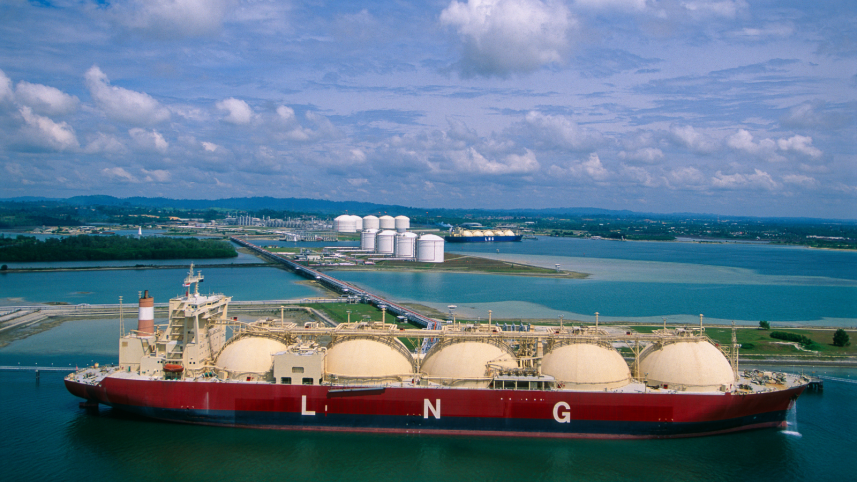
Furthermore, proposed energy solutions from various quarters of the country—the government, academics, development agencies, consultants, and even environmentalists—continue to advocate further entrenchment in the non-renewable path: mining for coal; importing LNG (such as through the lopsided and weaponised US-Bangladesh trade deal, signed on February 9, 2026); drilling or exploring for natural gas—both onshore and offshore (under the so-called “blue economy”); and building SMRs (small modular nuclear reactors). This approach is both self-contradictory and misguided. Although these measures are justified as solutions to mitigate the energy crisis, reduce external dependence, meet growing energy demands, etc.—whether for educational or political reasons—the point does not seem to get through that seeking solutions by becoming further entrenched in the very sources causing the crisis is not a solution. Such justifications, also parroted as “there’s no other choice”, demonstrate utter ignorance or denial of the revolutionary potential of renewable energy options for Bangladesh.
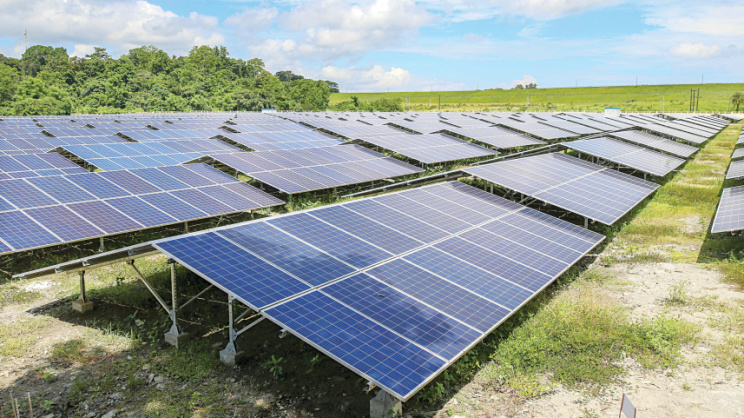
What we need, instead, is to stop digging deeper into the predictably unsustainable and catastrophic non-renewable energy path. At the same time, we must accelerate the transition with the utmost urgency—with all hands on deck and by utilising every appropriate option to tap into the country’s practically untapped and revolutionary renewable energy potential. I call this an Emergency Action Plan—needed for a 100% renewable energy-powered, energy-secure and sustainable Bangladesh!
Sajed Kamal, EdD, has been a renewable energy and sustainable development educator internationally for forty years, implementing renewable energy projects in the USA, Bangladesh, Sri Lanka, Armenia, El Salvador and Zimbabwe.
Send your articles for Slow Reads to slowreads@thedailystar.net. Check out our submission guidelines for details.

Can Bangladesh turn its OTT industry into global soft power?

Bangladesh’s gold paradox: From a shadow market to an export industry
Anu Muhammad speaks / Why Bangladesh’s energy crisis keeps coming back

The $5 billion opportunity Bangladesh is failing to see

How Bangladesh is failing its Qawmi graduates
Why is water-rich Bangladesh running short of water?

Bangladesh's education crisis: The future has already begun

The global injustice behind Bangladesh’s shipbreaking industry

How to make essential medicines affordable and accessible in Bangladesh