Can Bangladesh turn its OTT industry into global soft power?
In the 21st century, a country does not necessarily need an aircraft carrier to project its influence. People might need passports to cross borders, but their stories and culture do not. In the age of streaming, cultural influence is no longer the exclusive privilege of great powers. A country does not have to be a political or economic giant to tell a story that can shape and capture the world’s imagination.
Ask a Bangladeshi teenager to name a Pakistani drama, a Korean series, or an Indian film, and you are unlikely to get a blank stare. Ask the same teenager to name a Bangladeshi series that has become a global cultural phenomenon, however, and the silence may be telling.
A young woman in Dhaka hums a Korean song, a teenager in Nigeria watches an Indian film, and a family in Lahore discusses a Turkish historical drama. This is the new geography of storytelling. And it raises an important question for Bangladesh: Can Bangladesh leverage its emerging OTT industry as a tool of soft power? Could Bangladesh’s next breakthrough in soft power come through a television series?

When entertainment becomes soft power
Political scientist Joseph S. Nye introduced the concept of soft power in the late 1980s to describe a country’s ability to influence others through attraction rather than coercion. Nye identified culture, political values, and foreign policy as key sources of this attraction. Today, as stories increasingly cross borders through screens, entertainment – particularly OTT platforms – offers countries a powerful means of turning cultural narratives into global influence.
A compelling series can make audiences curious about a country they have never visited. It can introduce them to a language, a city, a cuisine, a fashion style, a historical memory, or simply a different way of seeing the world. Long before someone decides to visit a country, buy its products, learn its language, or search for its history, they may first encounter it through a screen.
The streaming revolution has therefore transformed more than the entertainment industry. It has turned films and television dramas into vehicles for exporting identities, lifestyles, and national imaginaries. The competition is no longer simply for market share. It is also for a place in the imagination of the global audience.
A Bangladeshi OTT series, for example, could be deeply rooted in the realities of Dhaka while exploring universal themes. A drama could tell a specifically Bangladeshi story while engaging audiences through shared experiences of power and resistance.
Fatima Bhutto, in her book New Kings of the World, examines the rise of Bollywood, Turkish dizi, and K-pop as cultural forces emerging from outside the traditional centres of Western cultural power. Their success illustrates what scholars describe as cultural contra-flow: the movement of media and cultural products from the Global South towards audiences that were historically dominated by Western cultural hegemony.
Hollywood surely remains enormously influential. However, it no longer has a monopoly over what the world watches, listens to, imitates, and talks about.

Glocalisation: Making local stories travel globally
One of the most important strategies behind the global success of non-Western entertainment industries is what scholars refer to as ‘glocalisation’. The term refers to the process of adapting locally rooted cultural content to a global media environment without removing the cultural characteristics that make it distinctive. In the context of streaming, glocalisation allows stories to remain deeply connected to their country of origin while making them accessible and attractive to audiences elsewhere.
Glocalisation does not mean making a local story look foreign. Rather, it means presenting a culturally specific story in a way that allows international audiences to understand, relate to, and become curious about it. Language, subtitles, storytelling structures, production quality, marketing, and digital distribution can help a local story cross national boundaries while holding on to its roots.
Turkey: Turning history into global entertainment
Turkey provides one of the clearest examples in this regard. Historical dramas such as Magnificent Century, centred on the life and court of Sultan Suleiman, have reached audiences across the Middle East, Asia, Africa, Europe, and other regions. The appeal of these productions lies partly in their ability to combine culturally specific stories with themes that are widely relatable to audiences across borders: power, ambition, family, romance, betrayal, and political conflict.
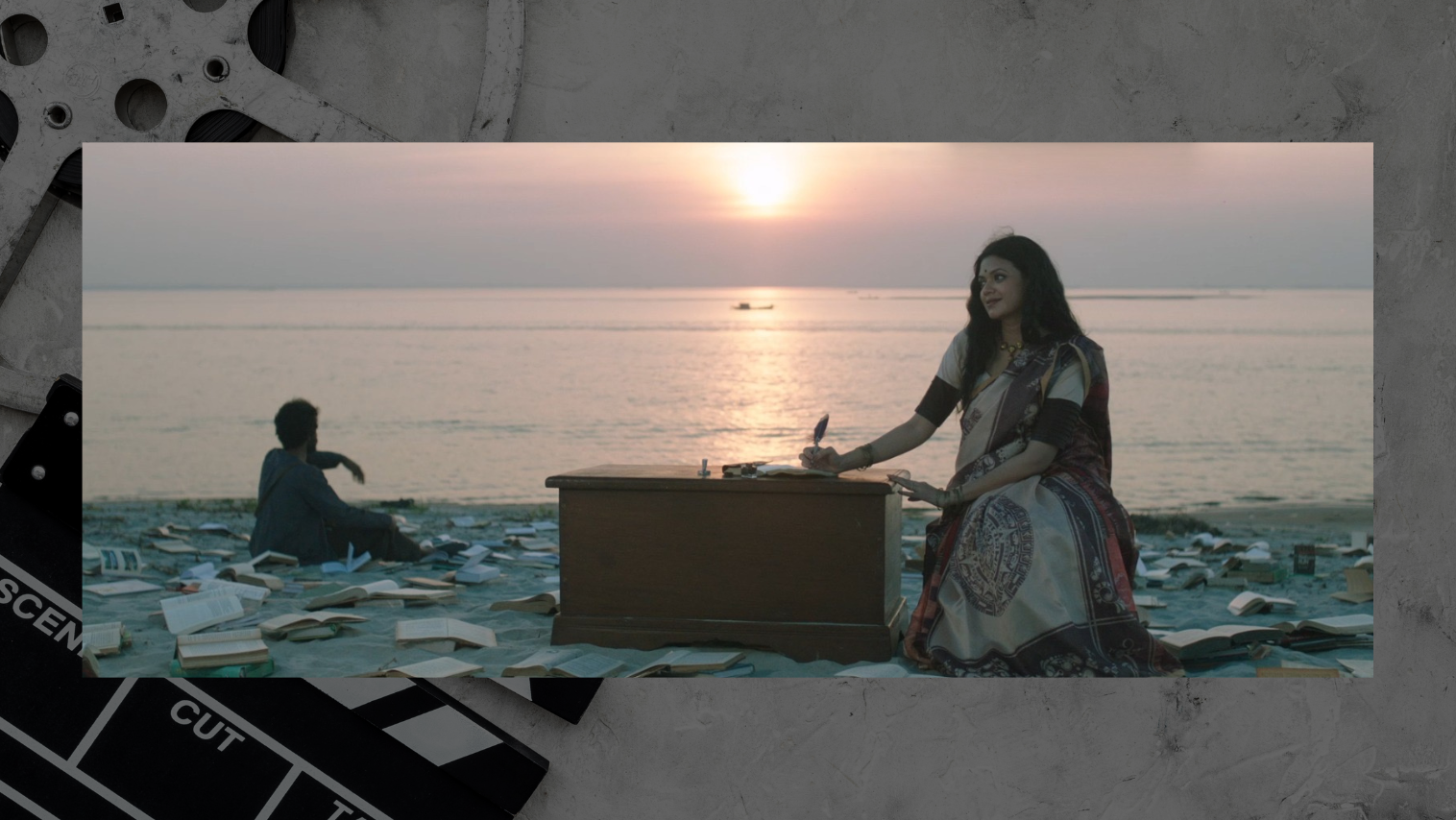
The success of Turkish dramas demonstrates that cultural specificity does not necessarily prevent international appeal. On the contrary, historical and cultural elements can become part of the attraction, creating a sense of connection and familiarity among audiences across different regions. International viewers are introduced to the history of the Ottoman Empire, its landscapes, architecture, and local traditions through entertainment. In this sense, a television drama becomes more than a product for consumption; it becomes an informal introduction to the country itself.

The cultural impact can also extend beyond television. Increased familiarity with Turkey can generate deeper interest in tourism, fashion, cuisine, and other aspects of Turkish culture. This illustrates an important feature of cultural soft power: the influence of entertainment can persist long after the programme itself has ended.
South Korea: Building an ecosystem around culture
South Korea offers an even more developed example of glocalisation and cultural export. Following the Asian Financial Crisis of the late 1990s, the country invested heavily in its cultural industries and gradually transformed entertainment into a major export sector. The Korean Wave, or Hallyu, did not emerge from a single successful television series or musical act overnight. It developed through sustained investment in the country’s creative industries, including dramas, cinema, K-pop, gaming, cosmetics, food, and digital media.
The global success of Gangnam Style and productions such as Squid Game illustrates how entertainment can transform cultural specificity into global influence. Squid Game, while deeply rooted in the social and economic realities of South Korea, found a worldwide audience through themes of inequality, debt, competition, and economic insecurity that transcend national boundaries. This, in turn, led Netflix to invest heavily in Asian story production. Such massive successes demonstrate that soft power need not come from deliberately exporting a glossed-over national image; it can emerge organically when culturally grounded stories capture universal human experiences.
This combination of local specificity and universal themes is central to the glocalisation process. Korean productions did not abandon their cultural identity in order to become internationally successful. Instead, they use local experiences to explore challenges that audiences in different societies can easily connect with.
The wider Korean cultural ecosystem has also allowed the popularity of one form of cultural content to support others. Interest in Korean dramas and music has led audiences towards Korean food, such as ramen, as well as fashion, language, tourism, and cosmetics brands. Cultural exports therefore work not as isolated products but as interconnected elements of a broader national cultural presence.
India and Pakistan: Regional stories, wider audiences
India demonstrates another form of glocalisation. Bollywood has long introduced Indian music, dance, family structures, fashion, and social narratives to international audiences. The growth of streaming platforms has expanded this process by allowing stories from different Indian languages and regions to reach viewers beyond their traditional markets.
Glocalisation does not mean making a local story look foreign. Rather, it means presenting a culturally specific story in a way that allows international audiences to understand, relate to, and become curious about it.
Productions such as Sacred Games, Laapataa Ladies, and Mismatched illustrate how Indian stories can be packaged for contemporary streaming audiences through Netflix India while retaining elements of their traditional narratives. Rather than presenting a single image of India, streaming has created space for multiple Indian identities and experiences to travel internationally.
Pakistan provides another relevant example, particularly through television drama. Pakistani dramas have attracted audiences beyond the country’s borders, including in Bangladesh. The rising popularity and demand for Pakistani dresses in countries such as India and Bangladesh are heavily driven by the massive reach of Pakistani television dramas. This is another example of how creative industries can create a powerful economic ripple effect by boosting local businesses.
What Bangladesh can learn from glocalisation
Bangladesh already possesses many of the ingredients required for this process. Its literary tradition, Liberation War history, folk culture, music, riverine landscape, rapidly changing cities, migration experiences, family structures, political history, and contemporary social tensions provide a substantial reservoir of stories. The challenge is to transform these culturally specific materials into compelling screen narratives that meet international production and distribution standards.
A Bangladeshi OTT series, for example, could be deeply rooted in the realities of Dhaka while exploring universal themes. A drama could tell a specifically Bangladeshi story while engaging audiences through shared experiences of power and resistance. A rural narrative could introduce international viewers to a way of life that is rarely represented in global streaming culture.
This is where glocalisation becomes particularly relevant to Bangladesh. The objective should not be to make Bangladeshi stories less Bangladeshi. It should be to make Bangladeshi stories understandable, accessible, and compelling to people who have never experienced Bangladesh.

Therefore, glocalisation offers Bangladesh a middle path between two extremes: producing content exclusively for the domestic market and attempting to imitate established global entertainment industries. The opportunity lies in developing content that is local in identity but global in accessibility.
The success of Bangladesh’s OTT industry may depend not simply on whether it can produce popular programmes at home, but on whether it can transform its local cultural specificity into stories that audiences elsewhere actively want to discover. Its emerging OTT industry has already demonstrated that audiences are willing to consume locally produced original content. Platforms such as Chorki, Hoichoi Bangladesh, Bongo, and others have created new opportunities for writers, filmmakers, actors, musicians, and producers. OTT has also given creators greater creative freedom to experiment with subjects and formats that traditional television has often struggled to accommodate.
Yet Bangladesh’s cultural presence on the global streaming landscape remains very limited. And this is where the real problem lies. Bangladesh does not have a shortage of stories. Perhaps it has a shortage of systems for taking those stories to the world.
The first step is to stop thinking of OTT simply as another platform for distributing television dramas. It should be understood as part of Bangladesh’s broader cultural and creative economy.

The objective should be to make Bangladesh recognisably itself while also making it compelling enough that audiences abroad want to know more. Millions of Bangladeshis and people of Bangladeshi heritage live outside the country, forming a natural first audience for locally produced stories. A strong Bangladeshi series can strengthen the sense of belonging, allowing second- and third-generation Bangladeshis to encounter aspects of their heritage that might otherwise become increasingly distant. But the ambition should not end with the Bangladeshi community abroad. The real test of cultural export is whether someone with no personal connection to Bangladesh will voluntarily press play and, after watching, feel curious enough to learn more about the country behind the story.
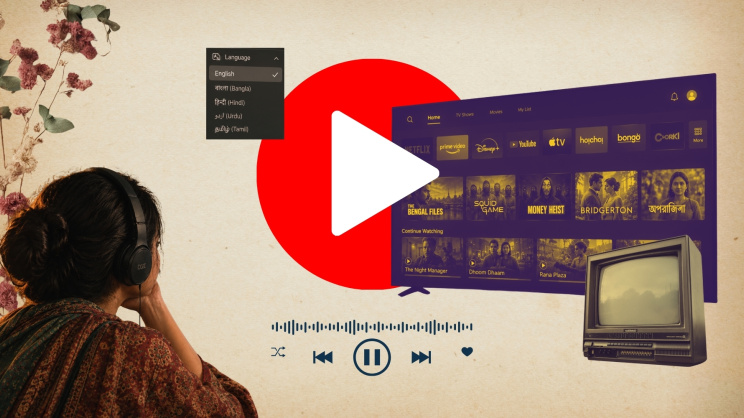
If Bangladesh wants OTT to become a genuine cultural export, it needs a long-term ecosystem rather than isolated successes. That means greater investment in ambitious original productions. High-quality cinematography, sound design, writing, and post-production can make local productions competitive in an increasingly crowded streaming environment. International marketing and digital platforms can then provide the distribution infrastructure necessary for these stories to travel.
Bangladesh already possesses many of the ingredients necessary to become a cultural exporter: a young population, a growing creative industry, a rapidly developing OTT market, a rich cultural heritage, and an enormous reservoir of stories. The countries that have succeeded in cultural export did not simply produce one international hit. They built ecosystems capable of producing the next one. That is the challenge Bangladesh now faces. The next global streaming phenomenon does not necessarily have to come from Seoul, Istanbul, Mumbai, or New York. It could come from Dhaka. But that will happen only if Bangladesh learns to see its stories not merely as entertainment for its own audience, but as cultural assets capable of travelling far beyond its borders.
In the age of streaming, a country’s cultural influence may begin with something remarkably small: a screen, a story, and a viewer somewhere in the world who presses play. The real power lies in what happens next: when a local story becomes a global conversation, it can turn entertainment into influence and culture into soft power.
Adrita Islam is a Lecturer specialising in political science and streaming media culture. If any of her thoughts happen to resonate with you, feel free to reach out to her at adrita027@gmail.com
Send your articles for Slow Reads to slowreads@thedailystar.net. Check out our submission guidelines for details.

An emergency action plan for a 100% renewable Bangladesh

Bangladesh’s gold paradox: From a shadow market to an export industry

Anu Muhammad speaks / Why Bangladesh’s energy crisis keeps coming back

The $5 billion opportunity Bangladesh is failing to see
How Bangladesh is failing its Qawmi graduates

Why is water-rich Bangladesh running short of water?

Bangladesh's education crisis: The future has already begun

The global injustice behind Bangladesh’s shipbreaking industry
How to make essential medicines affordable and accessible in Bangladesh