


‘Even if the killers are hanged, I will never get my son back’
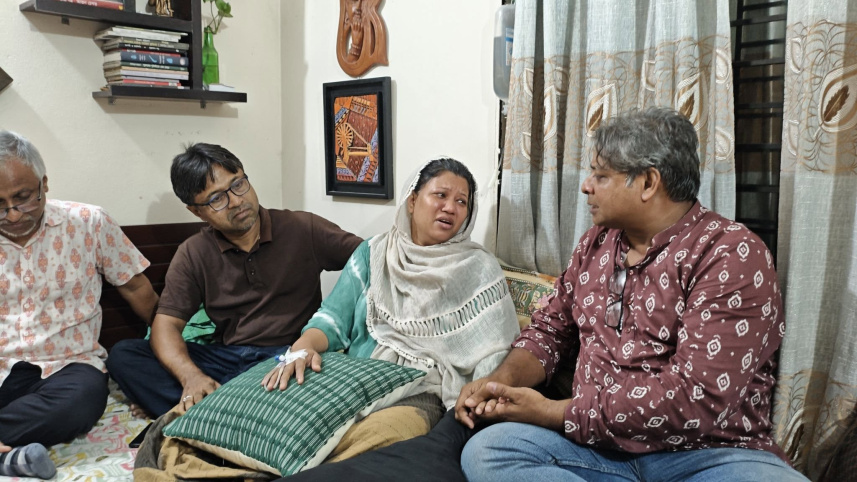
“He could not even eat properly unless someone fed him by hand. Even if the killers are hanged, I will never get my son back.”
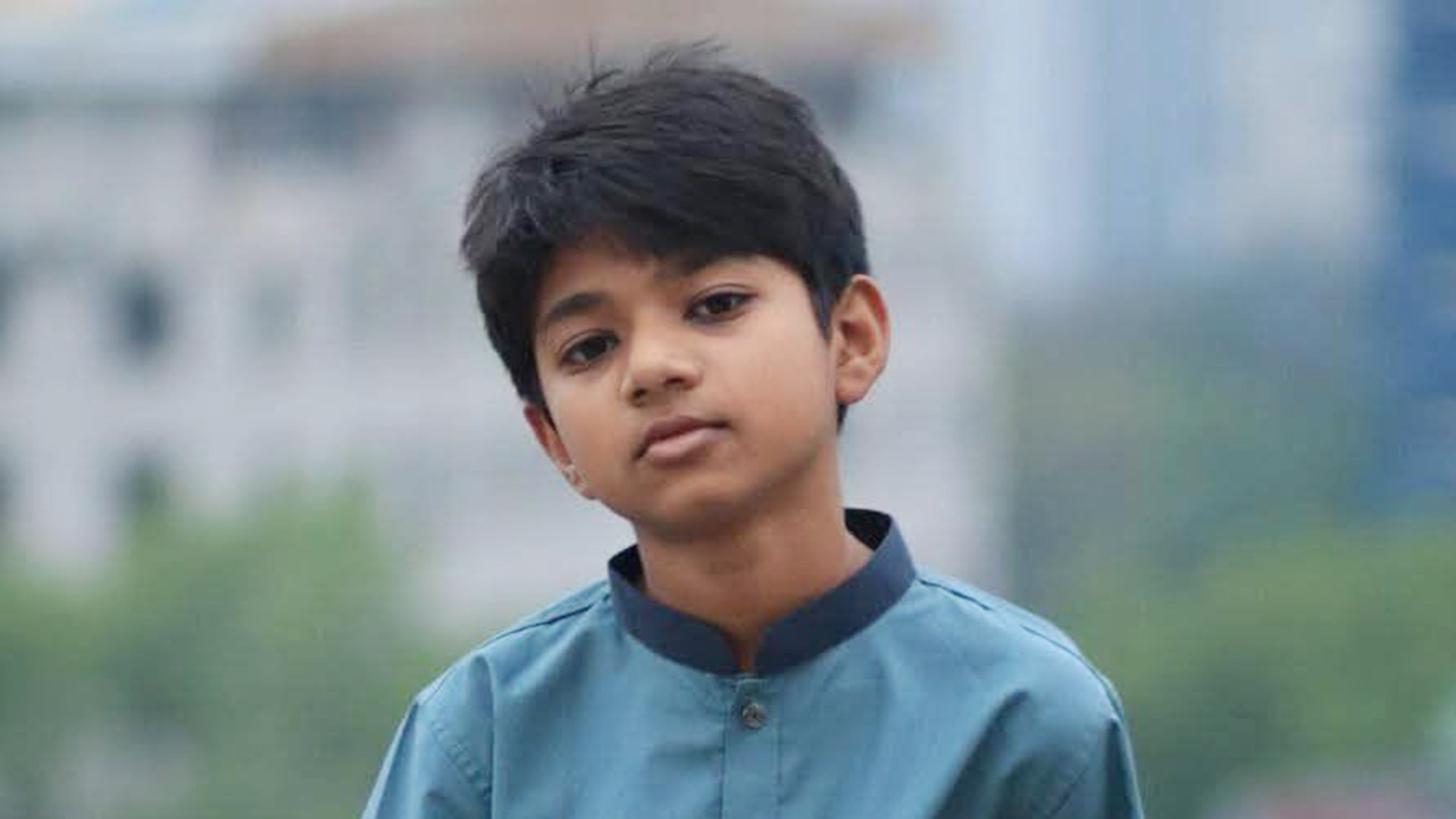
For the parents of 13-year-old Ishiat Shahriar Oprotim, the words carry a grief that no punishment can ease. Their only child is gone, leaving behind a silence in the home that no verdict can fill.

“What crime did my son commit that he had to be killed?” his mother, Nahida Begum, an associate professor of Bangla at Comilla University, and his father, businessman KM Firoz Shahriar, keep asking.
Oprotim was their only child.
For the past several months, he would usually go outside only on Fridays. Two teachers taught him for about four hours every day.
“On that day, he went out happily, thinking he was going to have some fun, but my son never came back,” his father said.
The family later learned that Saiful Islam Tuhin, 19, one of the accused, was allegedly involved in the killing. Oprotim’s father said he had never known Tuhin before the incident.
The day after Oprotim went missing, the family obtained a CCTV image and showed it to a 15-year-old deliveryman, one of the accused, who had joined the victim’s father’s business on September 2. The deliveryman identified Tuhin. That was when Oprotim’s father first saw him.
The deliveryman and Tuhin then pretended to help the family search for Oprotim, while the family remained unaware of Tuhin’s alleged involvement.
The deliveryman was given a job at Oprotim’s father’s business after his father repeatedly requested that he be employed there. He continued working there until his arrest on Saturday.
After identifying Tuhin, the deliveryman repeatedly called him, apparently asking him to flee, as police had already detained him, the father said. Police later arrested the deliveryman.
Oprotim had lived on the Comilla University campus since he was two years old, growing up among his mother’s colleagues, students and teachers. Many senior university students were like friends to him.
Professor Dr Abu Taher of the Department of Physics said Nahida had wanted to raise her son as a free-thinking person.
“She did not want social or economic divisions to become part of her son’s thinking. She did not teach him to identify people as rich or poor, high or low. She taught him to see everyone simply as human beings,” he said.
Mokaddesul Islam Bidyut, a teacher at the Bangla department, said Nahida had always shown a strong sense of responsibility towards her students.
He said three or four students had received significant emotional support from her during difficult periods in their lives, including when they were experiencing suicidal thoughts, and that she had helped them rebuild their lives.
Oprotim often accompanied his mother when she sold iftar items for Tk 10 or helped send aid to people affected by floods.
 For all latest news, follow The Daily Star's Google News channel.
 For Oprotim, kindness was not simply something he was taught. It was part of the life he grew up seeing around him.
His parents wanted to raise him with the same sense of humanity, family members and teachers said.
“I wanted to raise my child as a good human being. I did not want him to become a doctor or an engineer just for the sake of it. I wanted him to mix with people, sing songs, travel at home and abroad, and live alongside people of all backgrounds, beyond social divisions,” Nahida said.
“Oprotim was growing up exactly that way. But the people he considered his seniors were not human enough to spare him,” she added.
His maternal uncle Mahabub said Oprotim also had a deep affection for animals and birds.
“Once, he found a pregnant dog and kept it in an open space on the fourth floor of our building for nearly a month, feeding and caring for it,” he said.
Family members said Oprotim would also take students facing financial difficulties to his parents so they could receive help.
“There are countless examples of his kindness,” Mahabub said.
Comilla Superintendent of Police Md Anisuzzaman said the arrestees -- Tuhin and two 15-year-olds, including the deliveryman -- had given confessional statements before a court under Section 164 of the Code of Criminal Procedure.
Police recovered the iPhone from Tuhin’s house, he said.
Police also arrested Md Siam, 19, on allegations of concealing information about the killing.
The two 15-year-olds were sent to the Gazipur juvenile correctional centre yesterday, police said.
According to the police account, Oprotim was attacked with a stick and killed in a secluded area among the hills near Comilla University.
The killing has also left many at the university recalling Nahida’s commitment to her students.
Several university students said that during the 2024 movement, Nahida had rushed to hospitals to stand beside her students. Even amid violence and bloodshed on the streets, they said, she continued teaching them and her own child the importance of humanity.
For years, Oprotim had grown up in the university community, surrounded by teachers, students and people who knew him from childhood. Many of those same people are now left remembering a boy they had watched grow up.
Oprotim was buried in Gandhamati, the village where he had grown up.
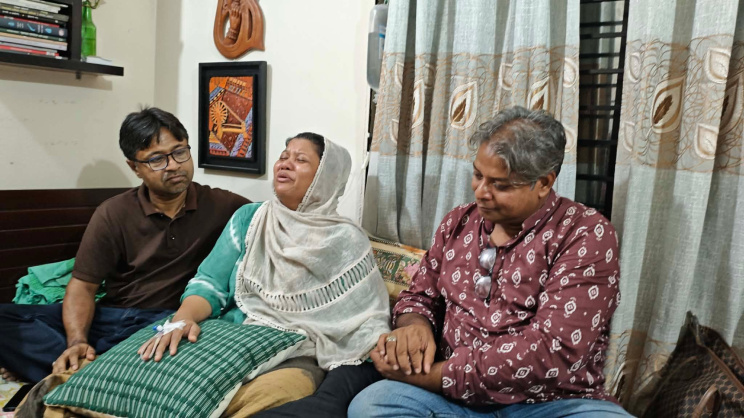
Hundreds of women, children and young people from Gandhamati and neighbouring areas, including Kotbari, Rampur, Jadughar and Salmanpur, gathered at the family’s home yesterday to see Nahida and offer their condolences.
Inside the house, the grief was shared by people who had known Oprotim in different parts of his short life -- as a son, a student, a neighbour and a familiar face around the university.
Amid the grief, those who knew Oprotim say the values Nahida tried to instil in her son will continue to live on in the many young people she has taught and supported.
Comments