


Biman: An airline that flies on political fumes

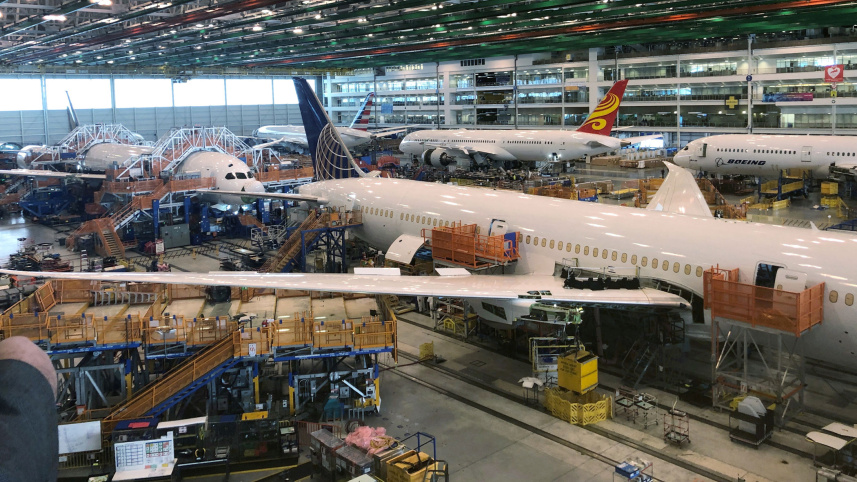
Buying aircraft is an expensive way to make friends happy, and Bangladesh is feeling remarkably convivial. Biman Bangladesh Airlines, the state carrier, currently owns just 19 aircraft, five of them being turboprops. Within weeks, it expects to sign for 21 more, taking its orders to 35— nearly twice as many aircraft as it has in the air. If the deals go through, it will be the largest fleet expansion in Biman’s history, and the least explained one.
Consider the sequence of this shopping spree. In April, Bangladesh agreed to a $3.7 billion contract for 14 Boeing jets, scheduled to arrive between 2031 and 2035. Then, on August 30, the world learned of another contract for 11 Boeings via a social-media post by Sergio Gor, a US envoy, who hailed “another incredible deal” struck between President Donald Trump and Prime Minister Tarique Rahman, with Trump writing to thank Rahman for the “decision to purchase.” The variants, price, financing, and delivery dates remain a mystery.

Predictably, Europe wanted a turn—and, perhaps, had grounds for it. The previous Awami League government had planned to buy 10 Airbus jets. The interim administration that followed the 2024 uprising switched to Boeing under pressure over US tariffs to narrow a trade deficit. By December, Airbus had been ruled out entirely. Yet, following a joint press conference by French, German, British, and EU ambassadors in Dhaka—and a pointed reminder from Airbus’s international chief that billion-dollar deals should hinge on commercial and technical value rather than politics—Dhaka reversed its reversal. A package of four A350-900s and six A321neos is now expected in October.
Ministers promise transparency, guided by a high-level negotiation committee, which would be a welcome step. So far, Biman has published no consolidated business case setting out how a mixed Boeing-Airbus fleet would be flown, on which routes, or when its ageing jets will retire. There’s no denying that Biman suffers an aircraft shortage, having failed to manage route networks and leasing effectively. But that is a chronic management failure, and management failures are not cured by jet deliveries.
Now for perspective, let’s compare Biman with Ethiopian Airlines, a carrier many Bangladeshis seem to admire. Africa’s largest airline, too, buys in bulk—its latest Boeing deal alone covered up to 67 jets—but everyone is bolted to a published plan. It aims to carry 6.5 crore passengers and 30 lakh tonnes of cargo a year by 2035. Biman’s planning document, by contrast, is conspicuously unknown. What’s more, Ethiopian Airlines is funding 30 percent of a new $12.5 billion airport in the scenic resort city of Bishoftu with its own equity, with lenders providing the rest. Built to park 270 planes and handle 110 million passengers a year—more than four times the capacity of its current hub, which will reach its limits on existing traffic in two to three years—it will be the largest aviation infrastructure project in Africa’s history.
The side-by-side stings because Bangladesh is richer than Ethiopia across nearly all macroeconomic measures. Bangladesh’s economy crossed $500 billion this year, dwarfing Ethiopia’s $125 billion. Bangladesh holds $36 billion in gross reserves ($31 billion by the IMF’s stricter measure, worth 4.8 months of imports); Ethiopia scrapes by on $6.8 billion, three months of cover, and has spent nearly three years in default on its only international bond before settling terms with its creditors in June. Yet, Ethiopian Airlines raked in $9.1 billion in revenue in the 2025-26 fiscal year, flying 2.07 crore passengers. Biman’s record year yielded just $943 million in revenue and 33.8 lakh passengers. The poorer country’s airline is 10 times the size of Biman’s. Crucially, the IMF says the airline is excluded from Ethiopia’s debt analysis, and that risks from Ethiopian Airlines appear “negligible” in the near term. It credits the airline’s strong balance sheet and pivot to cargo for record profitability after Covid. Authorities have also conveyed that the airline does not intend to seek government support for ongoing operations, according to the IMF.
Biman’s contribution to the state runs the other way—because Biman does not pay its arrears.
Official estimates put Biman’s arrears to two state organisations at Tk 8,127 crore. The civil aviation authority alone claims Tk 6,327 crore, of which only Tk 919 crore is the original bill; the other Tk 5,408 crore are surcharges, VAT, and income tax that have piled up while Biman declined to pay. The Bangladesh Petroleum Corporation, which supplies jet fuel, is owed around Tk 1,800 crore more. Biman disputes the figures, saying they do not match its records. Grant Biman the argument and halve the sums, and the arrears would still dwarf the annual profit it prefers to talk about.
Biman’s borrowing for the 14 new Boeings will carry a sovereign guarantee: if the airline cannot pay, the state will. The latter already does so on a large scale. As of June, the state stood behind Tk 6,257 crore of Biman’s debt across 15 guarantees, nearly all of it for Boeing aircraft and engines. None of this covers incoming planes.
Biman says it will shop around and take the lowest interest rate on offer. That sounds like thrift, but a borrower underwritten by the state tends to find cheerful lenders. Aircraft purchases usually require a down payment of about 10 percent, arranged through banks, before an order is even confirmed. Insiders say Biman agreed to pay list prices for its Boeings while Airbus offered discounts, and that the UK, Germany, and France would finance 85 percent of the Airbus bill, at interest rates to be revealed once the deal is signed. “Sign first, read later” is an unusual way to spend public money.
A government taskforce on re-strategising the economy saw this clearly in 2025. It said Biman had failed for half a century to meet modern aviation benchmarks, surviving only by milking a “captive market of migrant labourers” who endure poor service. That is the polite version of a harsh truth: Biman’s business model has not been to win passengers, but to sit astride a route network those passengers cannot avoid. The taskforce’s remedy was blunt: set strict performance targets, and if Biman misses them, carve out half its assets into a new, independently managed carrier—tentatively Bangladesh Airways. Let the two compete, and let whichever fails leave the market. The virtue of the proposal was not the second airline; it was the exit strategy. Somebody, at last, would face consequences.
Eighteen months and a change of government later, no targets have been published and no consequences arranged. Instead, the sovereign guarantee ensures that whatever Biman does, it can always piggyback on the state.
Biman certainly needs new planes; a country with a vast diaspora and a booming middle class shouldn’t surrender its skies to foreign carriers. Biman’s trouble is not that it is now buying from both Boeing and Airbus, but that it appears to have chosen neither on merit.
Three tasks are in order. Settle or restructure what is owed to the aviation authority and Padma Oil, so the public knows the exact size of the hole. Publish audited accounts that price every liability. And give Biman the independence it was promised in 2007 and let professionals run it. Then, by all means, buy the aeroplanes—once the business case, interest rates, and retirement schedules are on the table rather than in an envelope.
Ethiopian Airlines rose without a rich country behind it. Biman has had state backing for 54 years and, seemingly, that has still not been enough to help it take off.
Arun Devnath is deputy editor at The Daily Star.
Views expressed in this article are the author's own.
Follow The Daily Star Opinion on Facebook for the latest opinions, commentaries, and analyses by experts and professionals. To contribute your article or letter to The Daily Star Opinion, see our guidelines for submission.
 For all latest news, follow The Daily Star's Google News channel.
Comments