


Bangladesh's population policy must go beyond family planning

For half a century, Bangladesh treated population management mostly as a medical issue. For half a century, that was true. The instruments were the clinic, the fieldworker and the contraceptive. Fertility fell from more than six children per woman in the mid-1970s to 2.3 by 2012, child survival improved, and a country once cited as a cautionary tale became a case study in what determined public health programming could achieve. Population policy was housed with health because it was, in practice, family planning. However, the questions that will decide Bangladesh’s demographic future are no longer clinical ones.
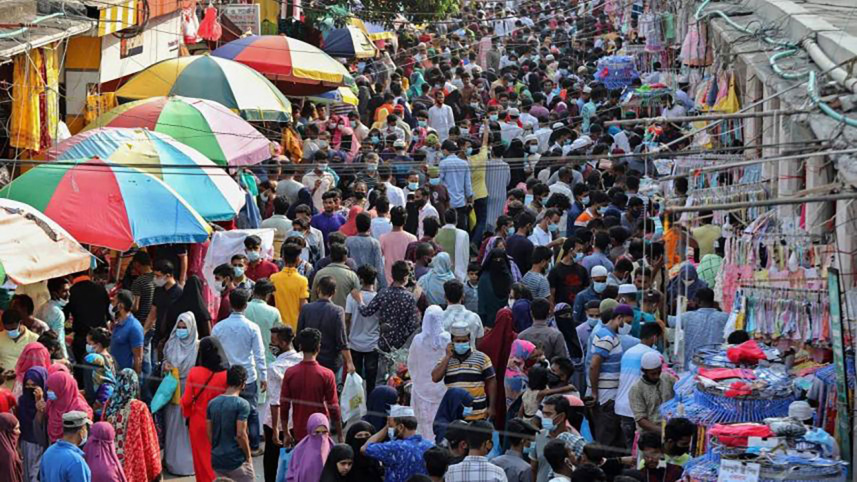
The Multiple Indicator Cluster Survey 2025 estimated the total fertility rate at 2.4, against 2.3 in the Bangladesh Demographic and Health Survey 2022. After decades of decline and a long plateau near replacement level, the direction deserves attention. The same surveys found that 47.2 percent of women aged 20 to 24 had been married before the age of 18. They also reported an adolescent birth rate of 92 births per 1,000 girls aged 15 to 19. In 2022, around 41 percent of young people aged 15 to 24 were not in education, employment or training (NEET), rising to roughly 62 percent among young women. People aged 60 and above made up about 9.3 percent of the population in 2022, and about one-third of the country now lives in urban areas.

Such a NEET rate among young women questions skills policy, transport, childcare, and labour demand. Rapid ageing alongside a still large youth cohort is a fiscal and pension problem. The concentration of people in a handful of cities is a matter of spatial planning. The Ministry of Health and Family Welfare owns none of these levers, and it should not be asked to answer for outcomes it cannot move.
The National Population Council, reconstituted in 2025 after lying dormant since 2010, has still not convened once. However, the main problem is not the council’s dormancy; it is the address. A coordinating body is only as strong as the secretariat that sets its agenda, prepares its evidence and pursues its decisions between meetings. That secretariat currently sits inside a ministry whose primary business is delivering health services, and that has no standing to summon the education, labour, local government or finance ministries to account. No amount of goodwill survives such a mandate problem.
The new Five-Year Strategic Framework is a breakthrough because it finally brings real accountability to Bangladesh’s population policy. Unlike previous plans, it assigns specific goals and strict deadlines directly to individual ministries. For the first time, there is a clear system stating exactly which minister is responsible for fixing issues—like the adolescent birth rate—and by when.
Three changes would turn recognition into machinery. First, the population council’s secretariat function should move to the Planning Commission, or at a minimum be jointly held with the General Economics Division, while the health ministry retains sole responsibility for reproductive health service delivery. Stewardship and service delivery are distinct functions, and the habit of treating them as one has produced the present impasse. Second, population dynamics should occupy its own block in the Strategic Action Matrix, with named lead ministries for adolescent pregnancy, NEET rates, ageing and urban concentration, so that responsibility is assigned rather than assumed. Third, the council’s two statutory meetings each year should be tied to the framework’s review cycle and serviced by a small technical unit drawing on the General Economics Division, the Bangladesh Bureau of Statistics and the health ministry. Every indicator should be reported below the national level. MICS 2025 estimated a total fertility rate of 2.8 children per woman in Mymensingh and 2.7 in Chattogram, against 2.2 in Rajshahi. A national average will conceal exactly the districts where action is most needed.
There are two main criticisms to this plan. First, critics argue that just moving the council to a new ministry won’t automatically fix things. They have a point; a council without real power or funding will fail anywhere. However, leaving it in the health ministry guarantees failure, which is reason enough to make the move.
Second, there is a risk that the government views its massive youth population merely as a cheap labour supply to build a trillion-dollar economy. But a true “demographic dividend” isn’t just about having lots of workers. A country only truly benefits when its youth are educated, women have reproductive freedom, and the elderly are supported. We will soon see if Bangladesh actually plans to invest in its people when the government releases its first annual policy review and holds specific ministries accountable.
Published estimates of when the demographic window closes range from the mid-2030s to around 2040. The framework now in force covers five of those remaining years, and its first annual review will fall within twelve months. Recognising population dynamics in a national planning document was the necessary first step, and the Planning Commission deserves credit for taking it. The next step is less visible and more decisive: putting the coordinating machinery where the coordinating authority already lies.
Dr Nuruzzaman Khan is associate professor in the Department of Population Science at Jatiya Kabi Kazi Nazrul Islam University in Mymensingh and research fellow at the University of Melbourne in Australia. He can be reached at nuruzzaman.khan@unimelb.edu.au.
Views expressed in this article are the author's own.
Follow The Daily Star Opinion on Facebook for the latest opinions, commentaries, and analyses by experts and professionals. To contribute your article or letter to The Daily Star Opinion, see our guidelines for submission.
 For all latest news, follow The Daily Star's Google News channel.
Comments