The elephants had to be rescued again. Where is the accountability?

The story of Samrat and Niharkoli was supposed to be one of rescue. Instead, it has become a story about what happens after a rescue—and about who is held accountable when the system meant to protect an animal appears to fail.
The two elephants were rescued following allegations of abuse, returned to their owners, and then brought back into state custody—all within 13 days.
The sequence raises difficult questions. Why did the initial allegations of abuse not lead to legal consequences? On what basis were the elephants returned to their owners? And when they allegedly faced mistreatment again, who was responsible for the decision that had put them back in that situation?
The questions go beyond Samrat and Niharkoli. They point to a larger problem in Bangladesh's management of captive elephants: what happens when an animal is rescued from alleged abuse, but the people accused of that abuse face little or no immediate legal consequence?
Tareq Rahman, officer-in-charge of Gazipur Safari Park, said the park learned of the renewed mistreatment through various communication channels and social media.
If the conditions under which the elephants were returned had been breached, however, why did the system have to fall back on another rescue rather than an established process of legal accountability?
This time, at least, there appears to be a formal legal proceeding.
Sanaullah Patowari, CCF of Forest and Wildlife Conservation, said a case had been filed against Samrat's owner after the elephant was allegedly subjected to cruel treatment again. He said permission had to be obtained from the department's head office because powers to initiate such litigation had not yet been delegated under the new wildlife law. The case was eventually filed from Sylhet.
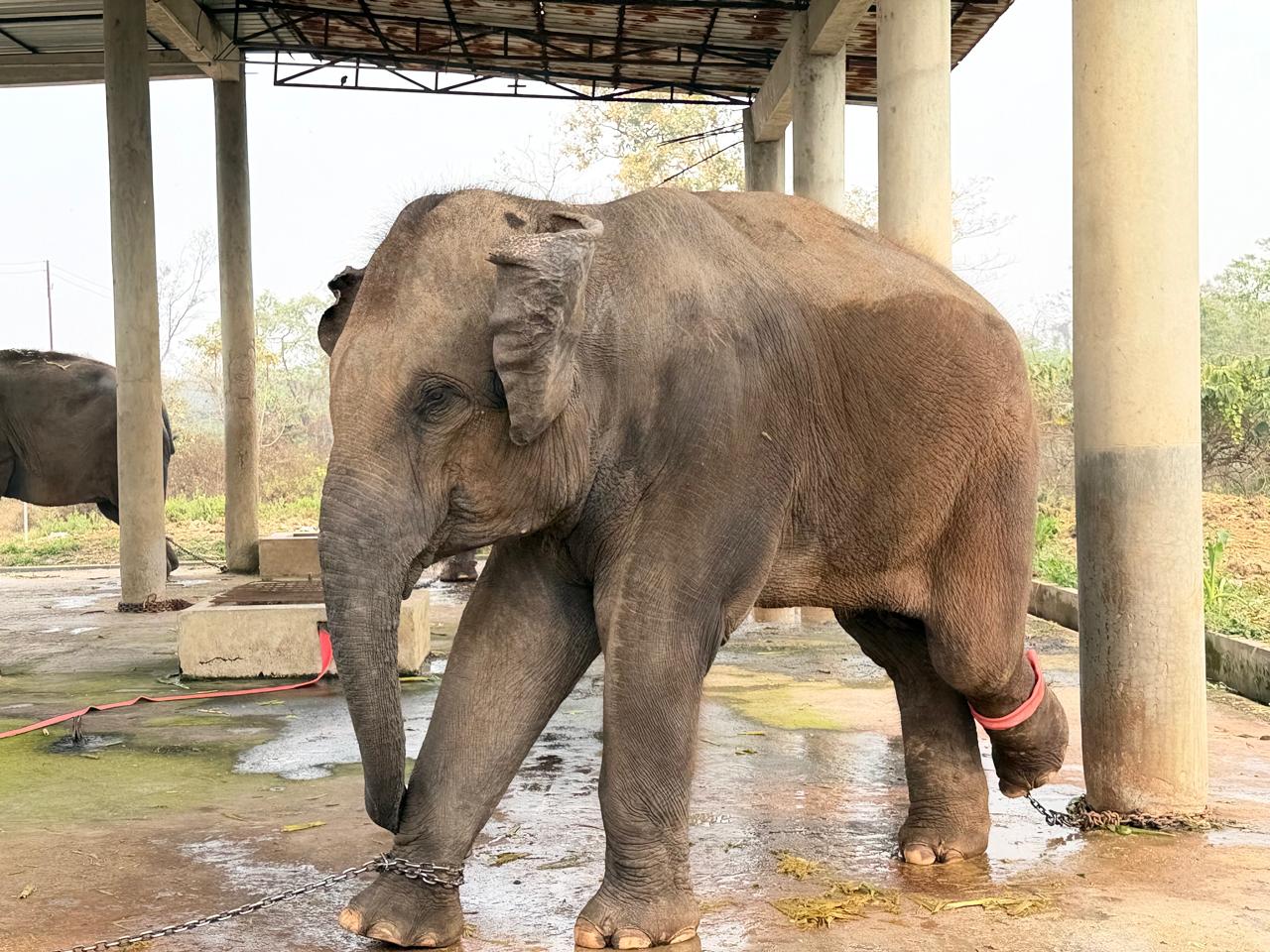
The case is a significant development. But it also exposes the weakness of what happened earlier. The initial rescue did not result in legal consequences. It was only after Samrat was returned and allegedly mistreated again that a case was filed against his owner.
Why did it take another rescue for the legal process to begin?
Why were the elephants returned?
The Forest Department's explanation centres on the relationship between elephants and their mahouts, repeated requests from the owners, and the difficulties of maintaining elephants in government custody.
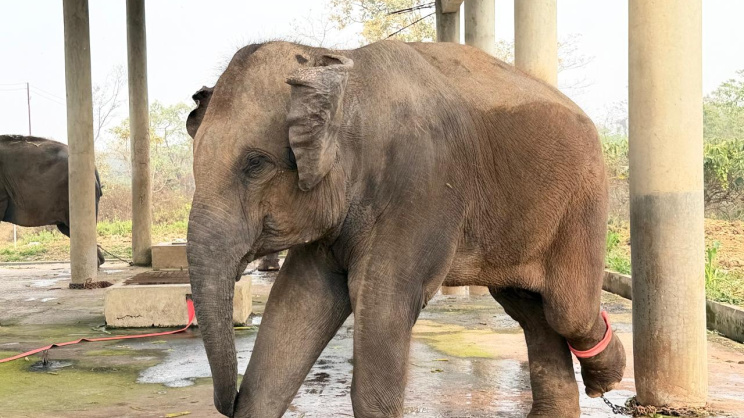
Sanaullah said the owners had repeatedly applied to take their elephants back and submitted custody deeds. Through those undertakings, they pledged that the animals would not be mistreated or subjected to inhumane behaviour.
The department also sought field verification before handing them over. According to Sanaullah, the relevant district forest officers inspected the owners' facilities and submitted reports assessing whether they had the capacity to keep and care for the elephants.
Tareq similarly said the facilities had been inspected and a positive report received before the elephants were handed over. The owners, he added, had repeatedly assured the authorities that the abuse would not happen again.
The elephants were returned on August 12.
By August 25, they were back in state custody.
The speed of that reversal inevitably raises questions about the assessment that preceded the handover. If the facilities had been inspected and deemed adequate, and the owners' written undertakings were considered sufficient, what went wrong? Were the assessments inadequate? Were the undertakings breached? And, given the previous allegations of mistreatment, were assurances alone enough to justify returning the animals?
Advocate Jyotirmoy Barua sees the central failure elsewhere: in the absence of a formal criminal process from the beginning.
He said the authorities had seized the elephants following allegations of torture, conduct that can constitute criminal offences under the Animal Welfare Act, 2019 and the Wildlife (Conservation and Security) Act, 2026. In his view, the authorities should have pursued two objectives simultaneously: ensuring the elephants' safety and seeking legal consequences for anyone found responsible for mistreating them.
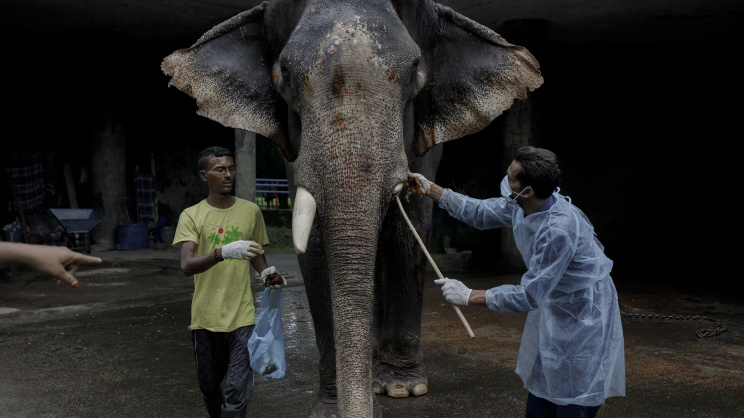
Instead, he said, no formal complaint was lodged before the concerned magistrate at the time. Without such a complaint, he added, police would not normally be expected to investigate on their own.
This points to a critical gap between rescue and accountability. Removing an animal from immediate danger may protect it temporarily. But unless allegations of criminal mistreatment are investigated through a formal legal process, the person accused may never face legal consequences—and the circumstances that led to the rescue may remain largely unchanged.
Barua said that, if an offence is proven through a formal case, an owner could face penalties under the relevant laws. He cited a fine of Tk 50,000 or one month's imprisonment under the 2019 Act, and one year's imprisonment or a Tk 100,000 fine under the 2026 Act.
The case against Samrat's owner therefore matters beyond the fate of one elephant. It may provide an important test of whether legal provisions designed to protect animals can be translated into actual enforcement.
Who holds the authorities accountable?
But accountability cannot end with the owners.
Tareq made clear that Gazipur Safari Park did not independently decide to release the elephants. According to him, the decisions both to hand them over and later to bring them back came from higher authorities, while park staff acted on those instructions.
That raises another question: if returning the elephants was an institutional decision, should examining what went wrong not also be an institutional responsibility?
Wildlife expert and researcher Dr Reza Khan argues that Bangladesh's deeper problem is not simply inadequate legislation, but the absence of a properly functioning wildlife management structure. He questioned whether officials responsible for wildlife management have the expertise, career structure and institutional supervision necessary to manage captive animals effectively.
He also raised a more uncomfortable question: what happens when Forest Department officials themselves fail in their responsibilities? Have officials lost their jobs, gone to prison or faced lengthy suspension over serious failures in wildlife management?
The department has mechanisms to act against an owner, including seizing an animal. But what mechanism exists to scrutinise a government decision if that decision exposes an animal to the very danger from which it had previously been rescued?
Questions about institutional accountability extend to veterinary management as well.
Amirul Rajiv, an elephant-rights activist and coordinator of the Bangladesh Tree Protection Movement, has raised questions about veterinary management at Gazipur Safari Park. Pointing to the park's record of animal deaths, he argues that concerns over preventive care, diagnosis and veterinary supervision warrant an independent review. Such an inquiry, he says, could establish whether there were systemic failures in animal care and where responsibility, if any, lies.
Accountability after death
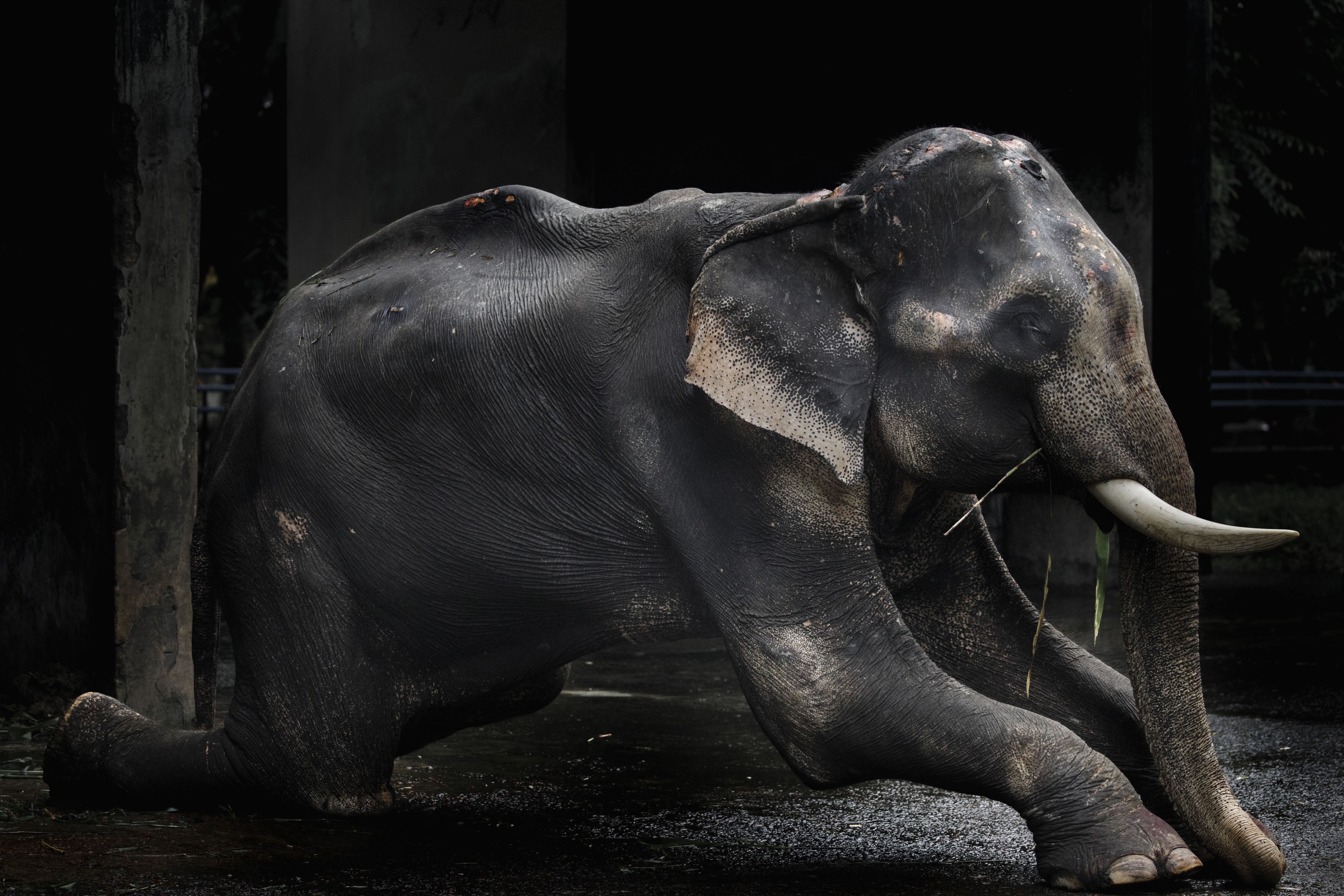
The deaths of Raja Bahadur and the controversy over Badshah Bahadur's missing tusk raise another question of accountability: what happens to an elephant's remains after it dies?
In Raja Bahadur's case, allegations have been raised that his tusk and tail were sold instead of being deposited with the Forest Department, claims that officials have denied. Questions have also been raised over Badshah Bahadur's missing tusk, with conflicting accounts of what happened to it.
The disputes underscore the need for a transparent system for documenting and preserving the carcasses, tusks, tails and other biological material of captive elephants. The state's responsibility does not end with an animal's death; clear records are essential to wildlife protection and to addressing concerns over the possible illegal trade in elephant parts.
The rules are still unfinished
Behind these individual cases lies another unresolved problem: regulation.
Sanaullah said draft elephant management rules submitted to the ministry in May were returned because they needed to be brought into line with the new wildlife law. Work on the rules is continuing, he said, with further discussions planned.
The regulatory framework specifically intended to govern elephant management therefore remains unfinished. At the same time, the government has yet to publicly announce a comprehensive and up-to-date figure for the country's captive elephant population.
Administrative and legal gaps may partly explain inconsistent enforcement. But they cannot justify a recurring cycle in which elephants are rescued from alleged abuse, returned to their owners, and then face allegations of mistreatment again.
There must also be a distinction between being the legal owner of an elephant and being capable of caring for one responsibly.
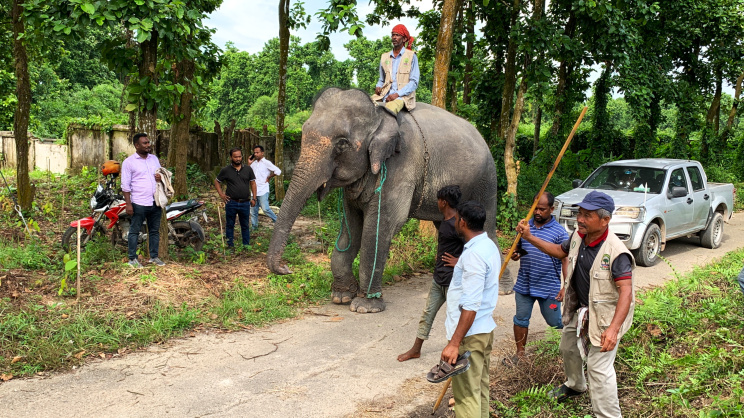
The return and rapid re-seizure of Samrat and Niharkoli make that distinction impossible to ignore. The episode demands scrutiny not only of the owners' actions, but of the assessments, legal processes and official decisions that allowed the elephants to be returned in the first place.
Otherwise, the pattern risks becoming familiar: allegations of abuse, rescue, release, further allegations, re-seizure—and little clarity about accountability at either end of the chain.
Bringing Samrat and Niharkoli back into state custody should therefore not be treated as the end of the story. It should be the beginning of a transparent examination of what went wrong, who was responsible, and what must change to prevent the same cycle from happening again.
Ystiaque Ahmed is a journalist at The Daily Star.
Send your articles for Slow Reads to slowreads@thedailystar.net. Check out our submission guidelines for details.

‘Situation under control’, but at whose expense?

The untold side of Bangladesh's climate migration

Dhaka's unbearable heat: Who suffers the most?

Enforced disappearance in Bangladesh / Who investigates the state?

Gibbons, kingfishers and the changing world of Adampur Reserved Forest

More than refugees: How Rohingya youth are reclaiming their story

Behind every cup / The mental toll on women tea workers

From Shyamnagar to Kurigram: Women work, but where is the income?

Waiting for April: The other side of migration in the Sundarbans