


‘Some people on social media do not understand the reality of football’: Dooley
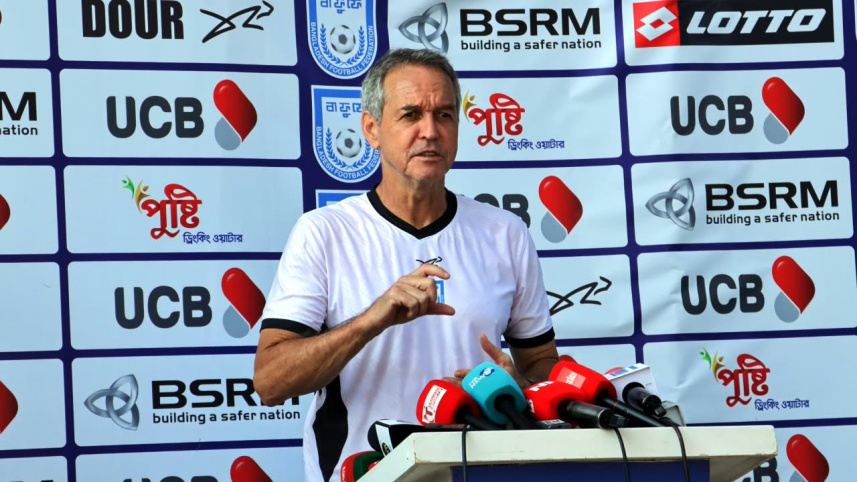
Bangladesh national team head coach Thomas Dooley believes some of the criticism directed at the football team on social media fails to take into account the reality of where the national team currently stands, arguing that improvement cannot be expected to arrive overnight.
“Some people on social media do not understand the reality of football,” Dooley told reporters on Saturday.

“Improvement does not happen overnight, and a coaching staff cannot transform a team instantly.”
Some people on social media do not understand the reality of football. Improvement does not happen overnight, and a coaching staff cannot transform a team instantly.
His comments came as Bangladesh prepare to fly to Indonesia tonight for the FIFA ASEAN Cup, where they face considerably higher-ranked opposition. Indonesia are 118th, Malaysia 136th and Singapore 148th in the latest FIFA rankings, while Bangladesh are 181st.
For Dooley, closing that gap is a long-term project rather than something that can be achieved through a few weeks of international preparation. He believes moving Bangladesh from around 180 towards 150 could take two to three years.
“Expecting us to go out and easily beat these teams is unrealistic,” he said.
Dooley also pointed to a significant difference in preparation. Indonesia, Malaysia and Singapore have played four or five competitive matches over the past month and trained together for six to eight weeks, whereas most of Bangladesh’s locally based players had almost two months without team training after the San Marino match.
“Professional pre-seasons typically take six weeks with multiple daily sessions, but we are trying to get our players match-ready in just four weeks,” Dooley said.
While overseas-based players such as Hamza Choudhury and Shamit Shome arrived with club preparation behind them, Dooley believes the overall gap cannot be erased simply through effort.
“Match outcomes depend heavily on league strength, player development, and preparation levels rather than effort alone,” he said.
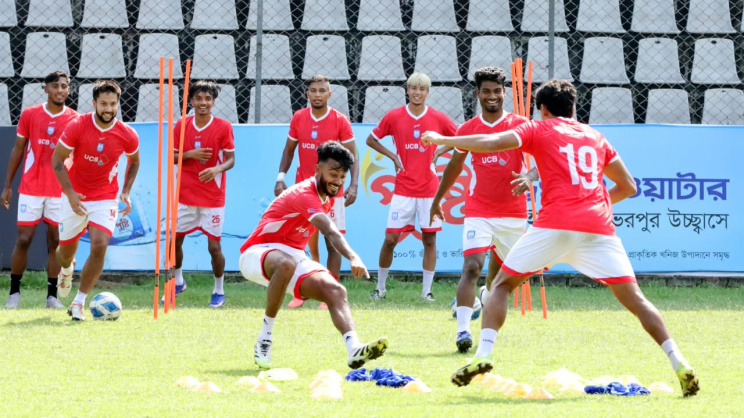
He cited Indonesia as another example of the disparity, noting that they have six or seven players competing in top European leagues in Germany, the Netherlands and Italy, while Bangladesh do not yet have a comparable pool.
That context, Dooley believes, has been lost in some of the reaction to recent results. He cited Bangladesh’s 2-0 defeat to Malaysia and the criticism directed at individual players, including Abbas, who he said struggled with the local climate and physical demands.
“When we lose 2–0 to Malaysia, people attack the team and undermine the confidence of players like Abbas,” he said. “Fans and media need to support the players rather than tear down their future.”
The same philosophy has shaped his squad selection.
Topu Barman has been ruled out with a calf injury after a scan indicated he would need another two weeks before returning to training. Bangladesh chose not to rush him back, particularly with the SAFF Championship regarded as a higher priority.
Dooley also defended the decision to bring in a forward rather than another defender following the injury-enforced absence.
He believes Bangladesh already have sufficient defensive options in Zidan Yousuf, Manik, Sohel and Tariq Kazi, while the squad needs greater depth in attack.
The final selection also reflects another element of Dooley’s approach: nine expatriate players are included in the squad, giving the team access to players exposed to football environments beyond the domestic game.
Yet amid Dooley’s emphasis on patience and realism, captain Jamal Bhuyan is unwilling to treat Bangladesh’s difficult group as a foregone conclusion.
 For all latest news, follow The Daily Star's Google News channel.
 Jamal believes the matches against Indonesia and Malaysia will be extremely challenging, but he also has a previous Bangladesh campaign to draw on.
Back in 2018, Bangladesh were placed in a group with Uzbekistan, Thailand and Qatar. Few expected them to progress, but they reached the Round of 16.
Back in 2018 when we were in Indonesia, we were in a group with heavyweights like Uzbekistan, Thailand, and Qatar. At that time, nobody believed we would make it to the next round, the Round of 16. But we did exactly that and qualified. Something similar could happen this time around as well.
“We know it is going to be difficult. To be honest, the matches will be very tough because both Indonesia and Malaysia are extremely strong teams,” Jamal said.
“However, back in 2018 when we were in Indonesia, we were in a group with heavyweights like Uzbekistan, Thailand, and Qatar. At that time, nobody believed we would make it to the next round, the Round of 16. But we did exactly that and qualified. Something similar could happen this time around as well.”
Comments