


Animal feed demand to reach 10 million tonnes by 2030
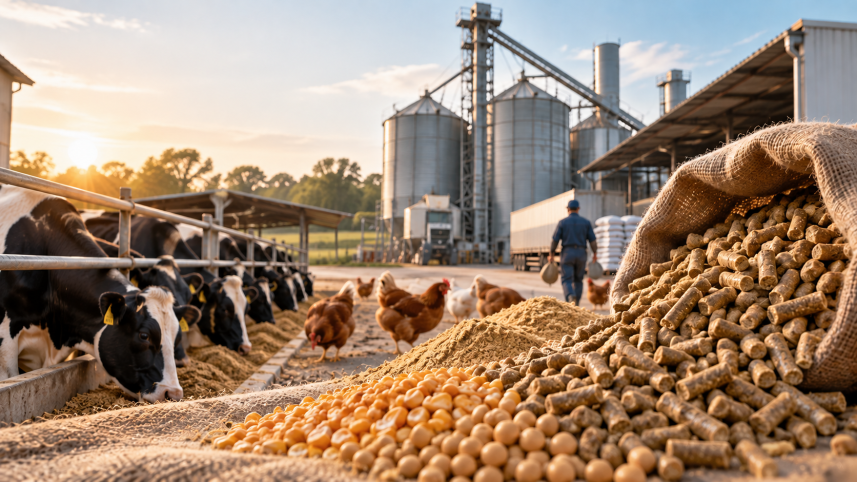
Annual demand for animal feed is expected to rise to 10 million tonnes by 2030 from 7.5 million tonnes now, driven by growing domestic demand for poultry and meat, according to a study by Bangladesh Agricultural University (BAU).
Of the projected demand, 65 percent will be used for poultry, 20 percent for fish farming and 15 percent for cattle, the study said.

The study was released today at a seminar titled “Feed Growth Supporting Bangladesh’s Protein Demand”, jointly organised by the Feed Industries Association of Bangladesh (FIAB) and the US Soybean Export Council (USSEC) at Dhaka Regency Hotel & Resort in Dhaka.
Bangladesh’s fish and poultry feed industry supplies nutrient-rich feed to support animal growth and productivity. It uses ingredients such as rice bran, maize, soybean meal, fish meal and other locally available materials.
However, if the national goal is protein security, the industry should be assessed based on how efficiently it produces edible protein, said Md Safiqur Rahaman Shishir, head and associate professor of the Department of Animal Nutrition at BAU.
“The cheapest feed does not necessarily result in the lowest cost of producing animal protein,” he said while presenting a paper on improving feed efficiency at the seminar.
Khabibur Rahman, Bangladesh market lead of the USSEC, said the country has a soybean complex, or value chain.
It includes whole soybeans, which are crushed to produce soybean meal for animal feed and soybean oil, he added.
The USSEC provides technical support, conducts workshops and seminars, shares knowledge and builds partnerships with industry players to strengthen the sector.
“Improving animal health will also improve the quality of food for human consumption and give people access to healthier food,” Khabibur said.
About 60 percent of the animal protein consumed in Bangladesh comes from fish and aquatic animals. To help ensure this protein supply, the USSEC provides technical support to fish farmers and aquaculturists in Bangladesh, he added.
Md Delwar Hossain, secretary of the Ministry of Fisheries and Livestock, said animal protein plays an essential role in building a healthy and well-nourished nation.
“Quality feed is the foundation for producing safe and high-quality protein,” he said.
Md Shah Alam Khan, director general of the Department of Livestock Services, said feed accounts for around 70 to 75 percent of total production costs in the poultry and livestock sectors.
 For all latest news, follow The Daily Star's Google News channel.
Comments