


Don’t create artificial crisis of eggs: minister
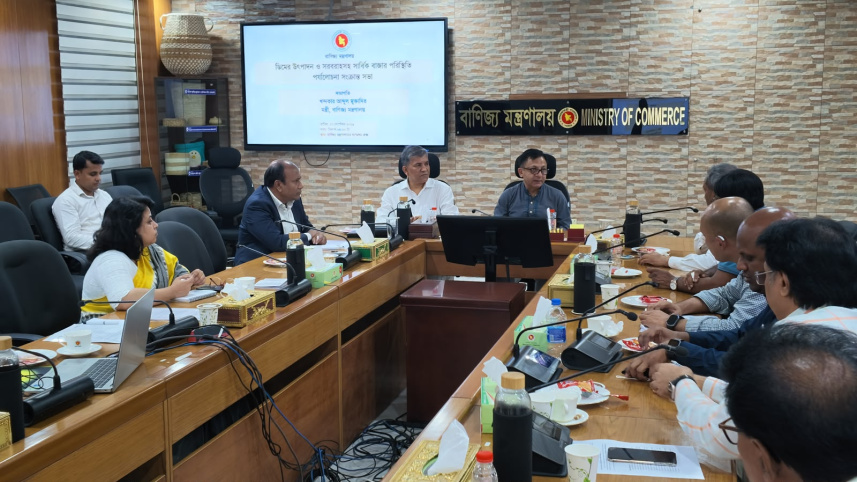
Commerce Minister Khandakar Abdul Muktadir today asked egg businessmen not to make excessive profits in the name of business, create artificial shortages, or destabilise the market by causing unreasonable disruptions in the supply chain of the widely consumed food item.
Everyone involved in the supply chain must play a responsible role in protecting consumer interests, the minister said at a meeting with businessmen and stakeholders on reviewing egg production and supply, held at the commerce ministry in Dhaka.

Eggs are one of the most important essential food items for the people of the country, and an abnormal increase in egg prices directly puts pressure on low- and middle-income people, Muktadir said.
Therefore, no situation should be allowed to develop in which ordinary consumers have to pay unreasonably high prices, he added.
Emphasising the need to review the price gap between producers and consumers, the minister said it must be identified at which stages of the supply chain abnormal costs or excessive profits are being added.
Coordinated cooperation among all stakeholders—including producers, wholesalers, commission agents, and retailers—is needed to make the market system more transparent and effective, according to a statement from the commerce ministry.
At the meeting, business representatives said that the cost of producing an egg has risen to around Tk 11 due to recent increases in the prices of various poultry-feed ingredients, including corn and soybean.
According to information provided by them, the average selling price of an egg at the producer level was Tk 7.91 in January this year, which rose to around Tk 11.30 in September, the statement also read.
The business representatives further said that although eggs are often sold below production cost for a significant part of the year, it is the periods of price increases that attract the most attention.
Generally, value is added by around Tk 1.50 to Tk 2 from the producer level to the retail market through various stages.
To reduce seasonal price fluctuations, the business representatives proposed establishing an effective system for storing eggs for one to one and a half months during periods of surplus production.
They also recommended rationalising the burden of turnover tax and income tax, controlling the prices of poultry-feed ingredients, reducing obstacles to transportation.
 For all latest news, follow The Daily Star's Google News channel.
Comments