


How performance enhancement classes put progress beyond marks
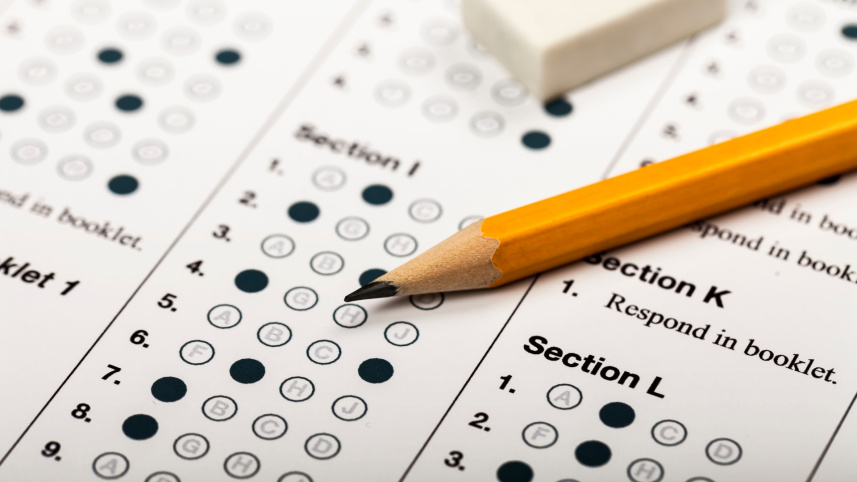
Contrary to popular belief, a report card cannot always be the perfect measure of how a student is learning at school. It can tell us where a student understands a lesson, where they are performing well, or where they need more support. But as a teacher, I’ve learned that there are things a report cannot fully capture, including a student's hidden potential.
Every classroom has students who learn at different paces. Every term, some students lag in class assessments or hesitate to write answers on the board. In a classroom with a diverse group of students, identifying these students might seem daunting, but it is not impossible.

Our starting point is often assessment. Through formative and summative assessments, we can identify areas where students may need additional attention. Formative assessment monitors students' learning during instruction to provide ongoing feedback, helping teachers improve teaching and students fix gaps. Examples include short quizzes and class tests. Summative assessment evaluates student learning at the end of an instructional period to measure final achievement against set standards, such as final exams.
But assessment is not the end of the process; it is a starting point for understanding what a student needs next, which is where performance enhancement classes (PEC) come in.
For me, one of the most valuable things PEC provides is something very simple: having the time to notice. I remember a student who was particularly hesitant during mathematics lessons. He rarely volunteered answers, and when he did not understand a problem, he would often wait rather than ask for help. His assessments showed that he was struggling with certain concepts, but they did not tell the whole story.
During PEC, with more time to work through problems step by step, I began to see that the issue was not that he could not understand mathematics. He was not confident enough to make mistakes in front of others.
We started breaking problems into smaller steps and giving him time to work through them himself. One day, after practising a similar question, he volunteered to solve one on the board. He got part of it wrong, paused, and then corrected himself. It was a small moment, but as his teacher, I noticed the difference. The goal was no longer simply getting the answer right. He was beginning to trust his own ability to find the answer.
That is what I find most valuable about PEC. Integrated into the weekly timetable for core subjects, including mathematics, science, English, and Bangla, these sessions give students time to revisit difficult concepts and approach them through different learning methods, using worksheets, multimedia presentations, and learning from each other.
We sometimes use peer teaching as well, allowing students to review one another’s work and learn from different approaches. It gives students a chance to engage more actively with what they are learning while allowing teachers to observe how they think, explain, and solve problems.
Over time, I have seen students become more willing to attempt difficult questions, ask for clarification, and participate in class. Some eventually begin helping classmates with concepts they once found difficult themselves. These changes may not immediately show up in a report card, but they tell us something important about how a student is learning.
For me, that is why student progress is more than a mark. An assessment can tell us where a student stands today. A teacher gets to see the steps they take to move forward.
The author is the Dean of Academics, Lower Secondary (Grades 6-8) at Glenrich International School, Uttara.
 For all latest news, follow The Daily Star's Google News channel.
Comments