


Khichuri, mood and the science of comfort food
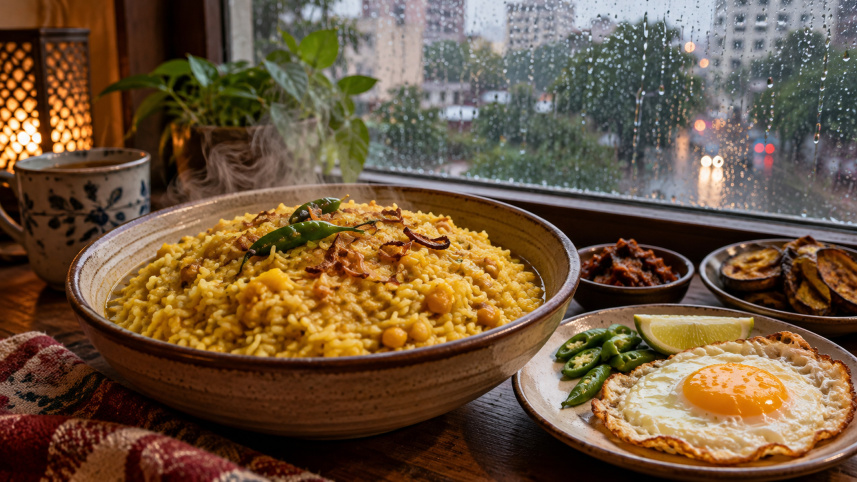
There is something about a rainy Dhaka evening that makes a steaming bowl of khichuri feel almost therapeutic. Add a fried egg, perhaps some pickle on the side, and the meal seems capable of lifting the mood after a long day.
That feeling is not simply nostalgia. Food can influence mood through a complex relationship between nutrition, the gut, the nervous system and the brain.

Serotonin, a chemical involved in mood and wellbeing, is closely linked with the gut. In fact, much of the body’s serotonin is produced there. This helps explain why scientists increasingly describe the relationship between the digestive system and the brain as the “gut-brain axis”.
Some foods also provide nutrients the body uses in processes related to brain function. Bananas, for example, contain tryptophan, an amino acid involved in serotonin production, as well as vitamin B6. Carbohydrates may also influence how tryptophan and other amino acids are handled by the body.
Healthy fats matter too. Fish, walnuts and other foods rich in omega-3 fatty acids support cell membranes and normal brain function. For Bangladesh, where fish has traditionally been an important part of the diet, this is particularly relevant. A simple meal of rice, lentils, vegetables and fish may offer more nutritional value than many highly processed convenience foods.
Refined sugar, however, tells a different story. Sweet drinks and desserts may provide a rapid burst of energy, but sharp rises and falls in blood glucose can leave some people feeling tired or irritable afterwards. Whole grains and fruit provide carbohydrates in a less concentrated form and usually come with fibre and other nutrients.
None of this means that food should be treated as a cure for sadness or depression. Mood is influenced by sleep, stress, relationships, physical health and many other factors.
But our everyday food choices do matter.
So when a bowl of khichuri feels especially comforting on a rainy evening, the pleasure may come partly from memory, warmth and familiarity — and partly from the way food interacts with the body and brain.
The writer is a Wellness Consultant at Rejuva Wellness, Dhaka. E-mail: dr.sadiq70@yahoo.com
 For all latest news, follow The Daily Star's Google News channel.
Comments