


Safe care for life: Why patient safety must be central to Bangladesh’s NCD response

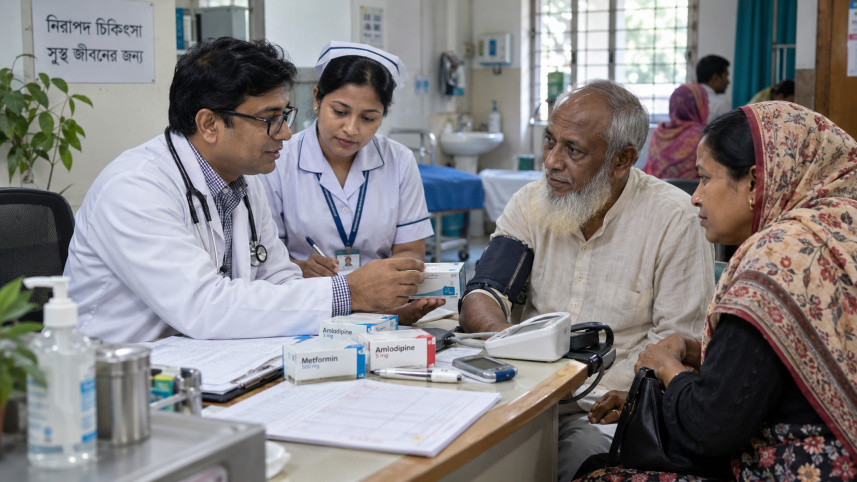
World Patient Safety Day 2026 carries a message of particular urgency: “Safe care for life!” This year, the World Health Organisation is focusing on safe care for noncommunicable diseases (NCDs)—cardiovascular disease, cancer, diabetes and chronic respiratory disease—which account for 74 percent of deaths worldwide.
Patient safety is often discussed in relation to surgery, infection or medication errors. But for people living with NCDs, risk accumulates over years. A patient with diabetes may move between primary care, specialists, laboratories, pharmacies and hospitals. A person with cancer may undergo complex investigations, treatment and long-term follow-up. At every step, fragmented communication, delayed diagnosis, medication errors, poor monitoring or inadequate infection prevention can cause avoidable harm.

WHO estimates that one in ten patients globally is harmed during health care, and around half of that harm is preventable. People with NCDs are especially vulnerable because they require repeated, often lifelong, interaction with health systems.
This is highly relevant to Bangladesh. WHO reported in June 2026 that NCDs account for seven in every ten deaths in the country, with more than half occurring prematurely. Yet safe chronic care requires more than access to medicines. It requires continuity, reliable records, appropriate prescribing, regular monitoring, functioning referral pathways and meaningful communication between patients and health professionals.
Basic infrastructure also matters. Recent WHO–UNICEF findings show serious gaps in water, sanitation and hygiene in Bangladeshi health facilities: only 25 percent have basic sanitation services, 32 percent basic hygiene services and 16 percent basic waste-management services. These are patient-safety issues, not merely infrastructure statistics.
Bangladesh has made progress. National infection-prevention guidelines have been developed, and WHO is supporting quality-of-care initiatives, patient-safety strategy and better referral systems. But implementation must reach district hospitals, upazila facilities, private hospitals and outpatient clinics—not remain concentrated in tertiary centres.
Patient safety should become a measurable component of NCD care. Facilities need systems for medication reconciliation, incident reporting, infection prevention, standard treatment protocols and safe referrals. Digital records can reduce duplication and errors. Patients and families must also be treated as partners who understand their medicines, warning signs and follow-up plans.
For Bangladesh, safer NCD care is essential to reducing preventable deaths, protecting families from avoidable suffering and building trust in the health system. “Safe care for life” must become a national commitment, not just a campaign slogan.
E-mail: tareq.salahuddin@thedailystar.net
 For all latest news, follow The Daily Star's Google News channel.
Comments