


Bangladesh must prepare for its growing dementia crisis

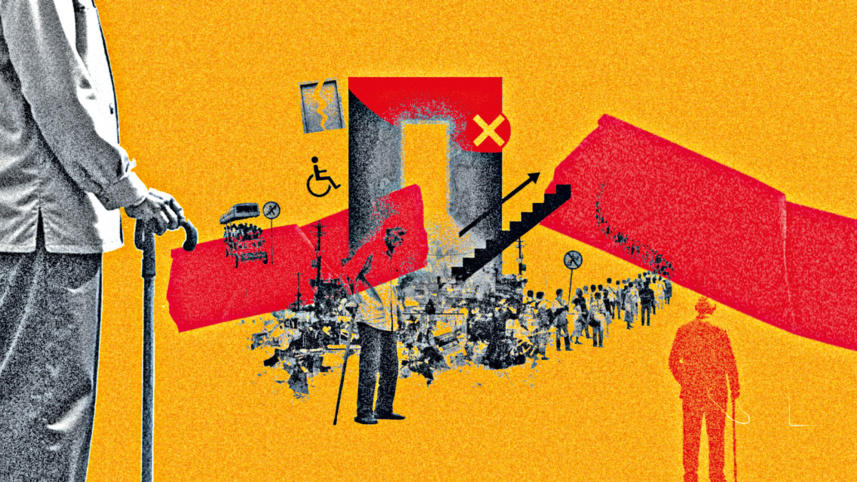
As the world marks World Alzheimer’s Month this September, Bangladesh itself is facing a critical demographic tipping point. Steady declines in fertility alongside remarkable extensions in life expectancy have accelerated population ageing across South Asia. But our national health apparatus remains structurally tethered to historical priorities: infectious diseases, maternal and child healthcare, and basic cardiovascular metrics. Beneath this policy horizon sits Alzheimer’s disease and related dementias—a gathering crisis often routinely dismissed as the natural infirmity of old age rather than recognised as a neurodegenerative emergency carrying staggering clinical, social, and economic costs.
Landmark epidemiological evidence from 2019—documented by icddr,b, the Directorate of Health Services, and the National Institute of Neurosciences and Hospital—revealed that approximately 8 percent of individuals aged 60 and older live with dementia, with rates disproportionately higher among women and climbing above 12 percent in regions such as Rajshahi and Rangpur. The study also projected that, across the country, more than 13 lakh older adults could live with cognitive impairment by 2025, and the number could exceed 24 lakh by 2041 without timely intervention.

In a Bangladeshi household, dementia creates a devastating compounding effect. Over half of affected individuals live with concurrent non-communicable conditions, most notably hypertension and clinical depression. Since primary healthcare providers at the union and upazila levels lack validated cognitive screening instruments, memory assessment infrastructure, and geriatric training, early symptoms remain unrecognised until severe behavioural disturbances emerge. Families are consequently driven straight to overwhelmed tertiary facilities in metropolitan centres, incurring immense logistical and diagnostic expenses for crises that could have been identified and stabilised locally.
This lack of institutional preparedness collides directly with our domestic financing realities. In a country where out-of-pocket health expenditure exceeds 79 percent of total healthcare spending, chronic neurodegenerative illness becomes an inescapable route into medical impoverishment. Comprehensive economic evaluations across low- and middle-income countries demonstrate that the per-capita cost of managing dementia rises drastically from $590 annually in the mild stages to over $25,500 in severe stages, driven by around-the-clock physical supervision, advanced palliative requirements, and long-term polypharmacy.
Critically, the largest share of this economic toll never appears on a hospital balance sheet. In low-and-middle-income nations, indirect costs—dominated by uncompensated domestic caregiving—comprise roughly 58 percent of the total economic burden of dementia. In Bangladesh, this structural deficit is absorbed almost entirely by women. Wives, daughters, and daughters-in-law systematically forfeit wage-earning employment or formal educational opportunities to provide unpaid personal care. This hidden tax not only depresses immediate household earnings but also erodes female labour-force participation, increasing gender disparities and shrinking the national tax base.
Addressing this requires, proper public investment in prevention and early detection of Alzheimer’s. The landmark report by the Lancet Commission on Dementia Prevention, Intervention, and Care demonstrated that managing 14 modifiable life-course risk factors, including midlife hypertension, diabetes, smoking, physical inactivity, and untreated hearing loss, can prevent or delay up to nearly half of all dementia cases globally. Because cardiovascular pathology directly accelerates both vascular dementia and Alzheimer’s pathology, routine investments in blood pressure control and lifestyle modification at our grassroots community clinics simultaneously prevent heart attacks and curb future dementia incidence. Delaying the onset and progression of the disease keeps individuals functional longer, effectively avoiding the exponential costs associated with end-stage dependency.
Achieving this transition demands a coordinated joint venture across three government ministries. The Ministry of Health and Family Welfare must integrate validated, Bangla-adapted brief cognitive screening tools into the existing non-communicable disease corners of upazila health complexes and rural community clinics, ensuring that frontline community healthcare providers can detect early cognitive decline. In parallel, the Ministry of Social Welfare should reform the current old age allowance registry. Instead of distributing an undifferentiated, nominal flat stipend, it should introduce a cognitive and functional disability tier that directs supplemental monthly cash transfers to households caring for moderate-to-severe dementia patients. Finally, the Ministry of Local Government, Rural Development and Co-operatives should mobilise union parishad and municipal ward community centres to host weekly supervised day-activity programmes, providing accessible community respite care that allows informal family caregivers to sustain gainful employment.
Dementia cannot remain an unspoken family tragedy borne in isolation behind closed domestic doors. It is an impending public health and economic shock that requires decisive state intervention. By investing in grassroots prevention, early detection, and inter-ministerial social protection today, Bangladesh can protect household solvency, support its female workforce, and guarantee dignity to its rapidly growing elderly generation.
Dr Imdadul Haque Talukdar is adjunct assistant professor of psychology in the Department of History and Philosophy at North South University and a specialist in public mental health.
Views expressed in this article are the author's own.
Follow The Daily Star Opinion on Facebook for the latest opinions, commentaries, and analyses by experts and professionals. To contribute your article or letter to The Daily Star Opinion, see our guidelines for submission.
 For all latest news, follow The Daily Star's Google News channel.
Comments