


Media reform and journalism protection law can help counter disinformation

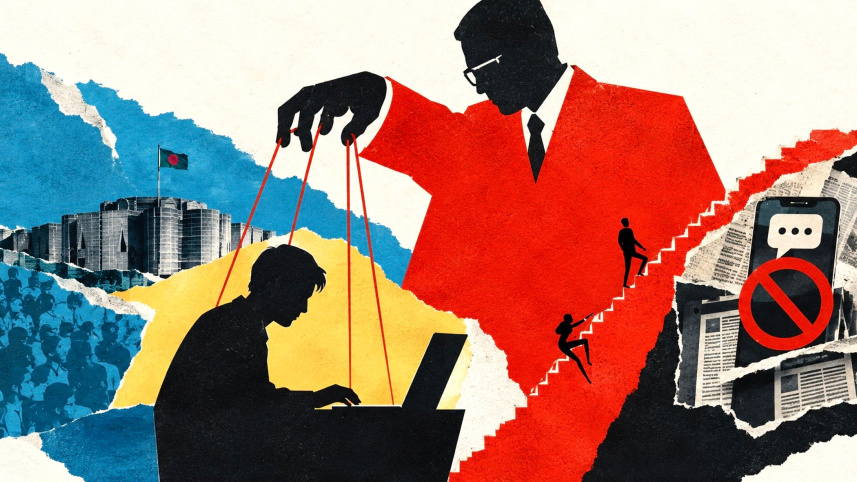
Terming the government’s latest initiative to amend the Cyber Safety Act “ominous,” Mahfuz Anam, editor of this paper, wrote in his September 25 column that “there is no way that media can be protected under the draft cyber protection law.” He proposed “a separate cyber law for the media, or at least a separate set of rules and guidelines” that would prevent cybercrime without hampering freedom of speech, expression and publication. His suggestion echoes, in part, recommendations made by the Media Reform Commission (MRC) under the interim government.
It is therefore worth revisiting those recommendations, particularly the proposed reforms aimed at protecting journalism while addressing the growing threats posed by disinformation and “fake news.” The MRC’s proposals broadly resemble rules and regulations already being implemented in many European countries and the UK.

The proposed amendments to the cyber law appear to be a knee-jerk response to the threat of instability fuelled by rumours, misinformation and disinformation. Members of the cabinet sub-committee working on the draft law told us that its aim was to strike a balance between protecting the media and safeguarding society from the misuse of digital platforms. The proposed changes would apply to mainstream media—newspapers, television, radio and online outlets—as well as social media platforms.
As the media landscape evolves rapidly, these threats are becoming more complex. Developed economies, equipped with advanced technology and greater resources, have responded by strengthening oversight, enforcing standards and regulations, and increasing accountability for major technology companies. These measures have not been intended to curtail civic rights, including freedom of the press and freedom of expression. Rather, they seek to reduce potential harms on major platforms such as Meta and Google, while providing specific protections for journalism against government interference and platform censorship.
Our government, however, appears to be conflating these distinct objectives. The proposed amendments may neither adequately protect citizens from cybercrime nor safeguard media freedom. Consider Home Minister Salahuddin Ahmed’s remarks to delegates of the International Republican Institute on September 13. He said the proposed Cyber Safety (Amendment) Act, 2026 would “help restore decency in the digital space, protect women and young people from cyber-bullying, and ensure professional safeguards for journalists while preventing any misuse of the law.”
There is no doubt that the abuse of women through vulgarity, indecency and sexualised language and images has reached an alarming level in Bangladesh and must be curbed. But such provisions should not be extended to defamation and humiliation in ways that could encompass legitimate political or non-political criticism, which is often open to differing interpretations.
The media and journalists have been particularly vulnerable to such misinterpretation since the government began regulating the digital sphere. The problem has been compounded by police and magistrates entertaining cases filed by third parties rather than by the individuals who were allegedly defamed. There have also been instances in which established legal norms were disregarded by registering multiple cases at different locations over the same alleged offence. No one has been held accountable for such arbitrary and politically motivated use of the law. The government is now proposing amendments that would give all security agencies—and even the information ministry—a role in enforcement.
In the past, cyber laws were weaponised to intimidate the media, resulting in the imprisonment of journalists, editors and publishers. This was possible in part because a number of provisions of the Digital Security Act (2018) and Cyber Security Act (2023) were non-bailable. Criminalising speech-related offences is fundamentally at odds with democratic principles, and making such penalties more stringent could further chill citizens’ ability to hold their government and elected representatives accountable.
At the same time, genuine cybercrimes—including exploiting vulnerable people through gambling, defrauding customers through the sale of substandard goods and services, using social media to sell contraband such as drugs, promoting pornography, etc—require stronger enforcement and appropriate penalties. Accountability should extend both to the criminals responsible and, where appropriate, to platforms that facilitate unlawful activities.
Addressing this complex challenge requires four broad objectives: preventing cybercrime and punishing perpetrators; protecting citizens from digital harm; holding platforms accountable for content and activities they facilitate; and safeguarding freedom of speech and journalism by protecting media organisations from arbitrary deplatforming or censorship by major technology companies.
We can draw useful lessons from the European Union and the UK, which have established separate legal frameworks for digital services and media freedom. The EU’s Digital Services Act (DSA), for example, establishes rules governing online services used by European citizens, including marketplaces, social media networks, app stores, and online travel and accommodation platforms. Digital platforms must address systemic risks, improve transparency, and protect minors through a range of obligations.
The DSA also requires platforms to explain content removals, provide clear appeal mechanisms, and offer accessible tools for reporting illegal material. Advertising targeted at minors or based on sensitive personal data is restricted. Platforms must offer users an option for non-personalised feeds, deceptive interface practices known as “dark patterns” are prohibited, and online marketplaces must verify and display seller information. Some European countries are going further by introducing additional measures to protect children from online harms, including age restrictions.
Bangladesh, by contrast, continues to struggle with such abuses. Numerous gambling sites are advertised on Facebook and other platforms, contributing to addiction and, reportedly, bankruptcy and heavy debt, with some cases allegedly ending in suicide. Authorities have also struggled to curb fraudulent sales of substandard goods and services and the promotion of illicit online activities.
Disinformation, particularly when it originates across borders or proliferates during elections, presents another serious challenge. Here, too, the EU has placed greater responsibility on technology companies through a framework of stringent regulations. Under the Digital Services Act, large online platforms and search engines must take measures to mitigate systemic risks or face potentially substantial financial penalties. The strengthened Code of Practice on Disinformation also encourages platforms to reduce the monetisation of disinformation and support fact-checking.
The EU has also introduced rules to increase transparency in political advertising and limit the potential for foreign interference in elections. Independent fact-checkers and researchers have received institutional and financial support, along with opportunities to work with technology companies and regulators.
The EU’s European Media Freedom Act and the UK’s Online Safety Act 2023, likewise, provide specific safeguards for journalism and media freedom. These frameworks recognise the importance of freedom of expression and journalistic content when platforms make decisions about removing or restricting material posted by journalists or recognised media organisations.
In the UK, certain recognised news publishers receive additional safeguards under the regulatory framework. Appeals involving journalistic content can receive expedited consideration, while some original journalistic content is subject to protections reflecting the special role of news publishers. Such content receives additional protection where publishers adhere to their own editorial standards.
We, too, need such protection for journalism. Without it, sustaining a vibrant and functioning democracy will be difficult. The Media Reform Commission recommended enacting a journalism protection law and establishing a permanent, independent national media commission to oversee self-regulation and enforce a national code of ethics and professional standards.
To counter the growing threat of disinformation, the government would do well to recognise the central role of a free press and pursue these institutional reforms while adopting stronger, more targeted measures against cybercrime. Free speech and press freedom must not be criminalised, while citizens must be protected from genuine digital crimes and abuse.
Kamal Ahmed is consulting editor at The Daily Star. He led the Media Reform Commission under the interim government. His X handle is @ahmedka1.
 For all latest news, follow The Daily Star's Google News channel.
 Views expressed in this article are the author's own.
Follow The Daily Star Opinion on Facebook for the latest opinions, commentaries, and analyses by experts and professionals. To contribute your article or letter to The Daily Star Opinion, see our guidelines for submission.
Comments