Confessions of a finance professor: The danger of putting profits first
In the late 1990s, I took a sabbatical from academia and spent nearly a year at a multinational investment bank. It was a small country office in Italy of a venerable, centuries-old, family-owned Anglo-French banking house. Unlike the modern global financial behemoths, the country operations were allowed to operate more like a suzerainty, largely independent in their choices and activities in-country, with London and Paris providing some macro-support for larger, cross-border deals, as well as acting as a backstop and implicit guarantor.
I was the eighth banker in the group, and there was easy camaraderie and a remarkable absence of hierarchical management in the work culture of the unit. They quickly included this particular non-Italian-speaking Bangladeshi in their midst. All the bankers were men (one woman joined us a bit later but left after a short while), and all the support staff were women, which, I must add, remains pretty much unchanged even among U.S. investment banking giants nearly 30 years later. Since this bank didn’t have capital market operations or a brokerage business, it didn’t suffer from many of the internal conflicts of interest that the big banks have, focusing only on corporate finance advisory (mergers and acquisitions, divestments, spin-offs, etc.) for large firms, including government-owned corporations, as, like many Continental European countries, Italy too was embarking on privatisation, as well as publicly traded and family-owned corporations. It was a nimble unit, and the bankers’ socio-political and cultural nous allowed it to compete with the vast resources of giants such as Morgan Stanley or Goldman Sachs.

Italy had only recently removed formal capital controls (1990) and was slowly liberalising its financial sector, so the investment banking landscape was qualitatively different from that of the U.S. or U.K. The corporate finance advisory business was fairly limited prior to the 1990s and had long been dominated by the merchant bank Mediobanca, so ours was among the first foreign investment banks active in what can be described as a nascent industry in Italy.
My colleagues were a highly intelligent, well-educated, polyglot bunch and generally, though there were notable exceptions, hailed from the upper classes. Four of the seven had had significant financial education and/or experience in Anglo-American institutions, and the youngest member was planning to go to the U.S. soon for an MBA in finance. The thing I noticed as a participant who was mainly educated and had worked in the U.S., with the additional remove provided by my status as a professor on sabbatical, was that, already in this group of Italian bankers, I could sense the emergence of a finance über alles mindset taking hold.

Finance über alles
“The more the capitalist has accumulated, the more is he able to accumulate.” — Karl Marx, Capital, Volume I, Chapter 24.
In the 1980s, following the recent elections of Margaret Thatcher and Ronald Reagan in the U.K. and the U.S., respectively, a series of labour, antitrust and financial liberalisations steadily removed many of the regulations that had been set up following the Great Depression of the 1930s. Similar liberalisation and privatisation followed in Europe and Japan in the late 1980s and 1990s. It seemed the guardrails and automatic safety mechanisms set up to protect the citizenry from financial excesses, ‘irrational exuberance’, in the words of U.S. central banker Alan Greenspan, were no longer deemed necessary.
The finance sector, both bank-intermediated financing and securities market transactions, began to take on a greater profile and scope in society and the imagination. As documented by Thomas Philippon and Ariell Reshef, between 1980 and the early 2000s, the size of and income from the finance sector grew dramatically in the U.S., and less dramatically in some other developed countries. In popular culture, films such as Wall Street, Working Girl, Barbarians at the Gate and The Wolf of Wall Street, though often indicting the moral vacuity of the finance industry and its professionals, served to give the industry a glamorous sheen.
The changing role and status of finance from the 1980s is very well captured by another marker. Since its founding in 1908, Harvard Business School has been the pre-eminent gateway for would-be captains of industry to the pinnacle of corporate America. The symbiotic rise of the modern corporation in the American Century, “business of America is business” (U.S. President Calvin Coolidge), “what’s good for General Motors is good for America” (GM President Charles Wilson), meant that the road to power and prestige was through a career in a corporation. And indeed, up through the 1970s, over 60 per cent of Harvard graduates took on general management roles in corporate America, with a minority going into finance and consulting.
This reversed dramatically in the 1980s. By the end of the decade, the vast majority were going to Wall Street and the general finance sector (including management consultancy work on mergers and acquisitions and corporate reorganisations), and to this day, the finance sector maintains a plurality of around one-third of new hires. For would-be movers and shakers, finance became the pathway to wealth, power and prestige. One can see this reflected even today in the number of cabinet, senior agency and ambassadorial appointees in the current Trump administration in the U.S. who have backgrounds in the world of finance.

Thus, a finance über alles mindset, with the rate of return on investment being the starting point and final arbiter of all economic decisions, and markets seen as solutions to all of society’s problems, took hold among the American elite. A bit later, with the gradual liberalisation of the financial sector in other countries, much of it promoted and lobbied for by U.S. interests, it increasingly started to permeate elite discourse globally. The cultural power of the finance über alles mindset cut across political lines: for example, in the U.S., “Potato chips, computer chips, what’s the difference? A hundred dollars of one or a hundred dollars of the other is still a hundred dollars” (Michael Boskin, chief economic adviser to Republican President George H.W. Bush; 1992), and “[N]ow I would like to come back [reincarnated] as the bond market. You can intimidate everybody” (James Carville, political adviser to Democratic President Bill Clinton; 1994).

As an undergraduate student in the 1980s, I wasn’t the obvious candidate to fall into the finance über alles mindset. Being the son of a father with a literary bent (even if he became a corporate executive to make a living) and a mother who was a history major, I more naturally gravitated towards history, literature and the social sciences. I took just two courses in finance: the first one, corporate finance, was taught by a University of Chicago graduate. The University of Chicago, entirely unknown to me at the time, had been the mecca of finance research since the 1960s, with the most ardent emissaries spreading the dogma of the social optimality of return maximisation and market allocation. I found that course to be boring, logically interesting and effective within its narrow domain, but uninteresting in the larger scheme of things. (Ironically, as an academic, I taught that course throughout my career.) My second class in finance, investments, was taught by a charismatic Italian-American from New York City, who I later learned was a legend among fixed-income securities traders on Wall Street. The theory and analytics were marvellous, but I didn’t find the domain interesting (and never taught investments over the course of my career).
Therefore, I actually began my doctoral programme studying international business, a field I found much more dynamic, with elements of politics, international relations, history, geography and culture added to the study of the economics of corporations. But a combination of natural aptitude, a genuine appreciation of the theoretical elegance and advances made in financial economics, prodding by some professors and, I can see now, the seeming inevitability of the primacy of finance that was in the air by the late 1980s led me to switch programmes and become a finance academic. During my early academic career in the 1990s, the finance über alles mindset, as can be seen from the quotes above, seemed to exist as a law of nature, and I too didn’t find any persuasive reason to question it then. Some of the most significant financial deregulation and liberalisation was occurring under centre-left parties in the U.S. and Europe, with debate over its efficacy and desirability left by the wayside. The logic of capitalism, accumulate ad infinitum in the words of Marx, had won at history’s end.
A mindset reset
“The love of money as a possession…will be recognised for what it is, a somewhat disgusting morbidity.” — John Maynard Keynes, “Economic Possibilities for our Grandchildren” (1930)
My time at the investment bank near the end of that decade was probably when I first began to question the finance paradigm as applied widely to socio-economic decision-making. I saw these superbly talented and motivated colleagues and counterparties engaged in the work of building, closing, expanding and slicing business organisations, strictly driven by the finance imperative, maximising the return on capital, with nary a thought or consideration for the underlying activities and the people involved.
What was also striking was that the finance über alles mindset, which was born in the U.S., was so naturally accepted by an elite, multinational and multicultural set of bankers and their clients. Subsequently, after my return to academia, I increasingly started to consider in my research the pernicious impact of share-price maximisation on the governance of corporations, specifically, and the consequences of the financialisation of society generally.
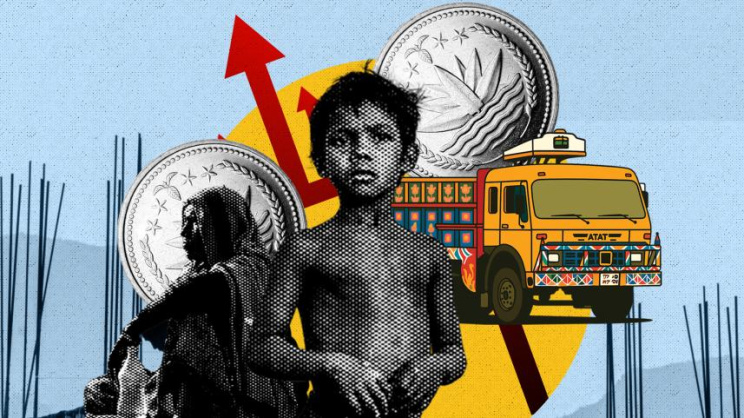
In the two decades after 1980, as financial deregulation spread out from its Anglo-American origins, the world witnessed a series of bubbles, followed by the inevitable bursts: for example, the rise and then fall of the U.S. dollar in the mid-1980s leading up to the stock market crash of 1987; the Japanese equity and real estate bubbles of the late 1980s; the S&L crisis in the U.S. in the early 1990s; the currency crisis in the European Union in 1992–93, followed by the banking crises in Scandinavia; the Asian financial crisis in 1997; the technology-sector bubble in the U.S. in the late 1990s; and the global real estate, commodities and financial-sector bubbles in the first eight years of the 2000s that also originated in the U.S. (the aftermath is better known as the Global Financial Crisis, or GFC). The damage and destruction to lives, livelihoods and communities in their aftermath seemed to be of little concern to the business and financial elite, as they simply moved on to the next financial, well, by now there really is no other way to call it, scam.
In recent years, the most notable sketchy activities have involved cryptocurrency and private credit (non-bank financing to firms, i.e., a shadow banking sector), both with a striking lack of transparency and accountability, just like the credit derivatives that fuelled the GFC.
You can go on a financial joyride with no speed limits or guardrails, but when you cause the inevitable crash, you will get the government to helicopter you to safety, while the road and the humans in the other vehicles burn below you.
Furthermore, since 2008, the financial sector has become very comfortable with the notion, economists call it moral hazard, that every failure will be covered by the government and/or the central bank, ever ready to mobilise resources or simply create money for bailouts. Quantitative easing, whereby the central bank provides newly created money to banks by buying assets, has been steadily bailing out investors in recent years. Between 2008 and 2015, the U.S. Federal Reserve created $3.5 trillion out of thin air, quadrupling its balance sheet. The magical elixir was put to more substantive use during the pandemic shutdown, to the tune of an additional $4.5 trillion, but even five years later, only two trillion of it has been retired, and in the last year, the balance sheet has started increasing again. You can go on a financial joyride with no speed limits or guardrails, but when you cause the inevitable crash, you will get the government to helicopter you to safety, while the road and the humans in the other vehicles burn below you.
The financialisation of society has created unnecessary volatility, brought precarity to the livelihoods of billions in the West and the Global South, and increased inequality. As has been repeatedly seen in past crises, failures in one country or sector quickly and, what is more serious, quite unpredictably spread to other countries and sectors (e.g., the Asian financial crisis in 1997 led to the collapse of Long-Term Capital Management on Wall Street in 1998, threatening the entire banking system; low-quality mortgages in Florida and California in the mid-2000s led to the collapse of staid regional savings banks in Germany and Ireland in 2007, enveloping the world in a financial crisis in 2008). And what happens in the centres of finance in America and Europe reverberates long and far across the world (most readily seen in the impact of a rise in U.S. dollar interest rates across the world).

Lest we become too sanguine as the GFC begins to recede from memory, here are some additional points of concern, beyond the underbrush of cryptocurrency and private credit mentioned above. Just as an unprecedented level of artificial intelligence (AI)-related capital investment, debt-fuelled to a degree unseen since the epic railway debt mania and bust of the 1870s, is being made, government debt levels in OECD countries have risen by 50% since 2007.
In the U.S., government debt has nearly doubled from about 60% in 2007 to over 120% of GDP in 2026. By the way, the total level of household, corporate and government debt in the U.S., which reached around 240% of GDP right before the GFC, now stands at 260%, mainly due to the increase in government debt. (The available data may actually be underestimating the full extent of corporate debt due to the growth of private credit and the ‘leases’ that AI companies are using to mask their debt.) At the same time, more and more developing countries are falling into dangerous levels of deficit financing.
No wonder that we now have op-eds in major newspapers citing the ancient Sumerian practice of amargi, cancellation of public debt, as a solution. Salvation from the excesses of modern finance is to be a Bronze Age financial policy! No one, however, can really predict the consequences of such cancellation in the maximalist and globally interlinked financialised society that we have now created. And even if that were, on balance, to be better for the larger society, the investor class, with its stranglehold on power, would bear most of the direct loss; it is hard to see its members countenancing it, even if they could afford it more than the rest of us.
At the moment, it seems a fanciful notion, but something society would do well to keep in mind, nevertheless, if the situation gets more dire. Note, however, that a country like China has and would have no compunction about following such a course. Taking action that harms a privileged sector if it is deemed that doing so would be beneficial overall to the country is a (highly technical term to follow) ‘no-brainer’ there.
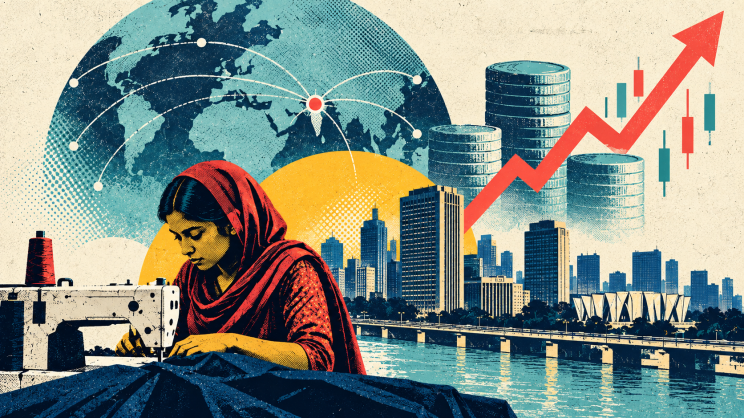
If we look at the world today, stressors from wars, displacement and destruction caused by man-made climate change, and the breakneck development of AI are already causing widespread unease and actual harm. But the finance über alles mindset is an additional aggravator of those stressors, as it is central to the incentive system of the financial elites benefiting from those actions. In fact, the drive to protect the financial returns of the military-industrial, carbon-industrial and technology-industrial complexes creates structural barriers (electoral campaign financing, lobbying) to any political action to rein in those sectors. A wholesale reset of this mindset and the setting of meaningful speed limits and guardrails, in the form of regulatory constraints on the finance sector, is a clear and present need. As Philippon and Reshef noted more than a decade ago, evidence already suggested that the social returns from the financialisation of society were diminishing. That is resoundingly more so today, and the sooner we undertake a reset, the better.
A century ago, in the depths of the Great Depression, Keynes envisioned for his readers a world a hundred years hence in which their grandchildren would live in abundance, with fifteen-hour workweeks being the norm (sigh). The returns from economic activities and technological advances would be geared towards proper distribution and allocation to ensure a higher quality of life for all mankind, and the accumulation of wealth would no longer be of great social importance. Instead, for the last half-century, the governing elites in much of the world have doubled down on maximising financial returns for the capitalist class, while the larger society has been left with an ever-shrinking share and a degrading planet. That cannot go on.
Manzur Rahman is Professor Emeritus of Finance at the University of San Diego.
Send your articles for Slow Reads to slowreads@thedailystar.net. Check out our submission guidelines for details.

The making of a cup of tea: Plantation, empire and the pursuit of quality

Why Bangladesh’s measles outbreak should be a wake-up call

From prediction to preparedness: How AI can help us navigate climate uncertainty

Crisis in Bangladesh’s Islamic banks: Liquidity is not capital, and a merger is not a cure

Can Bangladesh turn its OTT industry into global soft power?

An emergency action plan for a 100% renewable Bangladesh

Bangladesh’s gold paradox: From a shadow market to an export industry

Anu Muhammad speaks / Why Bangladesh’s energy crisis keeps coming back

The $5 billion opportunity Bangladesh is failing to see