The making of a cup of tea: Plantation, empire and the pursuit of quality
When tea drinkers reach for a cup of black tea, they are reaching for something dependable and standardised, not something unique and distinguished. The sameness and reliability by which tea drinkers judge a good cup of tea are the result of a hidden, complex process that traverses the history of European colonialism, postcolonial economic debates, and the development of modern industrial food science.
Tea consumers today arguably think as much as they ever have about quality. If they’ve switched to a fair-trade or organic black blend, they presumably have the quality of the tea-producing environment or the life of the tea plantation worker in mind. But they also might justify spending a few extra pennies on this specially labelled box because what is inside is just as good as, or maybe even a little bit better than, what is inside the conventional box.
What counts as quality tea is not just a matter of consumer preference, or even of environmental and labour conditions at the point of production. Though what goes on at kitchen tables and on tea plantations is certainly important to the story of quality, quality is also produced in the spaces in between: those of brokerage, blending, auctioning, and food chemistry. Even the cheapest, most ordinary-looking tea arrives in its cup in that reliable form thanks to a set of linguistic, technological, and aesthetic techniques not just for judging quality, as if quality were always just waiting there to be perceived, but for producing quality.
No single corporation or institution fully controls this set of techniques. Over the history of the modern tea industry, these techniques have been debated, distributed, and refined by professional tea tasters, auctioneers, blenders, and scientists. What these people all have in common is that they occupy intermediary positions in the system that circulates tea from farm to cup. The work of these figures helps make the black tea bag arrive to consumers in the form they come to expect time after time.
In contemporary capitalism, the relationship between quality and the market is often reduced to numbers. A quality product may be that which yields a high price, or that which has more numerous traits that, according to market research, a given consumer demographic considers desirable.
In contemporary capitalism, the relationship between quality and the market is often reduced to numbers. A quality product may be that which yields a high price, or that which has more numerous traits that, according to market research, a given consumer demographic considers desirable.
The techniques that produce quality are not entirely unique to the tea industry, but the pursuit of quality was central to the process by which colonial plantation production in India was transformed into a postcolonial capitalist enterprise. The qualification of reliable, cheap things is the outcome of historical and contemporary modes of economic inequality, racial and gendered differentiation, and environmental transformation. Black tea comes predominantly from former British and Dutch colonies, from East Africa to Southeast Asia. In these places, tea is plucked and pruned by hand on plantations, vertically integrated production systems in which factories, fields, and labourers’ homes are all located in one place and are often controlled by owners in faraway urban centres. From plantations, tea is crated and shipped, ready for sale, to auction centres in former colonial port cities like Kolkata, Colombo, and Mombasa, where it is tasted, priced, and sold.
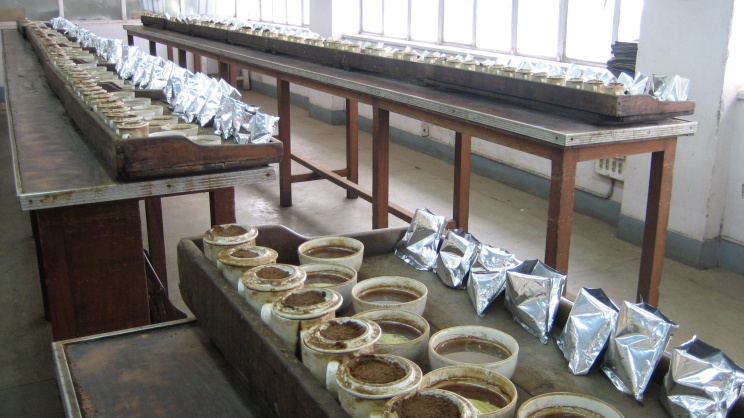
Mass-market black teas are blends of many different tastes, origins, and grades of tea, selected to match distinct flavour profiles. A bag of Tetley, PG Tips, or almost any tea consumers might encounter around the world is often a blend of 20 to 30 different kinds of tea, which traders refer to as “invoices”. Large and small companies alike buy invoices from different tea-growing regions to make their blends. Some invoices may be recently harvested, while others may have sat in a warehouse for months before blending. Some invoices are chosen for their flavour (whether malty or floral), others for their appearance (whether “wiry” dry leaves or “bright” steeped leaves), and others for cost, with an eye to ensuring that the price of a particular blend stays within a desired range.
Reach for another box of the same brand a week or a month later, and it will likely be composed of a completely different set of thirty-something teas and a totally different combination of regions, grades, ages, and flavours. The teas inside will be different, but the taste will be familiar. In fact, your preferred tea bag tastes the same because the teas inside are totally different. Tea seems to be infinitely reproducible, even though what tea is is highly variable.
So while we might think of the ordinary black tea bag as a static, simple thing, getting the tea bag you drink today to taste the same as the one you drank last month, and getting the tea inside it to react in the same way to everything from the hardness of water to the fat content of milk to consumer preferences in places as different as London, Louisville, and Lucknow, is actually a complex and fraught undertaking.
It is tempting to think of the plantation as the starting point of quality, and of the auction or retail sale as the mechanism through which quality is transposed to consumers. In this view, quality matters because suppliers must meet the demands of consumers. My research leads me to join other scholars of capitalist markets in seeing such stories of “supply and demand” as deceptively simplistic. The plantation and the auction are just two nodes in a much larger array of sites that also includes laboratories, agricultural experimental stations, bureaucratic offices, and spaces of consumption.
Efforts to standardise and objectify quality were central to the British colonial project that gave birth to the mass-market black tea that tea drinkers across the world know and consume.
While the plantation shapes the quality of black tea in the sense that colonial imagery of plantation landscapes and workers still dominates advertising and packaging, the reverse is also the case. Black tea, its sensory qualities and the images or memories it conjures, also works to keep the plantation together. Efforts to standardise and objectify quality were central to the British colonial project that gave birth to the mass-market black tea that tea drinkers across the world know and consume. The resulting linguistic and technoscientific conventions for describing tea’s qualities help maintain the colonially derived plantation form.
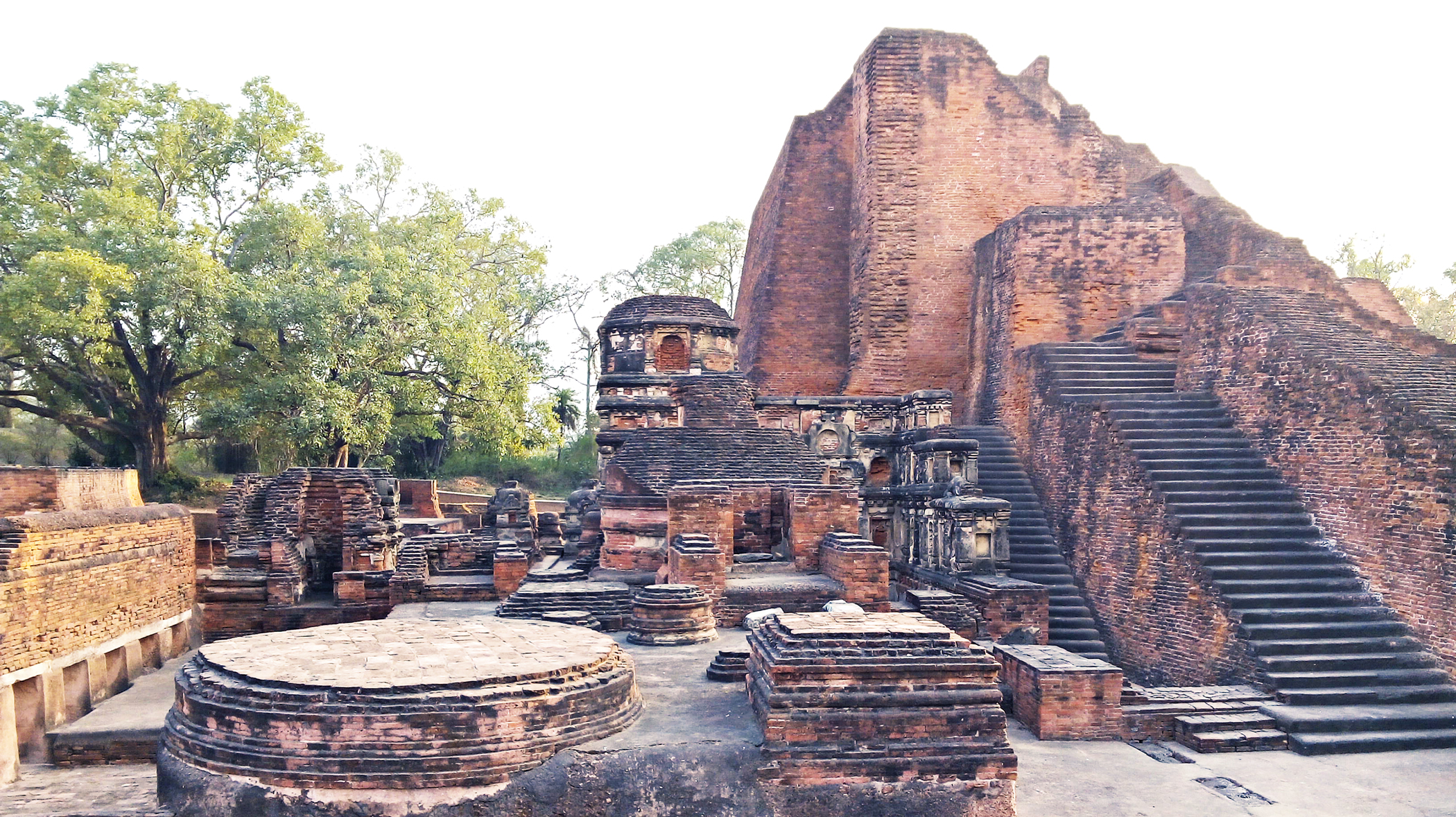
Those conventions are housed in the tea auctions and attendant brokerage houses that make the auctions run. Tea auctioning began in London under the auspices of the East India Company in the late 1600s. In these auctions, traders bought tea acquired from China. With the expansion of colonial control in India and the development of tea plantations there, beginning in Assam in the 1830s and moving to what is now West Bengal by the 1850s, the tea auction infrastructure expanded to include Calcutta, where the first sales were held in 1861. The environmental and social upheavals of plantation expansion under the British Empire ran parallel to the development of the new sciences of food chemistry and agronomy, the government regulation of an expanding global agribusiness, and the emergence of consumer consciousness about the taste, health effects, and safety of everyday foods and beverages.
Almost all that black tea comes from plantations. The plantation is far from an anachronism or a relic of a bygone era. It is both a crucible of the modern food system and an enduring driver of it. The tea plantation was a site at which scientific and economic experts first experimented with quality, devising methods for what they called the “improvement” of India’s landscapes, people, and tea itself. Within a few decades of carving out plantations in Assam from native forest, planters began to shift from hand-processing tea, the method used in China, to machine-processing. They constructed mechanised factories on plantations, working towards a faster, more efficient, and vertically integrated system for converting highly perishable green tea leaves into a fermented, dried, and transportable form.
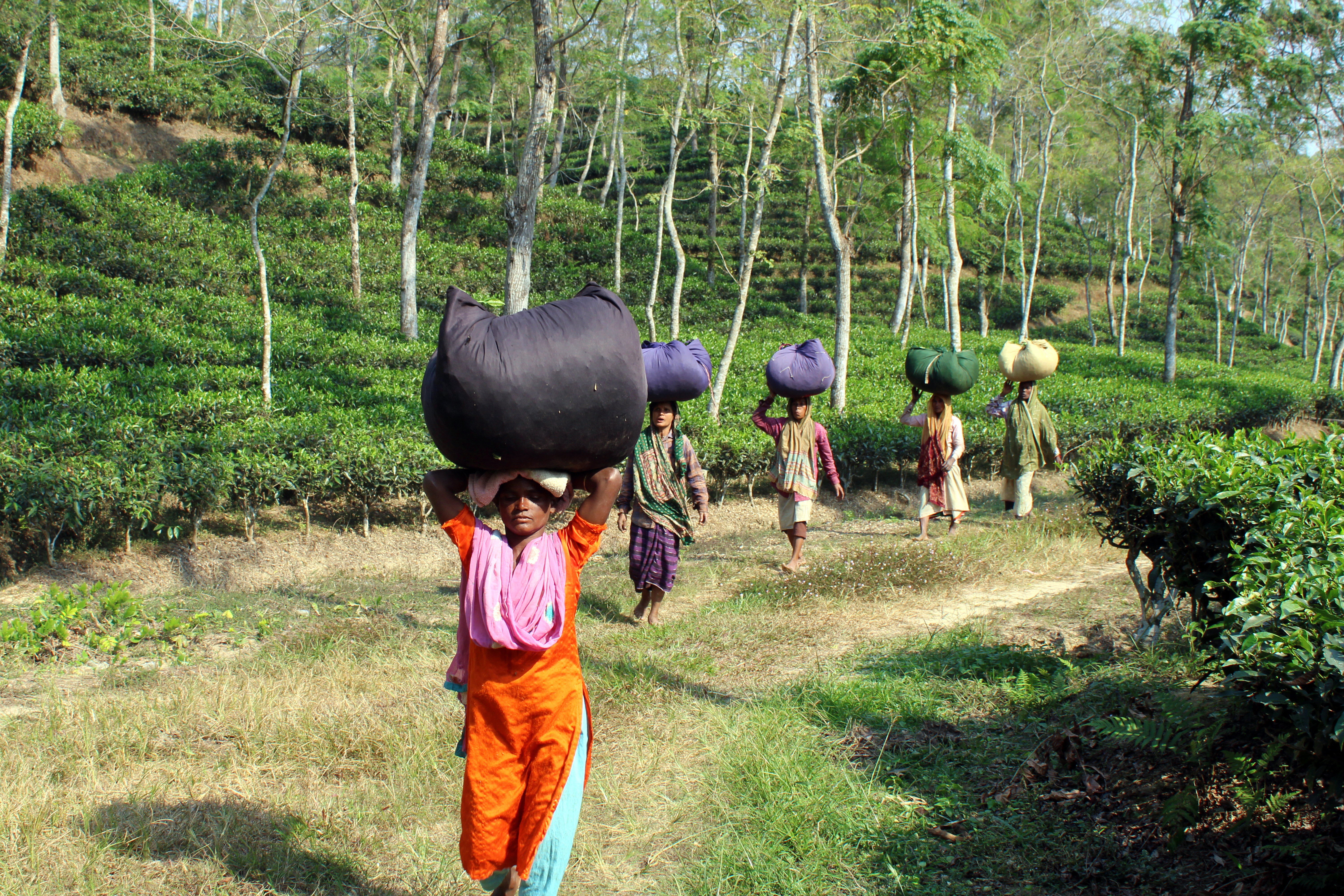
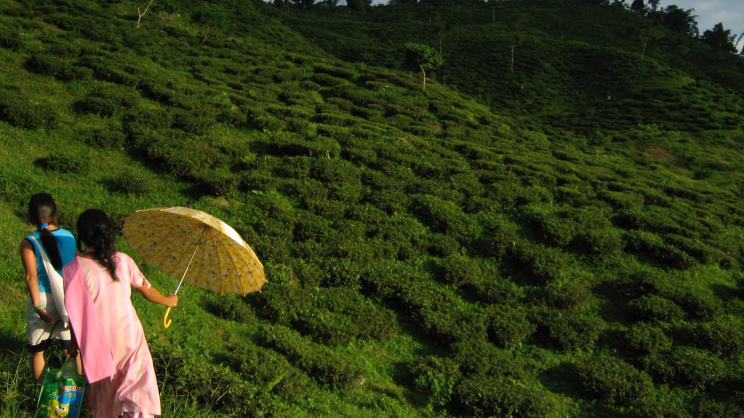
The plantation system allowed planters to grow tea as a monoculture, with a vast workforce that constantly pruned tea plants into flat-topped bushes. Tightly pruned bushes grow into each other, creating a nearly solid green shelf. Today, tea workers, most of them women, must pull themselves through tightly packed hedges to pluck from their flat, manicured tops. Tattered pieces of tarpaulin protect their legs and torsos from scratches and punctures. They return to the same bushes nearly every week for ten months a year to find the freshest sprigs of tea, the iconic “two leaves and a bud”. In the short dormant season, these women prune those same bushes to encourage more sprigs to grow the following season. In innumerable advertisements, images of two leaves and a bud and of stooped, comely women workers create the illusion of an entirely natural production system.
While many stories about contemporary capitalism highlight the paradox that low-paid workers cannot consume what they produce, nearly all tea plantation workers are also tea drinkers.
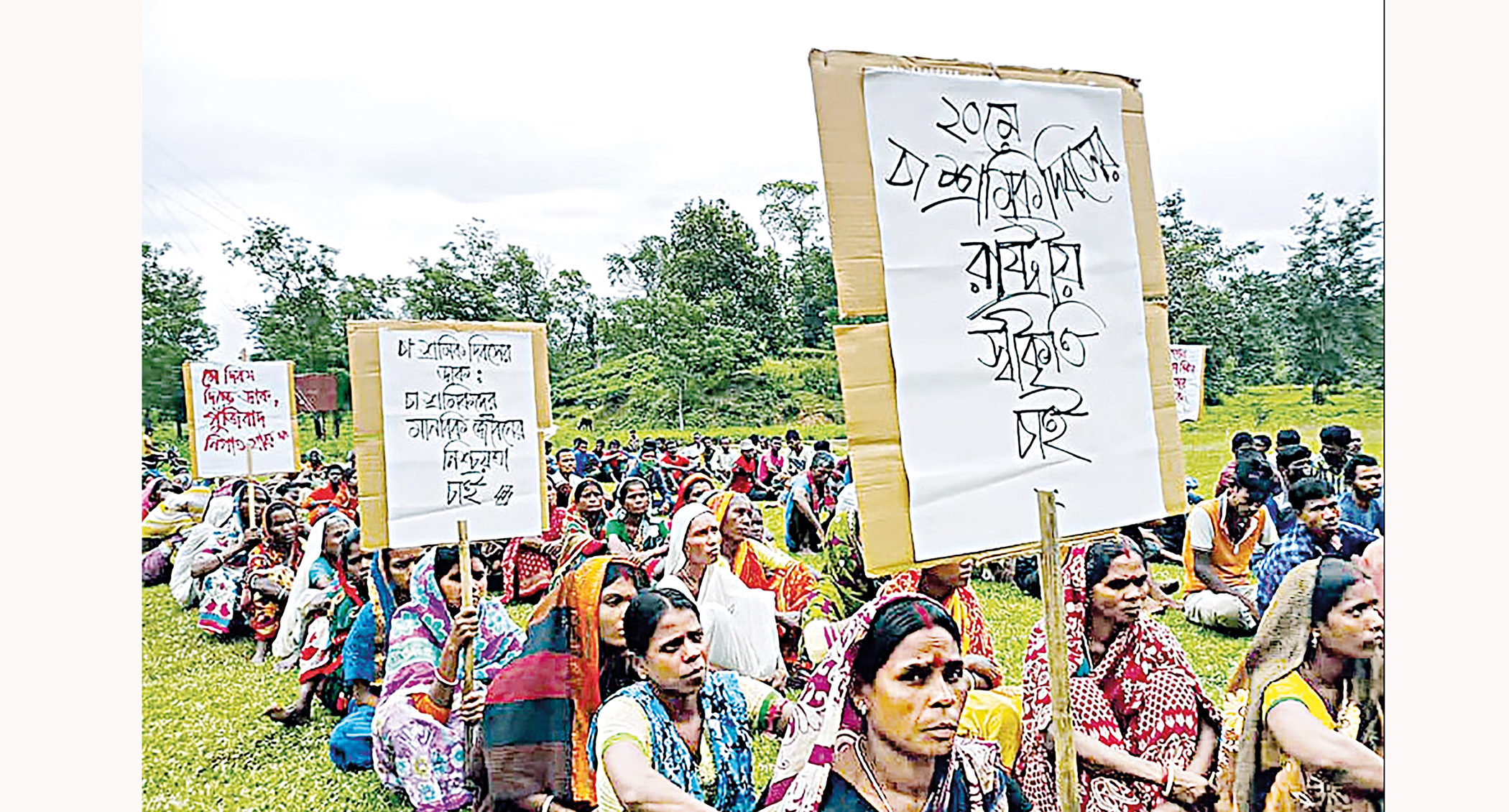
But black tea is far from natural. Black tea’s very existence in the cups of consumers in the metropole is the result of a distinct industrial ecology, an ecology that contains and constrains the botanical variability of the tea bush into a standardised form. All plantations still rely upon a vast workforce of ethnically marginalised labourers who depend upon the plantation not just for their daily wage but for food, housing, and healthcare. While many stories about contemporary capitalism highlight the paradox that low-paid workers cannot consume what they produce, nearly all tea plantation workers are also tea drinkers. Tea punctuates the plantation working day and the home lives of labourers, and quality matters to low-paid tea workers, albeit in a way that is quite distinct from how it matters to tea brokers, not to mention consumers in the Global North.
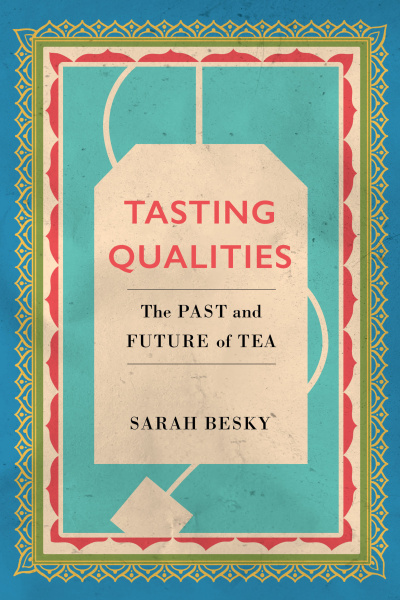
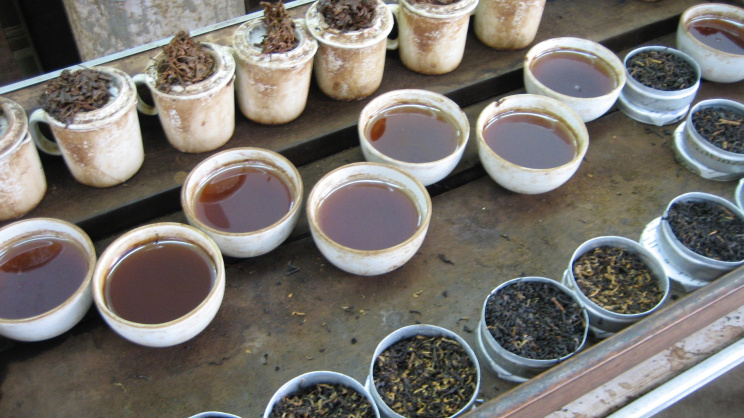
Tea brokers and traders are the central figures of Tasting Qualities: The Past and Future of Tea. (For a look into plantation production, please refer to The Darjeeling Distinction.) My research took place in the auction halls and brokerage offices of Kolkata and Siliguri. In these sites, I followed tea brokers as they tasted tea, and I observed the lively public outcry sales in which they auctioned lots of tea to buyers. In addition, I spent time in the Kolkata archives of the Indian Tea Association (ITA), the guild-like organisation that represents tea plantation managers and owners; in the National Library in Kolkata; and in the British Library in London, where the ITA’s London branch donated its materials after the office downsized in the 1970s.
Focused on the years between the founding of the ITA in 1886 and the passage of the Foreign Exchange Regulation Act of 1973, which officially ended British capital’s control over the tea industry and other enterprises in India, my archival research traced the ITA’s central role in the development of standardised aesthetic and scientific methods for discerning quality. In the quest to improve Indian tea, the expertise of professional tea brokers was both juxtaposed with and blended with that of scientific experts, including chemists, agronomists, and botanists, engaged by the colonial and postcolonial tea industries.
While quality in food and drink markets is frequently posited as an end in itself, Tasting Qualities offers a different interpretation. Quality is not an endpoint. It is not a more-or-less proposition. It is a material and linguistic variable, one that can be viewed and manipulated at a variety of sites. Put another way, quality is a set of ongoing experiments. One consequence of those experiments is the perpetuation of the plantation as a socio-ecological system.
Stabilising quality, then, requires not only disciplining feelings but also disciplining soils, machinery, and bodies. While tea plantations might seem like legacies, in South Asia, they are continually and experimentally rearticulated. They continue to bring consumers across the world their daily cup of tea. “Quality” is the language and discipline through which the plantation continues to be thinkable and knowable. The plantation remains the answer to the question of how “quality” black tea is produced, despite attempts to do otherwise.
Sarah Besky, PhD, is Professor of the Anthropology of Work at the ILR School at Cornell University, USA. She is the author of The Darjeeling Distinction: Labour and Justice on Fair Trade Tea Plantations in India (University of California Press, 2014).
Send your articles for Slow Reads to slowreads@thedailystar.net. Check out our submission guidelines for details.

Why Bangladesh’s measles outbreak should be a wake-up call

From prediction to preparedness: How AI can help us navigate climate uncertainty

Crisis in Bangladesh’s Islamic banks: Liquidity is not capital, and a merger is not a cure

Can Bangladesh turn its OTT industry into global soft power?

An emergency action plan for a 100% renewable Bangladesh

Bangladesh’s gold paradox: From a shadow market to an export industry

Anu Muhammad speaks / Why Bangladesh’s energy crisis keeps coming back

The $5 billion opportunity Bangladesh is failing to see

How Bangladesh is failing its Qawmi graduates