The moral hierarchy of pleasure: Who controls women’s bodies?

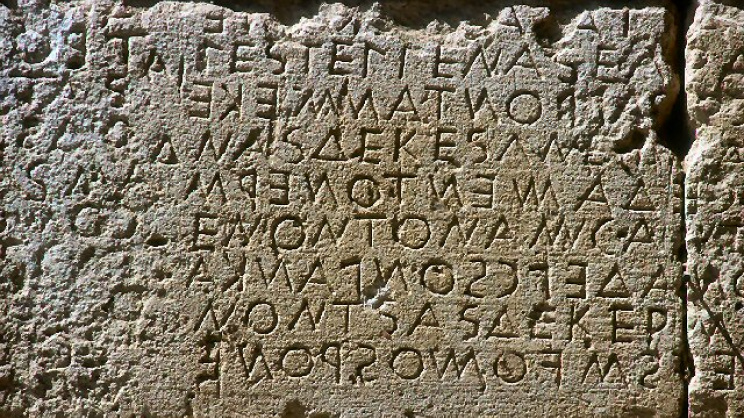
One of the earliest unambiguous surviving references to female genital cutting appears in a Greek petition written in Memphis in 163 BCE. It concerns a girl named Tathemis and money entrusted to her mother for her circumcision, clothing and eventual dowry. The cutting appears not as an isolated medical event, but as one element in preparing a girl for marriage.
More than two thousand years later, the Victorian surgeon Isaac Baker Brown would give genital cutting a different name and justification. In 1866, he argued that female masturbation, or “peripheral excitement of the pudic nerve”, caused hysteria, epilepsy, mania and, eventually, death. His proposed cure was clitoridectomy. Among the symptoms he believed the surgery could correct was a married woman’s “distaste for marital intercourse”. Brown was expelled from the Obstetrical Society of London in 1867 amid allegations that he had operated without adequate consent and exaggerated his results. Yet the premise underlying his work outlived his reputation: female sexual feeling could be classified as dangerous, and someone other than the woman experiencing it could decide what should be done to her body.
There is no straight historical line from Tathemis to Brown, or from either of them to the practices that followed. What recurs is not one procedure, but one political possibility. Once female pleasure is understood as powerful, it can be cultivated, sanctified, feared or placed under management.

Pleasure as power
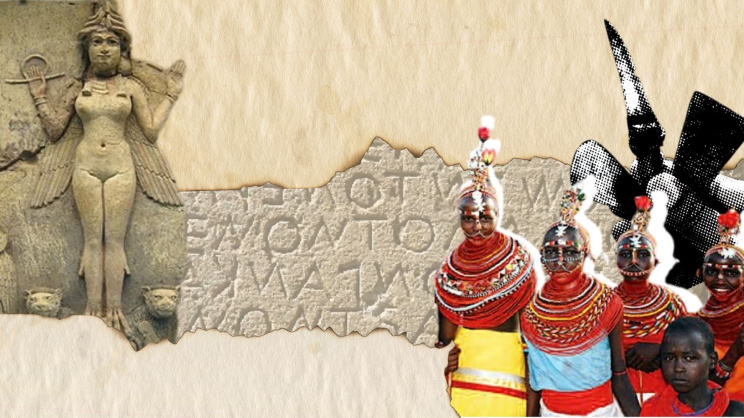
Female pleasure has not always appeared in religious and literary traditions as trivial, shameful or passive. Sometimes, it carries the force of creation itself. In Sumerian literature, Inanna, the goddess of sexuality, fertility, love and war, embodies a world in which erotic desire, generative power and sovereignty are entangled. In medieval Shakta and other Tantric traditions, Shakti names the feminine divine energy that animates the cosmos. Some Tantric ritual systems treated women as embodiments of that energy and understood sexual rites as possible routes to transformation, supernatural attainment or liberation.

The Kama Sutra is less theological, but it also refuses to imagine the woman as entirely inert. It discusses her arousal, satisfaction and capacity to act within the erotic encounter. The Song of Songs gives the woman an unmistakably desiring voice: she seeks, calls, praises and invites. Her longing does not wait for a man to explain it to her.
And while Islam does not divinise sexuality in the same way, I have always found it striking that Surah Al-Baqarah, the Qur’an’s second chapter, speaks directly about sexual intimacy while explaining what is permitted during the Ramadan fast. It allows intercourse during the night and describes spouses as garments for one another, an image of proximity, protection and mutual bodily closeness. Islamic legal and ethical traditions developed within patriarchal societies and did not speak with one voice about women’s sexual rights. But they could recognise marital intimacy as something other than a husband’s solitary entitlement.
Taharat
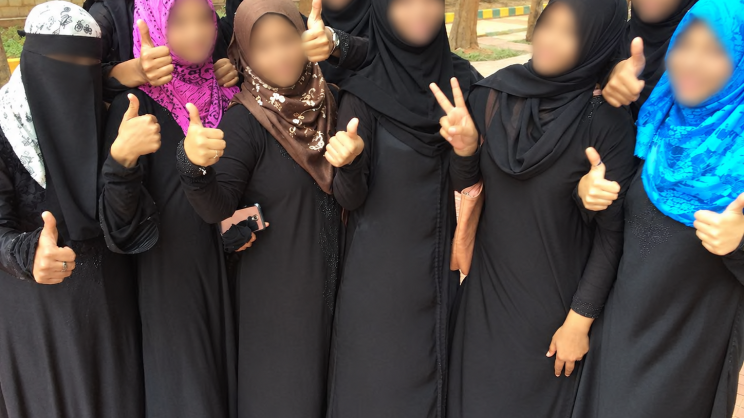
Within the Dawoodi Bohra community, a Tayyibi Ismaʿili Shia Muslim community with historical roots in Yemen and a long-established centre in Gujarat, a form of female genital cutting is practised under names including khafd, khafz and khatna. The procedure varies, and survivors’ accounts do not always resemble supporters’ descriptions of a minor nick or the removal of the clitoral hood.
Female genital cutting is not prescribed in the Qur’an and is not practised by the overwhelming majority of Muslim communities. But among communities where it is practised, supporters cite their interpretation of the Daʿāʾim al-Islām, a tenth-century Fatimid Ismaʿili legal compendium associated with al-Qadi al-Nuʿman, together with the authority of the Bohra religious leadership. They often describe the practice through the language of taharat: purity, religious obligation and belonging. Some insist that it is not intended to diminish sexuality and distinguish it sharply from more extensive forms of genital cutting. Others dispute both its religious necessity and its claimed harmlessness.
A 2018 exploratory study based on narratives from 79 Bohra women and girls documented physical, psychological and sexual effects. Among 67 sexually active participants, 22 believed that khafd had negatively affected their sexual lives, although the researchers cautioned that the study could not establish causation. The same study reported that many supporters described the clitoris or clitoral hood as “skin”, “flesh”, “it” or “that”. The finding cannot be generalised to Bohra women, but it shows how an intervention performed in childhood can remain both bodily and linguistically indistinct.
A regimen for widows
Regulation does not always require a blade. It can enter through food, clothing and the disciplined repetition of ordinary days.
Widowhood practices across South Asia have varied widely by caste, class, region, sect, family and period. But in the nineteenth and early twentieth centuries, widowhood in upper-caste Hindu communities in Bengal could demand severe bodily austerity. Widows might be required to wear white, remove jewellery, crop or shave their hair, avoid festivities, remain celibate and observe restrictive vegetarian diets. Some households prohibited fish, meat, onions, garlic or particular pulses classified as rich or stimulating. Widows could also be expected to fast on Ekadashi, sometimes under physically punishing conditions.
While these disciplines could become debilitating, particularly when fasting and food restrictions intersected with poverty and dependence, the wider social meaning of these practices is even more difficult to miss. The widow had to perform renunciation long after the funeral ended. Her clothing announced it; her plate repeated it. Appetite, culinary, sensual and sexual, became evidence of a self she was no longer permitted to possess.
Where property and power enter
The connection between women’s sexuality and property extends far beyond Bengal. Across many patrilineal societies, land, wealth, citizenship and family status passed through a recognised male line. For that line to remain credible, legitimate descent had to be established, and certainty about descent encouraged the sexual regulation of women. A man’s extramarital relationships might violate morality or disrupt another man’s household, but a married woman’s sexuality could be treated as a more fundamental threat: it introduced uncertainty over whose child would inherit.

The legal forms varied. In classical Athens, an epikleros, the daughter of a man who died without sons, was required to marry within the paternal kin group so that a son born to her could continue her father’s household and inherit its property. Under Augustus, Roman law made adultery with a married citizen woman a public crime. It did not regulate all sexual activity equally; it concentrated on relations capable of disrupting legitimate marriage, descent and the reproduction of citizen families.
Elsewhere, different systems produced related arrangements. English coverture placed much of a married woman’s property under her husband’s control. In Bengal, Dayabhaga inheritance law could permit a widow to inherit her husband’s estate when he left no qualifying male issue, but usually through a restricted interest. The Hindu Widows’ Remarriage Act of 1856 legalised remarriage while generally ending a remarried widow’s claim to her deceased husband’s property. These systems were not identical, but women could carry property, preserve it or produce its future heirs without possessing equal authority over it.

This is why female sexuality became a matter larger than private conduct. Desire could lead to sex; sex could produce children; children could redirect property, caste position, citizenship and lineage. Institutions compressed pleasure, reproduction and inheritance into one problem, even though they are not the same thing. Chastity became a technology of administration. Female pleasure became politically dangerous not simply because it was pleasure, but because self-directed desire suggested that women might choose where their bodies, loyalties and reproductive capacities went.
Bhog, bhogi, and what remains
Martha Nussbaum identifies instrumentality, treating someone as a tool for another’s purposes, and denial of subjectivity, treating someone’s feelings as though they need not be considered, as two features of objectification. She does not argue that every experience of objectification is inherently abusive; context and reciprocity matter. What makes these histories troubling is the absence of both.
Widowhood disciplines subordinated a woman’s appetites to the identity her husband’s death assigned her. In khafd, adults alter a girl’s body according to a judgement she is too young to evaluate or refuse. These histories are not equivalent. But in each, an external purpose is made more authoritative than the woman’s or girl’s own sensations.
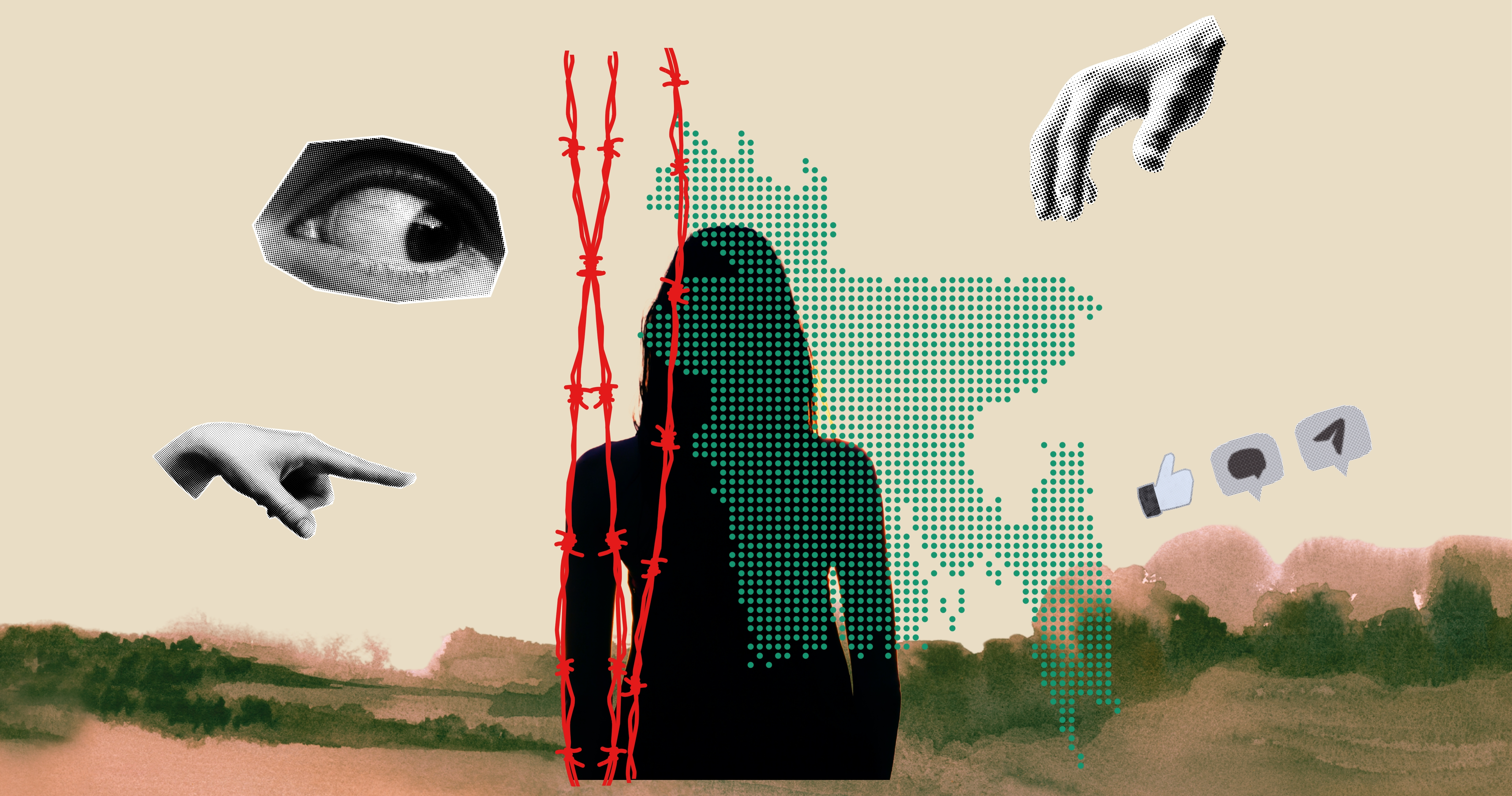
Bengali permits an unsettling play between bhogi, one who enjoys or experiences, and bhog, which can mean enjoyment, consumption or an offering placed before a deity. The language does not assign these positions by gender. History has been less neutral. Again and again, one person remains bhogi; another is made bhog.
Female pleasure has been worshipped, represented, prescribed, feared, disciplined and cut. Its power has rarely been in doubt. And perhaps that is what leads to the age-old dispute over who possesses that power: the woman who feels it, or the worlds that have learned to make use of her body.
Syeda Shagufe Hossain is a feminist writer, gender justice practitioner and movement-builder. This is the third article in a series of eight exploring how faith, ritual and culture shape women’s bodies and lives.
Send your articles for Slow Reads to slowreads@thedailystar.net. Check out our submission guidelines for details.
Inherited Memories / My grandmother’s world: Partition, Shia traditions and memories of Old Dhaka

The taste of childhood: Bengali food, family and memory

Along the Kapotaksha, in search of Madhusudan’s river

Where did gold come from?

Do we understand the children we try to teach?

AI is here. Can Bangladesh’s education system adapt?

Why are we in such a hurry to live?

Why I chose teaching over a corporate career

The moral hierarchy of blood