


Strong monitoring to keep prices of essentials stable
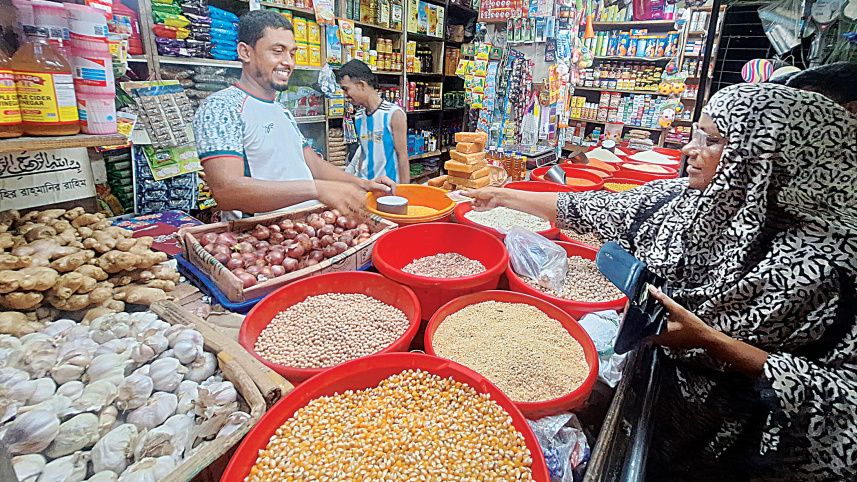
Commerce Minister Khandakar Abdul Muktadir yesterday said market monitoring would be strengthened to ensure adequate supplies of essential commodities and keep prices stable throughout the year, not just during Ramadan.
He made the remarks at a meeting at his ministry office at the Secretariat to review the supply and prices of essential commodities and the overall market situation.

“No abnormal situation will be allowed to develop in the market. If anyone takes advantage of the current situation to raise commodity prices unreasonably or attempts to make excessive profits, the government will take necessary action,” he said.
Muktadir said coordination among business organisations, importers, producers and government agencies would be strengthened to ensure normal supplies and reasonable prices.
He said gas supply disruptions had affected production in some industries, while transportation of goods had also faced obstacles. Storms and rain had also disrupted markets in several areas.
However, he expected the supply of vegetables to improve as new crops begin arriving with winter approaching.
The minister urged business organisations to monitor markets regularly, saying even price fluctuations of Tk 2 to Tk 4 could undermine public confidence.
“Maintaining public confidence is as important as ensuring market stability,” he said.
Monitoring would be intensified through coordination among the Directorate of National Consumer Rights Protection, the Ministry of Commerce, law enforcement agencies and district administrations, he said.
Regular meetings would also be held with importers to review inventories, imports and supplies.
Highlighting the impact of rising global fuel prices, Muktadir said Bangladesh was also facing the resulting economic pressure.
“If the government bears part of the burden instead of passing the entire cost on to consumers at once, the burden ultimately falls on the national exchequer. Therefore, efficient and economical use of fuel is extremely important,” he said.
The government would consider policy support to keep markets and businesses operating normally, while reviewing aspects of the existing tax structure to keep essential commodity prices affordable, he said.
It would also regularly monitor information on domestically produced goods and products for which letters of credit (LCs) have been opened or which are at the shipment stage.
At the meeting, the Bangladesh Trade and Tariff Commission presented an overview of demand, imports, supplies and prices of essential commodities. It said the import and LC-opening situation was positive compared with the previous year.
According to commission data, annual demand for lentils is around 7 lakh tonnes. From July 1 to September 15 last year, 42,000 tonnes were imported, compared with 1.06 lakh tonnes during the same period this year.
Imports of oilseeds, used as raw materials for edible oil, also rose to 3.86 lakh tonnes from 2.73 lakh tonnes during the same period last year.
Annual sugar demand is around 20 to 21 lakh tonnes, with about 3 lakh tonnes consumed during Ramadan alone. The commission said the overall import and pipeline situation for essential commodities remained positive.
Muktadir said initiatives were also being taken to introduce traceability systems to make supply chains more transparent and accountable.
The system would allow monitoring from production to consumers, with eggs and poultry being considered for priority.
 For all latest news, follow The Daily Star's Google News channel.
 He said the government’s main objectives were to ensure adequate supplies, maintain reasonable prices and strengthen consumer confidence.
“The government and the private sector will have to work together to achieve these goals. Advice from business leaders will play an important role in market management and policymaking,” he said.
At the meeting, business leaders raised issues related to the production, import, transportation, supply and prices of essential commodities and offered suggestions for maintaining market stability.
Md Ataur Rahman Khan, secretary to the commerce ministry; Nasir Uddoula, chairman of the Bangladesh Trade and Tariff Commission; and Md Zahirul Islam, director general of the Directorate of National Consumer Rights Protection, among others, were also present.
Comments