


How Nawshaba reinvented herself after trauma, blacklists
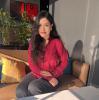
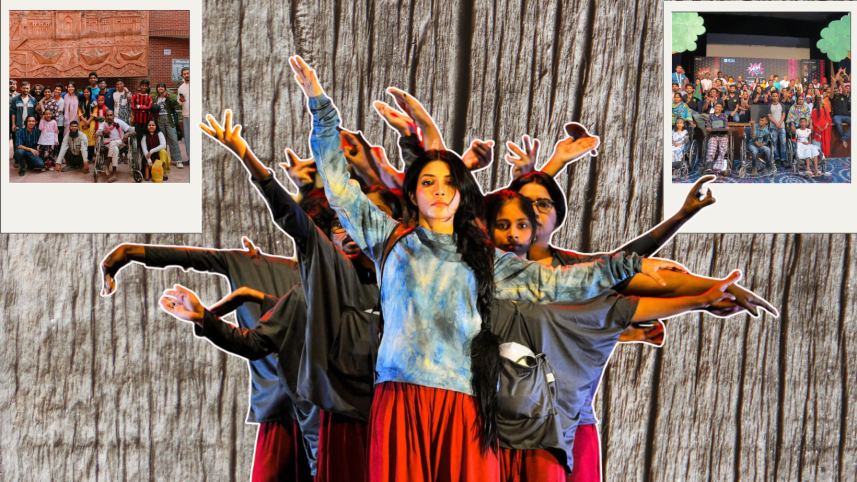
Quazi Nawshaba Ahmed became a voice of strength, despite the trauma of being detained and blacklisted by many during the 2018 road safety movement.
When most doors were closed to her, the actress found healing through theatre. Even today, she continues to work in theatre with specially-abled individuals, senior citizens, and more.

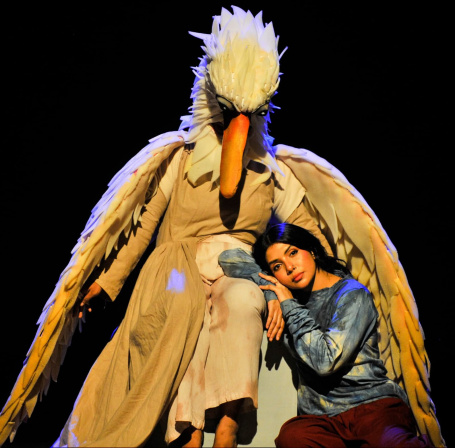
As the theatre industry continues to face what many describe as a dire situation, Nawshaba believes the conversation needs to go beyond the survival of productions. It must also address the survival of the artistes themselves.
“Theatre shouldn’t be in a miserable state,” Nawshaba said. “If you look at Bangladesh’s theatre scene, the people we consider our pioneers—Mamunur Rashid, Aly Zaker—they laid the foundation of theatre, and we have followed the path they created.”
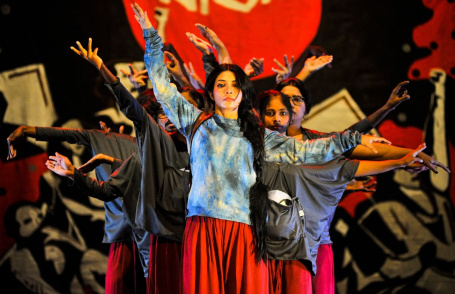
For Nawshaba, the word “miserable” is particularly difficult to hear when talking about an art form shaped by generations of dedicated practitioners. She herself came to theatre much later in her career, but found in it many of the qualities she believes define an artiste.
“Being an artiste means being sensitive, being socially conscious, standing beside others, practising inclusivity, and a sense of oneness,” she said, explaining why theatre eventually became so important to her. “I saw these qualities very strongly in theatre.”
Today, Nawshaba runs her own theatre group, working with people with differently abled children, as well as senior members aged over 70. For her, pulling off a show is only one part of the equation. The bigger challenge is making sure the people behind the production can actually sustain themselves.
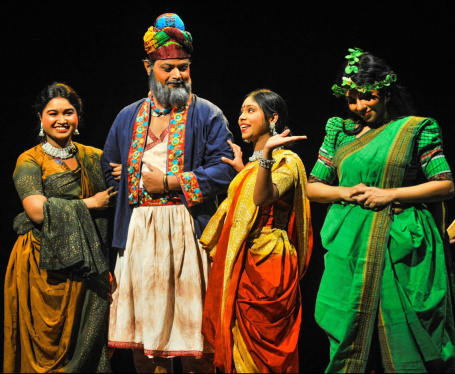
“Our first priority is to recover the cost through theatre shows and ensure that everyone receives some remuneration,” she said. “I genuinely don’t understand why, even today, we expect an artiste to keep working without pay.”
She herself works within that reality. Nawshaba directs productions and performs without payment, while also trying to create opportunities for the artists around her. She is grateful to the British Council for occasionally arranging paid opportunities for artistes, but believes such support needs to be part of a broader institutional system.
“If there were a system for this at the government level, I know many artistes who might not even have thought about taking up other work,” she said.
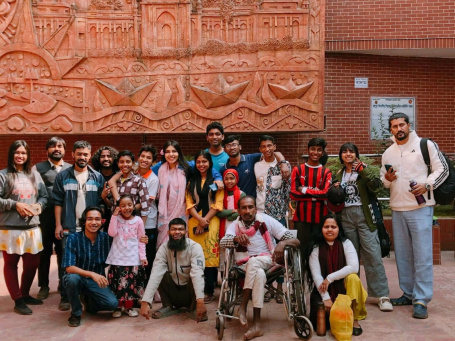
“You should be able to think, ‘I’m going to rehearsal, I have some money in my pocket,’ or, after coming out of rehearsal completely exhausted, ‘I’ll take a car home.’ Even these simple things are difficult for a theatre artiste,” she said.
Nawshaba's theatre work has also brought her into close contact with people with disabilities. She believes the way society approaches inclusion needs to change fundamentally.
“What do we actually mean when we talk about an inclusive society?
Inclusivity does not mean that you are superior because you are making space for someone in your world.
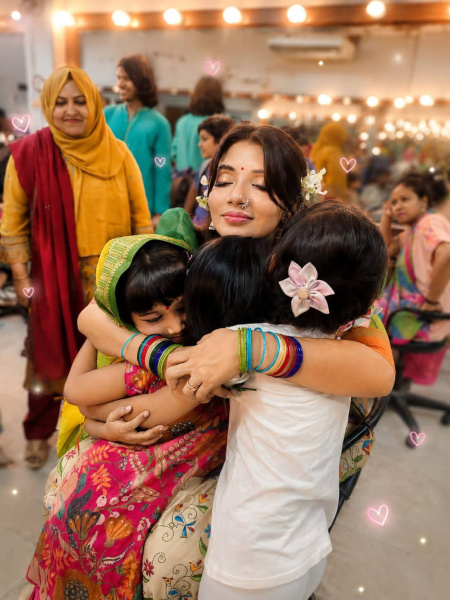
When people with disabilities come to work with us, we sometimes act as though we are doing them a favour or accomplishing something extraordinary,” stated the actress.
We need to change our mindset.
Instead of making a big show of inclusion for just one day on Women’s Day or International Day of Persons with Disabilities, we need to create opportunities for them throughout the year and think about accessibility on a continuous basis.
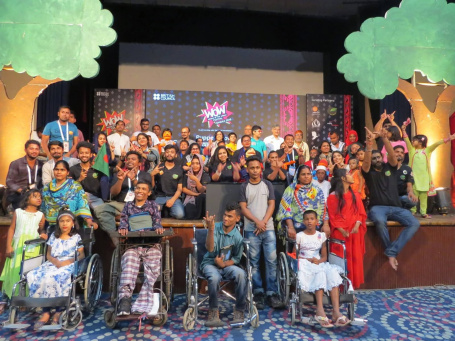
In Dhaka, I work on a project called "Dharonir Gaan", an inclusive musical performance where blind people, autistic children, and others work together. Bringing everyone together is particularly challenging because the parents are extremely cautious about where their children are going and what is happening during rehearsals.
Having worked outside Dhaka, Nawshaba has seen both the possibilities and the challenges of taking theatre beyond the capital. She has found genuine interest in theatre in cities such as Rangpur and Rajshahi. The lower cost of transportation and the absence of Dhaka's traffic can make rehearsals more manageable for artistes.
But working outside the capital comes with another challenge, particularly for female performers. Families can be reluctant to allow young women to participate because rehearsals often extend into the afternoon or evening, raising concerns about their safety.
 For all latest news, follow The Daily Star's Google News channel.
 While working on her production "Aguni", Nawshaba spent considerable time trying to convince the performers' parents. Yet just two days before the show, some of the girls were withdrawn after their families decided not to let them participate.
“As the show approaches, rehearsal hours naturally become longer, which makes families even more concerned,” she explained.
Nawshaba also questioned why there cannot be more venues similar to Shilpakala in areas such as Uttara and Gulshan, while also stressing the need for reasonable rental costs.
“If the rent is up to Tk 100,000 for a show, it can still be difficult for small groups or new theatre groups like ours to manage. Many people living in Uttara wouldn't have had to worry about traffic and missing out on the 7 PM play if there were more branches of Shilpakala in those areas,” she said.
“The people of Bangladesh have always been very empathetic. But this post-trauma is something else,” she said, referring to what people experienced during July. “Seeing blood, witnessing what happened on Facebook and elsewhere—these things leave an imprint on their neurons and their bodies.”
She believes that art can provide a space for people to process such experiences. “Nature does not divide us, so why do we, as human beings, create divisions?” she asked.
“I was blacklisted by many. But I kept working outside Dhaka, training people in different places and gradually bringing them into productions.
Eventually, I was able to come to Dhaka and stage shows,” she said. Even now, she manages roughly one theatre production a year, despite wanting to do much more.
“Theatre is a very important space. I want to tour across Bangladesh and conduct healing sessions. But I receive no sponsorship or support. Artistes cannot survive by doing just one show a year,” she said.
When asked whether her social activism has affected the amount of professional acting work she receives, Nawshaba returned to something her father taught her: the importance of asking questions.
“I don’t have millions of followers. But young people do like me, and they respect me,” she said.
“My father taught me something that has stayed with me: everyone can give an answer, but not everyone can ask a question.”
She said she learned from an early age to question things—“Why did you do this? Why should you do this? Why can’t you do this?”—even though people who ask difficult questions are not always welcomed.
“And when you hold up a mirror to someone, they don’t necessarily like what they see in it. It is difficult to confront yourself. An artist who holds up a mirror to society becomes a reflection of that society, and naturally, most people will not like that,” she said.
Yet she has no intention of changing herself to fit expectations.
“I won’t change myself because then I would lose myself. I don’t mean to say that I’m completely at peace with everything, but I have come to terms with who I am,” she said.
“If a child is dying, if children are being lost, if someone is being unjustly detained, I cannot simply say nothing. I cannot sit on Facebook pretending that I didn’t see or hear anything. That’s not who I am,” she said.
At the same time, she says she has become more cautious about what she engages with, particularly in the age of artificial intelligence and misinformation.
“That is why, although I am much busier with my own work now than I used to be, I also do much more fact-checking. In the age of AI, knowing what to trust has become a major issue,” she said.
Someone may describe that as activism, she acknowledged, but that is not how she defines her work. “To me, art is not simply about making money or gaining fame. I may earn less,” she said. “And I know that I wasn’t born into this world to make everyone happy. But I will keep on spreading words of love and peace.”
Comments