Can the 81st UNGA restore hope in a world of crises?
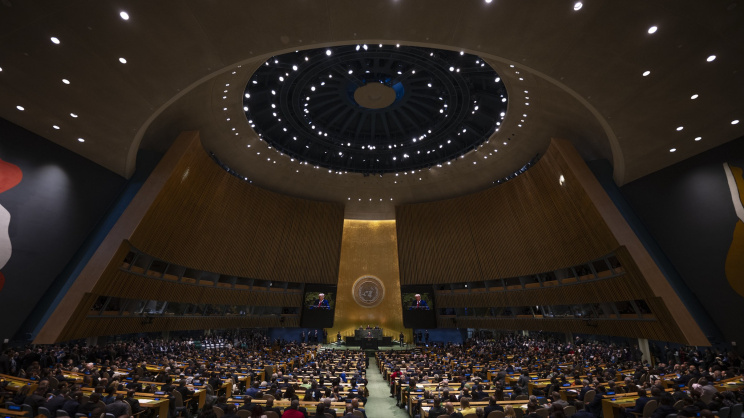
We are going to witness the grand finale of the 81st UNGA meeting at a time when geopolitical flashpoints are proliferating and plaguing the space for diplomatic parleys and negotiations. The rules are wilfully compromised and warped to suit the agendas of superpowers. The present Secretary-General, António Guterres, in a recent interview, voiced the concern that the sooner the superpowers understand the limits of their power, the better.
On the other hand, the recent election in Russia consolidates Putin’s decisive leadership. However, the grim reality of the Ukrainian war front was demonstrated when former UK Prime Minister Boris Johnson and a former CIA director narrowly escaped a drone attack on September 13. The scenario in Europe is alarming, with inflation skyrocketing and the security dilemma intensifying.
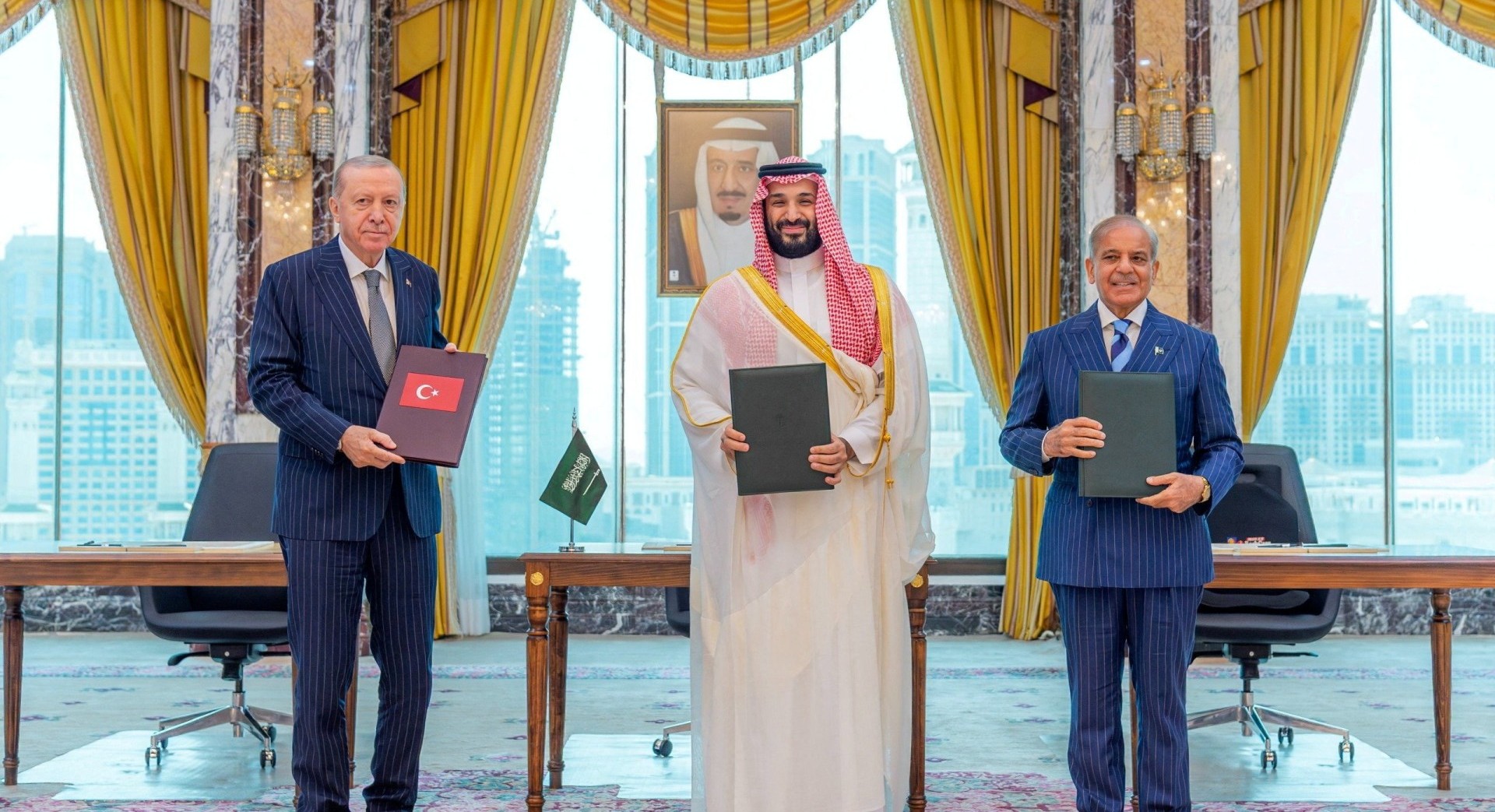
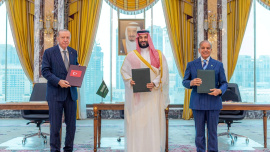
The Middle East is also undergoing a phase of tremendous agony and volatility. Qatar, hitherto a major natural gas supplier, is on the verge of failure and is now compelled to import gas from the US. Similarly, Russia is importing refined gasoline from India. The Saudis are also frantically seeking security outside the traditional US security umbrella. The first step in this direction was the conclusion of the Saudi-Pakistan Strategic Defence Agreement (SMDA). Recently, following Turkey’s joining, this elevation resulted in the conclusion of the Mecca Military Agreement as a means of cooperating to confront Iranian threats collectively.
Some countries are highly exposed, and some are less exposed, to the ongoing crises, but all remain vulnerable to the global surge in energy prices and to aviation and supply-chain shocks created by protracted conflicts. This is creating a new gap that the UNGA must consider and address. The point is clear: we need neither an Iranian victory nor the triumph of MAGA, but regional stability, greater trust and harmony to prevent conflict and galvanise free trade through interstate agreements.
Sudan is seething with unrest. Bangladesh is facing a severe energy shortage. Human rights violations are multiplying and human suffering is being aggravated. Conflicts have thrown supply chains into disarray. The Iran crisis has not only plunged the region into an abyss of disastrous catastrophe but has also steadily assumed a humongous form that could bleed world trade and commerce, from which it might take a long time to recover. So, today it is not merely a question of bilateral animosity, Iran versus the United States, or a trilateral confrontation with Israeli involvement. There is no gainsaying the fact that the spiral, much like a wild conflagration, is spreading across a huge catchment area, with spillover effects straining and disrupting almost ten to fifteen supply chains and creating an impact of alarming magnitude.
Of course, it is the episodic nature of the Strait of Hormuz crisis that distinguishes it from another ongoing war front in the eastern Donbas region of Ukraine, but in a sense, it is like history repeating itself. Already, the price of Brent crude, the global benchmark, has registered an upward trend due to fear and speculation about the possible resumption of American strikes against Iran. In his latest speech at the UNGA, President Trump issued a stern warning to Iran. It is likely to encourage panic trading in anticipation of impending military action to degrade Iranian capabilities. These shockwaves are pushing global gasoline prices to an all-time high-water mark, while companies face huge pressures due to failures to meet commitments. As long as this geopolitical volatility continues, two things will always figure in any dependent country’s economic policy: supply-chain disruptions and continuous adjustments through policy shifts by national central banks.
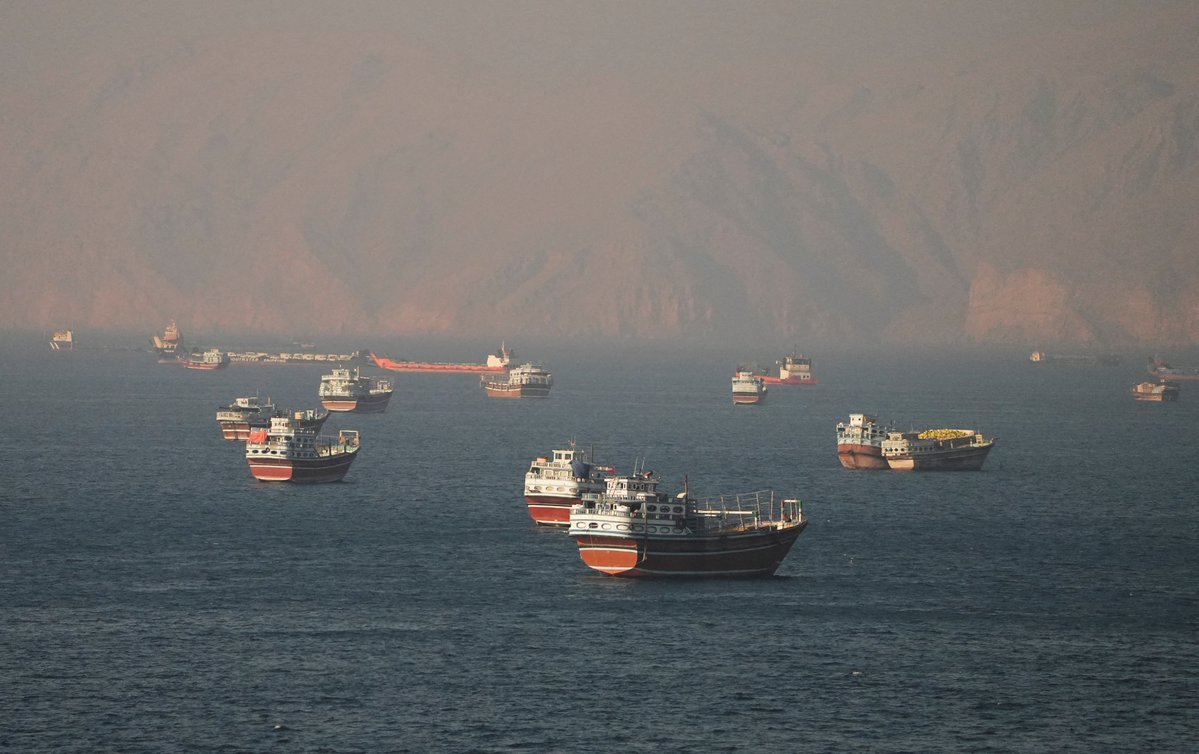
Earlier, the risks were associated with excessive dependence upon northern transport corridors; but now, the unabated confrontation with Iran and its extension to another chokepoint, Bab el-Mandeb, amply demonstrate that southern corridors can also become vulnerable. For Africa, South and East Asia, and Central Asian states, the signal is ominous.
Some countries are highly exposed, and some are less exposed, to the ongoing crises, but all remain vulnerable to the global surge in energy prices and to aviation and supply-chain shocks created by protracted conflicts. This is creating a new gap that the UNGA must consider and address. The point is clear: we need neither an Iranian victory nor the triumph of MAGA, but regional stability, greater trust and harmony to prevent conflict and galvanise free trade through interstate agreements and the expansion of growth areas based on a peace dividend.
So, when the UNGA meets for its 81st session, we find an emphasis on trust-building, since trust has reached a historic low. With leaders following narrow nationalistic lines and, moreover, seeking re-election, it seems that alternative voices are being choked and that there is something seriously wrong with global governance. Yet the foundational optimism surrounding benign multilateralism lingers because we understand that the alternative to cooperation and reconciliation is systemic collapse. Therefore, peace and solidarity cannot be an abstract moral preference but must become both a compulsion and a panacea for the ills plaguing the relational grammar of International Relations. We cannot miss the significant opportunity that the 81st session of the UNGA has ushered in for us to move in that direction.
Akbota Zholdasbekova is affiliated with L.N. Gumilyov Eurasian National University in Astana, Kazakhstan and Gouri Sankar Nag is affiliated with the Department of Political Science at SKB University, West Bengal, India.
Send your articles for Slow Reads to slowreads@thedailystar.net. Check out our submission guidelines for details.
What Malaysia’s Rohingya repatriation plan means for Bangladesh
Why Bangladesh must reconsider its trade agreement with the US
The Indo-Pacific at a crossroads: What it means for Bangladesh
Could the Teesta redraw the map of India-Bangladesh diplomacy?
Iran’s China moment? From isolation to regional hegemony
Makkah Pact: The geopolitics beyond Islamic solidarity
Myanmar’s deteriorating crisis and the political future of the Rohingya
Bangladesh between India and China: The dilemma of defence diversification

What Bangladesh should ask before joining the Makkah Pact