


What is the UN still good for?
“It would be hard to imagine a scenario as threatening as the one we’re facing right now,” the outgoing secretary general of the UN, António Guterres acknowledged on the eve of this week’s annual shindig in New York. His calculations for this grim pronouncement stretched from the consequences of the US-Israeli aggression against Iran and the repercussions of the conflict over Ukraine to the increasingly dire evidence of climate change and the emerging threat of artificial intelligence (AI).
Lip service and short shrift are the best that can be predicted for the genocides proceeding apace in Palestine and Sudan — precisely the kind of catastrophes the UN was created to prevent eight decades ago. Like some of his predecessors, Guterres frequently sounds appropriate warnings, but implicitly acknowledges that the UN is effectively helpless in dealing with wars, can’t do very much about famines, and campaigns to exterminate entire segments of humanity are equally beyond its ability to prevent.
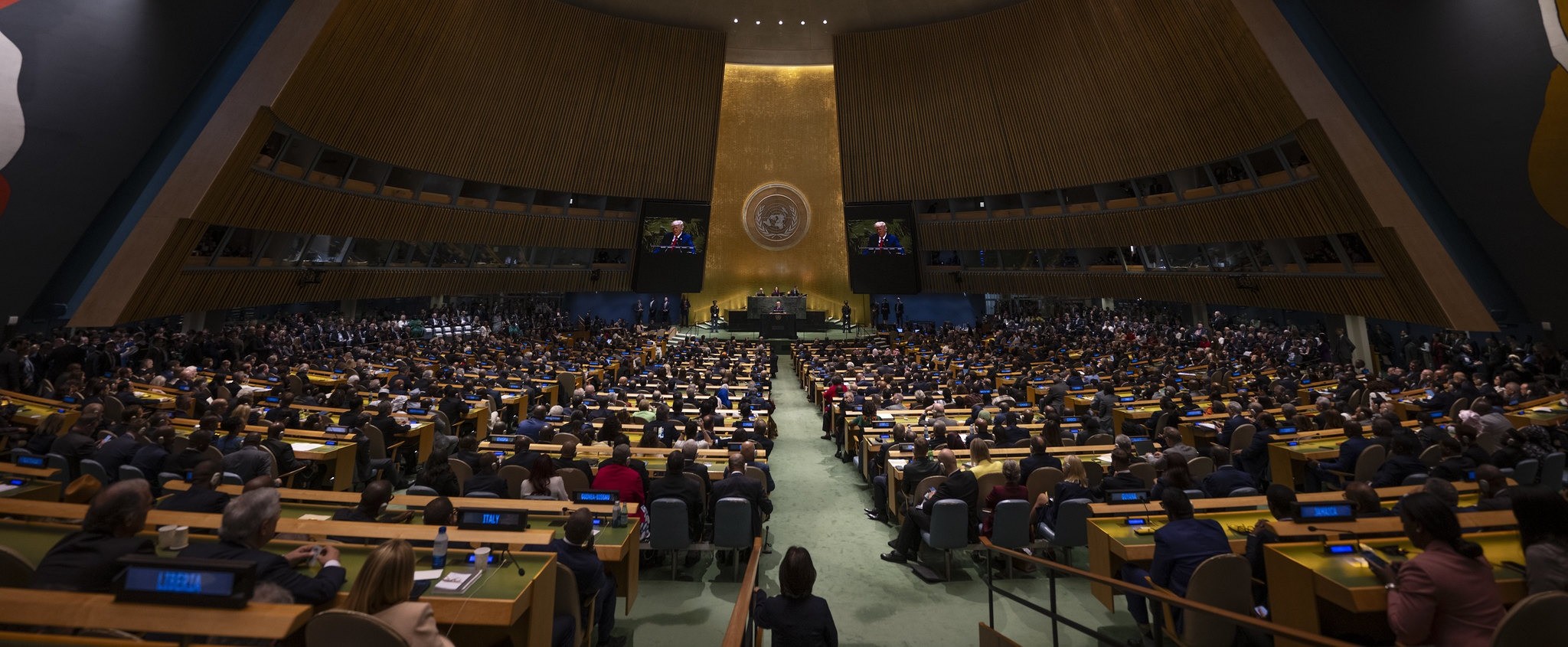
Whether the UN serves any useful purpose in the 21st century is a question that has often been raised, but is yet to be convincingly answered. Among its vast array of branches, there are several that still play a key role in stalling humanity’s descent into barbarism. UNRWA, for instance, can be credited with a key role in keeping Palestinians better educated than most of their counterparts in the Arab world. It cannot guarantee them jobs, though. Or, for that matter, help them stay alive.
The UN emerged in the aftermath of a still colonial-minded Europe’s worst catastrophe. It was intended in large part to avert the next one. It could be argued that it served its purpose to some extent in the early decades of its existence. There has, after all, been no world war since 1945. But nor has there been peace. Besides, the horrific Nazi Judeocide did not prove to be the last genocide, notwithstanding the ‘never again’ vow.
Various other branches of the UN also struggle to play a role in spheres from conflict resolution and refugee accommodation to staving off starvation and other humanitarian initiatives. But there’s no obvious remedy for rapidly dwindling resources. Nor, by virtue of the hostile nation in which its headquarters are located, can the organisation do much when the US prevents representatives of particular nations from attending General Assembly sessions. More than half a century ago, Yasser Arafat became the first Palestinian leader to address a plenary UNGA session. “Today I’ve come bearing an olive branch in one hand and a freedom fighter’s rifle in the other,” the PLO leader declared in 1974. “Do not let the green branch fall from my hand.”
Fourteen years later, when he intended to renounce the use of violence, Arafat was denied a US visa, and the UNGA temporarily relocated to Geneva to allow him to address the assembly. This year is the second time the Trump administration has withheld a visa from Arafat’s now nonagenarian successor, compelling Mahmoud Abbas to address the assembly virtually. Even before Abbas succeeded Arafat as the head of the toothless Palestinian Authority, the post-Oslo PA was accurately perceived as effectively a collaborator in the occupation, and it did nothing to redeem itself during the most horrific stages of the Gaza genocide, before subsequently flagging its impotence in the face of daily pogroms in the West Bank.
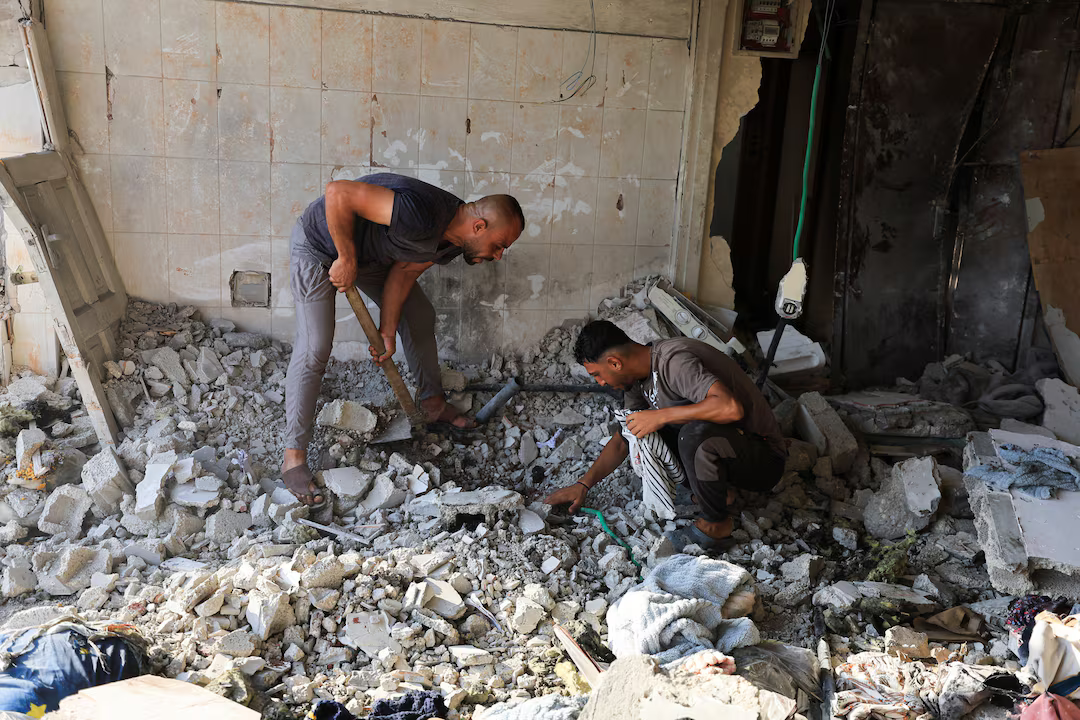
The utterly ineffective PA chief’s presence in New York would have made only a symbolic difference at best, but the very fact that Guterres and his officials could do nothing to override its host nation’s Israeli-sponsored malice reflects the folly of the UN’s founding fathers in locating its HQ in New York. Sure, neutral spaces are hard to locate nowadays, but Geneva might have been a smarter option.
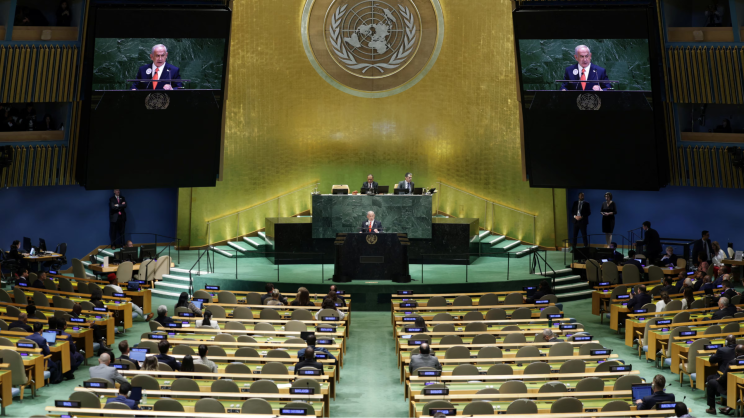
In many respects, though, branches of the UN might be as compromised as the PA. It has, for instance, sounded a warning about an unprecedented El Niño that could wreak even greater havoc across the globe than what has lately been witnessed. Yet a recent media investigation has revealed that “at least a dozen [Intergovernmental Panel on Climate Change] authors are employed by or linked to Saudi Aramco, Saudi institutions and other oil and gas interests”.
The UN emerged in the aftermath of a still colonial-minded Europe’s worst catastrophe. It was intended in large part to avert the next one. It could be argued that it served its purpose to some extent in the early decades of its existence. There has, after all, been no world war since 1945. But nor has there been peace. Besides, the horrific Nazi Judeocide did not prove to be the last genocide, notwithstanding the ‘never again’ vow. Many surviving victims of the Holocaust or their descendants acknowledge that their worst fears are being revived by co-religionists whose vicious tendencies consciously echo those of their ancestors’ oppressors.
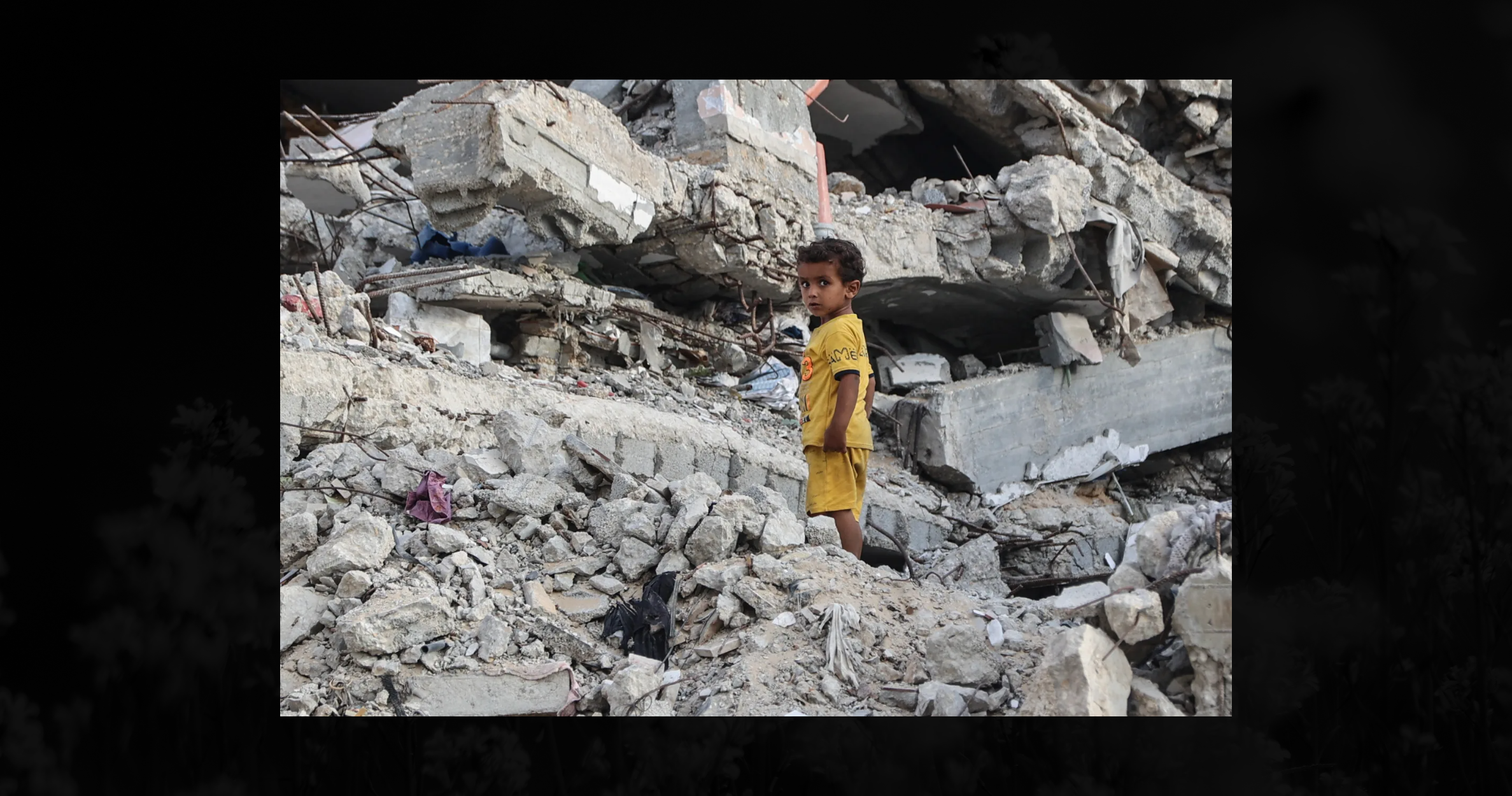
The UN is helpless in this sphere, as it is in so many others. Once again, its raison d’être hangs in the balance. Donald Trump’s latest address may not sink the institution, but it might make it harder to keep it afloat, even as the US president focuses more intently on hosting his foremost frenemy, the inordinately powerful but invariably taciturn Xi Jinping.
This article was first published under the title “World gone wrong" in Dawn, an ANN partner of The Daily Star, on September 23, 2026.
Mahir Ali is a columnist at Dawn. He can be reached at mahir.dawn@gmail.com.
Send your articles for Slow Reads to slowreads@thedailystar.net. Check out our submission guidelines for details.
Can the 81st UNGA restore hope in a world of crises?
What Malaysia’s Rohingya repatriation plan means for Bangladesh
Why Bangladesh must reconsider its trade agreement with the US
The Indo-Pacific at a crossroads: What it means for Bangladesh
Could the Teesta redraw the map of India-Bangladesh diplomacy?
Iran’s China moment? From isolation to regional hegemony
Makkah Pact: The geopolitics beyond Islamic solidarity
Myanmar’s deteriorating crisis and the political future of the Rohingya
Bangladesh between India and China: The dilemma of defence diversification
